

Chapters
The reign of Emperor Commodus (ruling from 17 March 180 to 31 December 192 CE), son of Marcus Aurelius, began just as the brutal Marcomannic Wars (bellum Germanicum et Sarmaticum) were finally winding down. At its height, according to Marcus Aurelius’s own letters, this conflict involved thirteen legions and dozens of auxiliary cohorts.
The war of 166/167–180 CE may have ended, but Commodus still had to deal with its aftermath, including the banditry that had taken root across regions only recently pulled out of active combat. The most notorious of these bandits was an ex-soldier named Maternus. He was a deserter whose gang grew troublesome enough that Rome eventually declared a full-scale war against them.
Desperation and its consequences
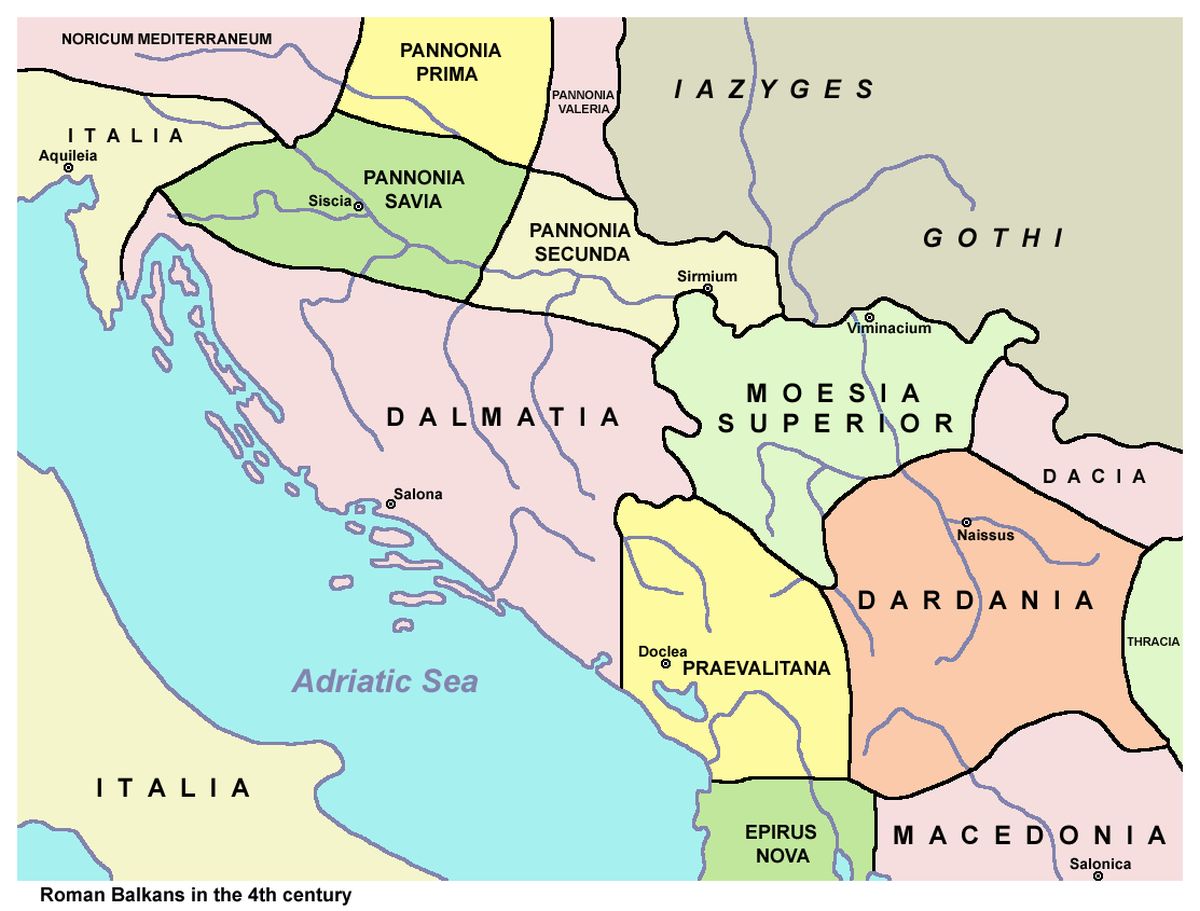
The Marcomannic Wars had badly strained the imperial army, and replacing its losses proved no small task. Fourteen years of brutal military operations and raids had a way of scaring off potential volunteers, so Rome turned to freed slaves (gladiators among them) and brigands (latrones) recruited from the provinces of Dalmatia and Dardania. Many of these new soldiers struggled to adjust to military discipline, pushing back against it in various ways.
Desertion was the most common form of insubordination, and on a scale large enough that even decades later, under emperor Septimius Severus (193–211 CE), Italy, Gaul, and Spain were still being terrorized by armed gangs descended from these same dubious recruits (Birley, A.R., Septimius Severus: The African Emperor).

Maternus, who was he?
The first bandit leader of this kind whose cognomen (the third element of a Roman name, roughly equivalent to a nickname) has come down to us was Maternus. His origins and full name remain unknown, although some scholars (Kajanto, I., Latin Cognomina) argue that the name Maternus — meaning something like “mama’s boy,” “close family ties,” or simply “maternal,” depending on context — points to his Gallic or Iberian origins, since it appeared most frequently among Romanized populations of these two regions. Equally, he may have come from a freedman’s family elsewhere in the empire, where the name also enjoyed some popularity.
Most of what we know about Maternus comes from Herodian’s History of the Roman Empire, itself partly drawn from contemporaries such as Cassius Dio (Roman History), who had been living in Rome as a senator since 180 AD. From them we learn that Maternus was a Roman soldier of unknown unit who, after deserting, built a gang out of fellow deserters, runaway slaves, poor peasants and various fugitives. Why exactly he chose to desert remains a mystery, but he did so while on active duty, taking several other soldiers with him.
Herodian describes Maternus’s earlier “bold” exploits in the army, which had already gotten him into trouble. He seemes to be a soldier with a clear discipline problem, though apparently not one serious enough to warrant severe punishment. Even his desertion wasn’t automatically a death sentence: had he voluntarily returned to his unit (and provided nothing worse like murdering a fellow so