If you have found a spelling error, please, notify us by selecting that text and pressing Ctrl+Enter.

Articles

Roman state existed for nearly thirteen centuries, repeatedly exerting a profound influence on the course of history. I present the history of ancient Rome in the individual articles below, which not always refer solely to the Eternal City itself but encompass the wider world of the Roman Empire.

I encourage you to submit your own articles and to report any corrections or factual inaccuracies.

Changes of Roman religion during great conquests

One of the most breakthrough periods in the history of Roman Empire were the years of wars with Carthage. The First Punic War began in 264 BCE and ushered in a new chapter in the history of Rome, the so-called period of the great conquests. The very rapid spread of the territorial power of the Romans influenced many aspects of the internal life in their country, including religion, which underwent significant transformations during this period.
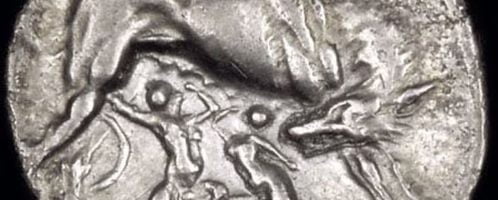
Reverse of a Roman coin showing a she-wolf suckling Romulus and Remus

Genesis of deification in ancient Rome

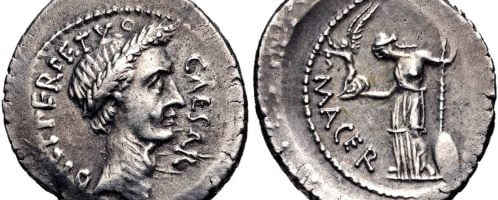
In the times of the republic, the Romans were famous for their extraordinary religiosity. This opinion was already expressed by a Greek Polybius and Cicero, writing that: piety and we are religious above all peoples and nations. The early Roman religion, however, was very reluctant to exalt and worship outstanding individuals. It was related to the political and social system in Rome. In this way, the possibility of the return of the monarchical system so hated by the Romans was avoided. However, despite this, as the Empire grew, eminent leaders began to play an increasing role in Roman politics and religion. Over time, they began to be assigned unique features, which were to be due to the protection of the gods. Ultimately, this process led to the divine exaltation of individuals or so-called deification.

Monetary portrait of Gaius Julius Caesar

Literature in ancient Rome

In ancient Rome, the simplest method of conveying information or the content of your work was to deliver it – recitation (recitatio), which was certainly based on Greek symposiums (symposium). Seneca the Elder reports that a certain Asinius Pollio, who wrote during the reign of Octavian Augustus (27 BCE – 14 CE), invited guests to read his work1. Pliny the Younger, Martial and Juvenal regret that in their time there was a really big number of people reciting their songs.

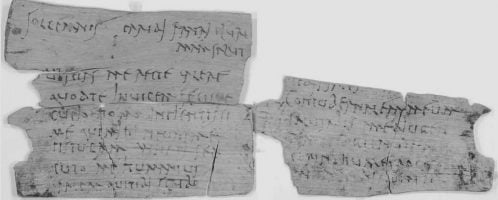
Wooden tablet (No. 311) discovered in Vindolanda

Edict of Diocletian on Maximum Prices from 301 CE

The Edict of Diocletian on Maximum Prices from 301 CE, known as Edictum Diocletiani et Collegarum de Pretiis Rerum Venalium, was intended to combat the progressive inflation in the Roman Empire by setting maximum prices on more than 1,400 products, slaves or services. The edict has survived to our times partly due to fragments of inscriptions (in Greek and Latin) on stone slabs found mainly in the eastern territories of the Empire, in 42 places.

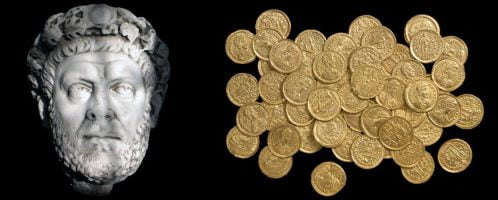
Diocletian

Richest men and wages in ancient Rome

The social inequalities prevailing in ancient Rome have always been large and only strengthened with the progressive territorial expansion of the Empire. Based on the preserved sources, we are able to collect information about how large disproportions prevailed in Roman society, and how much wealth or earnings could be obtained by citizens. I will try to present selected professional groups and their “outstanding” representatives. The property or earnings will ideally be compared with the earnings of an ordinary Roman soldier, slave prices and selected goods.

Slave market, Gustave Boulanger

Animals and hunting in world of Romans

Animals played many different roles in the life of the Romans. At the outset, attention should be paid to the importance of animals in the Roman religion. Etruscan influences meant that the initially simple religious rites of the Romans became more and more complicated. They began to try to guess the intentions of the gods by reading them from natural phenomena, from the entrails of animals sacrificed, and especially from the liver, the colour and shape of which varied from one individual to another. Attempts were made to read the future from the flight and behaviour of birds (e.g. auspices). The flight of vultures or ravens and the manner in which sacrificed hens collected grain were observed.

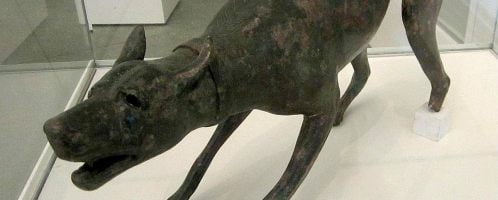
Roman statue from Volubilis showing a dog

Optical illusions in the ancient architecture

Great architectural and engineering achievements of ancient Rome, like roads, aqueducts, the use of concrete and the invention of a dome, were preceded by centuries of the architectural development of ancient Greece. The Greek builders implemented numerous innovative solutions, which were then taken over and further developed by the Romans. Many of those were intended for the optical correction of buildings, which would look completely different without the use of these nearly invisible modifications.

First temple of Hera in Paestum (approximately 550 BCE)

Secrets of Pompeian fresco

September in Campania was far from what we had imagined. Together with a Polish couple, permanently living in the cool, rainy Scottish Highland, we naively expected room temperature, perfect for long hiking trips. Instead, the Campaign greeted us with over thirty degrees of heat and humidity of ninety per cent. In a word, horror.

Roman fresco showing the Dionysian mysteries

War of two Scipio. Warfare in Spain in 218-211 BCE

In the second half of the third century BCE, the Iberian Peninsula was inhabited by three peoples divided into tribes. In the west, in the areas roughly equivalent to today’s Portugal, the Lusitannians lived. In the north were the lands of the Celtybers – a people created by the mixing of migrating Celts with the Iberians. The Celtybers created a culture distinct from both the Celts and the Iberians. The latter inhabited the south and middle of the peninsula.

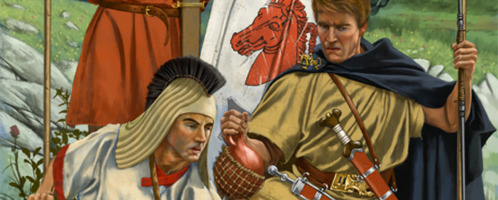
The Carthaginian army consisted of various nationalities. In the picture we can see Iberian, Celt and Numidan

Spelling error report

The following text will be sent to our editors: