
Chapters
| Name | Gaius Iulius Caesar Germanicus |
|---|---|
| Ruled as | Gaius Iulius Caesar Augustus Germanicus |
| Reign | 18 March 37 – 24 January 41 CE |
| Born | 31 August 12 CE |
| Died | 24 January 41 CE |
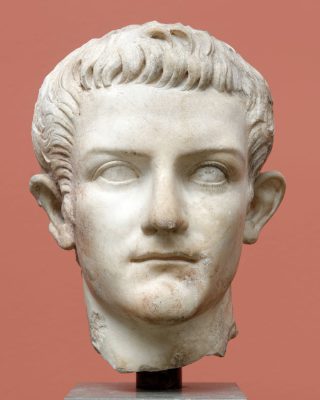
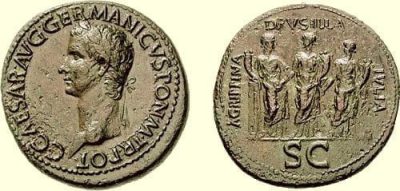
Caligula was born on 31 August 12 CE, in Antium (now Anzio) in Italy, near Rome, as Gaius Iulius Caesar Germanicus. His father was Germanicus, while his mother was Agrippina the Elder. His father was a commander adored by the army, who, just after the birth of his son, happened to be with his family by the Rhine, where he commanded the army.
Caligula was a Roman emperor in the years 37 – 41 CE. The son of the great Roman leader, Germanicus, was originally adored by the crowds. Unexpectedly, on November 37 CE Caligula fell into an unknown serious disease, and after recovering from this he became cruel and unpredictable.
Youth and the period to rule
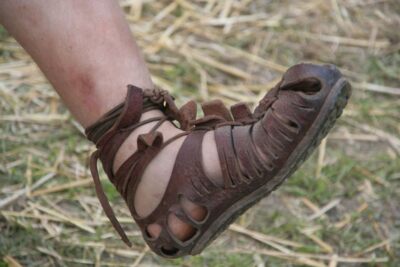
Caligula is one of those emperors we rarely know by their real names. Germanicus, as a commander, was more often in military camps than at home. Therefore, his wife and son often accompanied him while he was performing his duties. And there, to the delight of the legions, he dressed little Gaius in military clothes and put on his sandals. This way his nickname was made: Caligae. This is nothing but the name of the sandals that the legionaries wore. It can be also explained as a “little caliga”. The “little caliga” was regarded as the mascot of the army; according to Tacitus1, when one time there was unrest in the army, Germanicus threatened to leave the camp Agrippina and Caligula. Legionnaires were so tied to them that they begged the general for understanding and stopped unrest.
In 17 CE the whole family moved to the East. Two years later, the father of the family, Germanicus, died under mysterious circumstances. Orphaned Gaius lived with his mother and five siblings in Rome. He was there to witness the atrocities that fell on his loved ones after the praetorian prefect Sejanus came to power. His mother in 29 CE sent to the island Pandateria, where she died in 33 CE. The elder brother, Nero, was imprisoned on Pontia and died in 31 CE. Mean brother Drusus kept on Palatine, and died in 33 CE Gaius was saved thanks to the fact that he was still considered a child. His only sisters were: Agrippina the Younger, Julia Drusilla and Julia Livilla. Later there were rumours of their incestuous relationships. After the deportation of his mother, Gaius was looked after by his great-grandmother, Livia, who died in 29 CE Then the boy lived with his grandmother, Antonia, who respected even the suspicious emperor Tiberius.
Gaius came on the island Capri, where Tiberius settled permanently, in 31 CE, because the emperor wanted to have his two heirs close to him. They were: his grandson, Tiberius Gemellus and Gaius. They were constantly surrounded, and especially Gaius, by informers catching every word. In 33 CE Tiberius gave Caligula an honorary quaestorship. In 33 CE Caligula married his first wife, Junia Claudilla, who died giving birth along with her child.
In 37 CE Caligula came into agreement with Macro, Praetorian Prefect. Gaius wanted to become an emperor, and Macro to keep his position by the new emperor’s side. The guarantee of the agreement was Macro’s wife, Ennia, who, with her husband’s knowledge, became Gaius’s mistress (he was married to Junia at that time). On 16 March 37 CE, the Emperor fainted and died. There were rumours in the city, that Caligula and Macro contributed to the death of Tiberius.
The deceased in his will recommended that Gaius and Tiberius Gemellus reign together. However, his will did not fulfil. Thanks to Macro, the Senate annulled his will and appointed Gaius the Emperor. The beginnings of the reign of the new emperor shaped up very well.
Reign
Initially, Caligula’s rule did not indicate terror. Caligula ruled in harmony with the Senate and gained great popularity. Caligula ordered all political proceedings to be discontinued, people exiled for political reasons had been dismissed, records of the trial of his mother and brothers were publicly burnt, and he ordered the release of the works of opposition historians. He introduced tax credits and re-published state accounts. He went to Pandateria and Pontus for the ashes of Agrippina’s mother and his brother Nero to put them in the imperial mausoleum. He granted special privileges to his sisters and grandmother Antonia.
However, in November 37 CE, the emperor suffered from a serious illness, probably encephalitis. When Caligula recovered, he was a different man. Suetonius after the year 120 CE suggested that even the emperor’s appearance was a sign of serious disturbances:
He was tall of stature, very pallid of complexion. His body was ill-formed, his neck and legs very thin. His eyes and temples were sunken, while his brow was broad and intimidating. His hair was sparse, his crown being completely bald, while the rest of his body was hairy. Because of this, he pronounced it a crime meriting death if, when he was passing, anyone should look down on him from above, or if, for whatever reason, the word ‘goat’ was mentioned. Though nature had made his face hideous and repulsive, he deliberately tried to make it more so by practising all kinds of terrifying and dreadful expressions in the mirror. His health, both of body and of mind, was unstable.
– Suetonius, Caligula, 50
After recovery, Caligula sent soldiers with the order to kill Tiberius Gemmellus, who could dun his patrimony. He also forced Marcus Junius Silanus (substitute consul in 15 CE) the father of his first wife, Junia, to commit suicide.
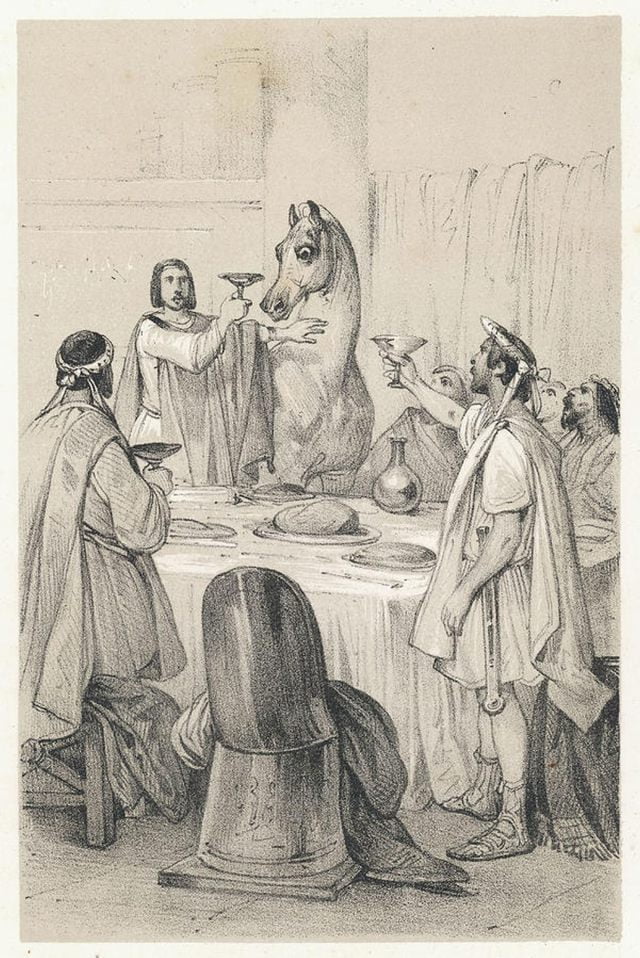
Image showing horse Incitatus at a feast
The horse was a racehorse. Initially, he was called Porcellus, or “Piglet”. However, the Emperor changed the name. From that time on, the horse was called Incitatus (“Wing-footed”). Suetonius writes about it in the “Lives of the Caesars”[przypis id="2"]. According to the Roman writer, the animal had 18 servants who took care of him. He lived in a marble stable, walked in a harness decorated with precious stones, and ate from an ivory manger. Cassius Dion adds that the horse was fed with “golden barley” (barley mixed with gold flakes). There is no information on whether such a diet suited him. Incitatus had the opportunity to try other dishes because he regularly participated in the feasts organized by Caligula. The emperor raised toasts for the health of his steed, and other participants in the meetings did the same thing.
On the night before the race, no one bothered him, he was watched by Caligula himself, who slept next to the animal. However, Suetonius also writes that it was also a soldier’s job.
According to the writer, Caligula appointed his favourite senator. This way, Incitatus’ political career was supposed to begin, because the horse would eventually become a consul. Caligula’s successor, Emperor Claudius, removed the horse from the senatorial state, arguing that Incitatus lacked assets and fixed income.
At the end of 37 CE, witnessing the wedding of Pegas and Orestilla, he took a liking to the bride and took her during the ceremony as his wife. Then he left her. Caligula was widely accused of promiscuity, incl. Suetonius reports that he had sexual relations with all his sisters (including public feasts).
Caligula – was he really a madman?
According to ancient sources, his psychic deviations are confirmed by the reports from the course of all-day feasts, during which the blood of sacrificial flamingos was shed, and the protagonist of the melodrama which was then released, Laureolus spit on the stage with blood. Caligula was one of the greatest erotomaniacs of his time. He abused his power to satisfy his sexual needs, and at the same time, he vented his love for ridiculing others, regardless of their position, merit or knowledge.
In the end, he also wanted to be worshipped as a deity, and therefore he intended to put his statue in the temple in Jerusalem. It was only the threat of the Jews that prevented him from doing so, claiming that if he did, he would provoke an uprising.
In 38 CE the games were held, during which the emperor’s sister, Drusilla died. Public mourning was then announced. A few months after the funeral, he married Lollia Paulina, the wife of Memmius Regulus. In 38 CE Macro committed suicide. In 39 CE the state’s finances deteriorated considerably because Caligula recklessly threw away the money left by Tiberius. To improve this state of affairs, the emperor began confiscating properties. When in the middle of September Gaius prepared a great expedition against the Germans, a conspiracy aimed at slaying the emperor was discovered. His senatorial leaders (the army commander Getelik and Marcus Aemilius Lepidus, the ex-husband of Drusilla) died, and the emperor’s sisters, Agrippina the Younger and Julia the Younger, involved in the conspiracy were exiled to the islands.
Caligula broke up with his wife Lilia and got married to Caesonia. 30 days after the wedding, she gave birth to his daughter, whom the emperor acknowledged as his own. Thanks to the wave of political processes and property confiscations, the ruler had the resources for all his desires and entertainment. In the middle of September 39 CE, the emperor went to Germania, which he decided to annex to the Empire. Crossing Rhine itself was considered a dazzling victory and he began his way back to Rome. Further military operations on behalf of the emperor were conducted by Galba. In 40 CE he took over Mauritania, whose ruler had to commit suicide. In the spring of 40 CE, Caligula led the legions to the north coast of Gaul, pretending to prepare an expedition against the Britons, and because a British prince came to the camp, the mystification was considered a great victory. Immediately after that, Caligula, full of praise, returned to Rome and entered the city in glory. The rest of his reign consisted of feasts and games for the people.

Caligula’s great ships
They were excavated from the Nemi lake – a tiny reservoir 30 kilometres south of Rome. These were real floating palaces – with heating, baths and toilets. What prompted Caligula to build such large ships on such a small lake (1.67 km2)? According to Roman law, the lake was sacred, and so an absolute ban on swimming on it was obligatory. Caligula was fascinated with the Egyptian goddess Isis, as well as with the sumptuous life of Ptolemies. He wanted to create something the biggest – big Imperial ships, surpassing everything that the world had seen. An additional aspect for which he decided to build his floating palaces was the specific microclimate of the place. The extremely clean region with slightly lower temperatures than in Rome caused the richest Roman citizens eagerly built their residences there. The lake was additionally connected with the capital with the famous Via Appia.
Death

In Rome, another conspiracy to murder the reigning emperor began. It was to be led by a.e. Cassius Chaerea, who had the reputation of an outstanding soldier in the Roman legions and served as a tribune of the praetorian guard. His duties included, first of all, a morning visit to the emperor, who gave him the motto of the day. This ritual caused Chaerea more and more trouble. Due to the fact that he had a high voice, he became the object of Caligula’s derision. The emperor not only called him “a girl”, but he invented increasingly obscene slogans. The whole community knew that he systematically insulted the commander and deliberately humiliated him. Another tribune of the Praetorian Guard joined Chaerea, Cornelius Sabinus. He also had serious reasons for this, as he was often the object of the perverse and insulting whims of the emperor.
Participants in the action were to wait for Caligula when he would come back for dinner from the theatre. They decided to attack him in the narrow corridor of the underground gallery in the palace. Only there it was possible to surprise the emperor, not allowing quick guard intervention, consisting of Germanicus warriors. The conspirators, however, had to wait, after the end of the performance, the emperor stopped behind the scenes and talked with several actors about the next performance, which was to take place in the afternoon.
When in the end Caligula left the actors and set off for dinner, the assassins attacked the hated ruler. Chaerea, who led them to him, cut the emperor with a sword in the shoulder, and Sabinus brought him to his knees. Then the other attackers rushed on him. The two porters of the litter and the German guards, who the conspirators have defeated, tried in vain to defend the ruler.
Suetonius describes the event in the following way:
On the ninth day before the Kalends of February at about the seventh hour he hesitated whether or not to get up for luncheon, since his stomach was still disordered from excess of food on the day before, but at length he came out at the persuasion of his friends. In the covered passage through which he had to pass, some boys of good birth, who had been summoned from Asia to appear on the stage, were rehearsing their parts, and he stopped to watch and to encourage them; and had not the leader of the troop complained that he had a chill, he would have returned and had the performance given at once. From this point there are two versions of the story: some say that as he was talking with the boys, Chaerea came up behind, and gave him a deep cut in the neck, having first cried, “Take that,” and that then the tribune Cornelius Sabinus, who was the other conspirator and faced Gaius, stabbed him in the breast. Others say that Sabinus, after getting rid of the crowd through centurions who were in the plot, asked for the watchword, as soldiers do, and that when Gaius gave him “Jupiter,” he cried “So be it,” and as Gaius looked around, he split his jawbone with a blow of his sword. As he lay upon the ground and with writhing limbs called out that he still lived, the others dispatched him with thirty wounds; for the general signal was “Strike again”. Some even thrust their swords through his privates. At the beginning of the disturbance his bearers ran to his aid with their poles, and presently the Germans of his body-guard, and they slew several of his assassins, as well as some inoffensive senators.
– Suetonius, Caligula, 58
On 24 January 24 CE, the conspirators murdered the emperor, inflicting approximately 30 wounds on him. His wife, Caesonia, and his daughter were also killed. Caligula was buried in the Mausoleum of Augustus.
After Caligula was murdered, in the ensuing confusion some of the soldiers of the Praetorian Guard decided to proclaim Claudius, the only adult representative of the Julio-Claudian dynasty. Soldiers and important personalities feared the reaction of Caligula’s guard of 300 powerfully built Germans who had no qualms about killing the population. Supposedly, when Claudius was found behind a curtain, the praetorians raised Claudius and made him emperor, against his will. The Germans entered the box in which Claudius was, knelt down and promised him faithful service and protection. Despite initial opposition, the Senate, aware of its powerlessness over the soldiers, approved his status. For the first time, the true character of the principate was so clearly revealed – the power of the emperors was based on military strength, and the times when the will of the senate was of importance are irrevocably over.
Marriage and offspring |
|


