
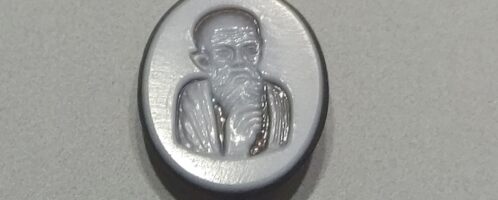
Cameo of Philemon
Cameo depicting Philemon, a Greek comedy writer who lived in the 4th-3rd centuries BCE. The artifact is located in the National Archaeological Museum of Naples.
If you have found a spelling error, please, notify us by selecting that text and pressing Ctrl+Enter.
Artifacts is a collection of curiosities dedicated to objects left behind by the ancient Romans. This category features lesser-known facts and interesting information about archaeological finds, such as tools, weapons, coins, inscriptions, and everyday objects, which provide a deeper understanding of life in the Roman Empire.
Cameo depicting Philemon, a Greek comedy writer who lived in the 4th-3rd centuries BCE. The artifact is located in the National Archaeological Museum of Naples.
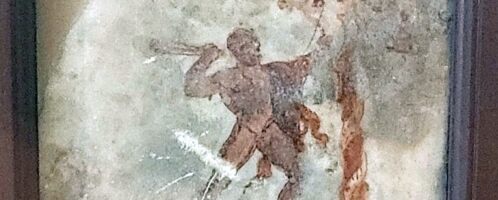
Roman fresco showing the fight of Hercules with the seven-headed hydra. The object dates back to the 1st century CE; discovered in Pompeii. The artifact is located in the National Archaeological Museum of Naples.
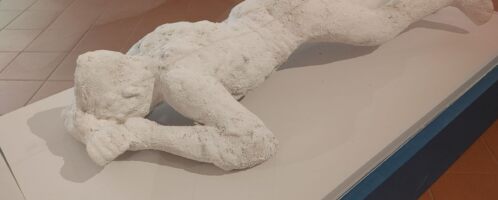
A plaster cast of a young woman who died in Pompeii as a result of the eruption of Mount Vesuvius in 79 CE. Her hips were wrapped in cloth. The artifact is on display in Pompeii.
Roman fresco showing young Harpocrates, son of Isis and Osiris. The depicted deity approaches the altar, which is entangled by a snake eating sacrifices. Dated to the 1st century CE. The object was discovered in Herculaneum. The artifact is located in the National Archaeological Museum of Naples.

Roman bronze and silver sculpture showing Dionysus (Bacchus) and Satyr. The object was discovered in Pompeii and dates back to the mid-1st century CE. The artifact is located in the National Archaeological Museum of Naples.

Roman altar of a certain Gaius Julius Alpinus Classicianus, which was found in the ruins of the Roman defensive walls of Londinium. Thanks to the accounts of the Roman historian Tacitus, we know that the man was the minister of finance in Britain and was sent there by Nero after the fall of Boudica’s rebellion (60-61 CE).

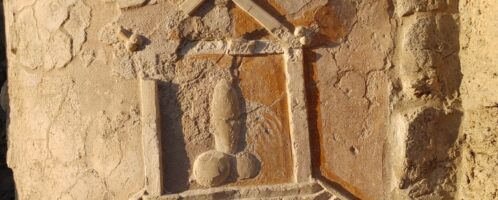
Relief on the wall of one of the Roman houses in Pompeii on Via dell’Abbondanza. The phallus brought good luck and protected against bad luck and black magic.
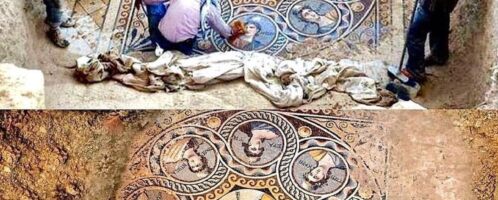
Mosaic discovered in the ancient Greek city of Zeugma (present-day Turkey). The object is located in the Zeugma Mosaic Museum in Gaziantep (southern Türkiye).
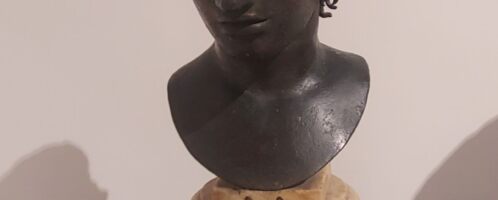
Ancient sculpture of a young man. The artifact is located in the National Archaeological Museum of Naples. The caption under the exhibit – “Epheb” – suggests that we are dealing with the image of a Greek young man aged 18-20 who has undergone military training.
Roman portrait of an unknown man. The sculpture dates back to the 1st century BCE. The artifact is located in the National Archaeological Museum of Naples.
