If you have found a spelling error, please, notify us by selecting that text and pressing Ctrl+Enter.

Curiosities of ancient Rome (Artifact)

Artifacts is a collection of curiosities dedicated to objects left behind by the ancient Romans. This category features lesser-known facts and interesting information about archaeological finds, such as tools, weapons, coins, inscriptions, and everyday objects, which provide a deeper understanding of life in the Roman Empire.

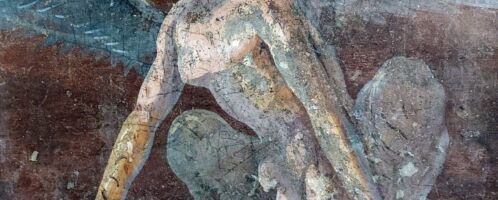
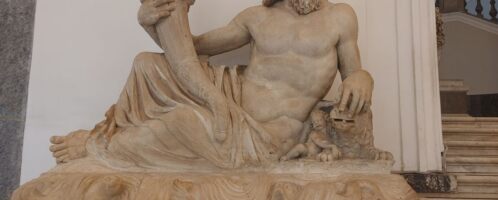
Roman fresco showing young man and cattle

Roman fresco showing a young man (it may be Paris) grazing sheep and cattle next to the sanctuary. The object dates back to the 1st century CE. The artifact is located in the National Archaeological Museum of Naples.

Roman fresco showing young man and cattle

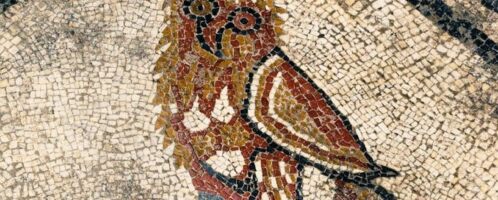
Roman mosaic depicting owl

Roman mosaic depicting an owl. The object was discovered in Uzèz in southern France. Dated to the second half of the 1st century BCE.

Roman mosaic depicting owl

Roman fresco divided into two scenes

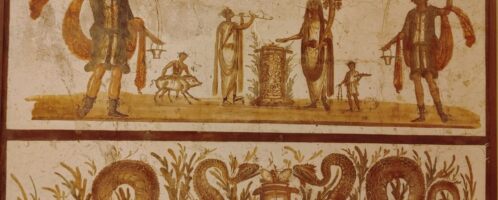
Roman fresco divided into two scenes. At the top you can see two lares pouring wine from the horn – so-called rhyton – and Genius, who, with the support of his assistants, makes a sacrifice. There is also a musician playing the flute on the upper stage.

Roman fresco divided into two scenes

Sculptures of Amores with vessel

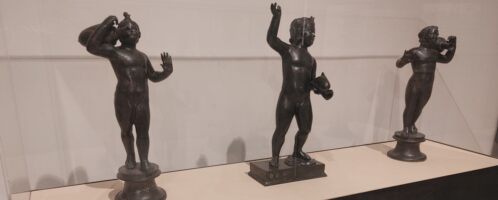
Sculptures of Amores with a vessel, made of bronze. Objects were discovered in Pompeii or Herculaneum. The artifact is located in the National Archaeological Museum of Naples.

Sculptures of Amores with vessel

Painter on Roman fresco

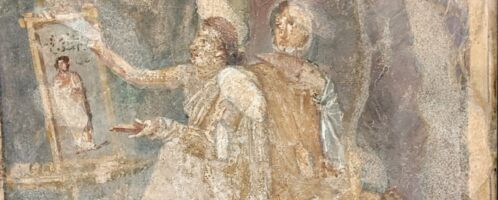
Roman fresco showing a painter retouching a painting depicting the herm of Dionysus. The object was discovered in Pompeii. Dated to the 1st century CE. The artifact is located in the National Archaeological Museum of Naples.

Painter on Roman fresco

Mosaic with inscription SALVE LUCRU

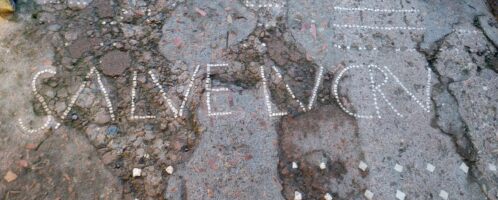
One of the Roman houses from the 1st century BCE in Pompeii had a very interesting inscription on the floor in the entrance – SALVE LUCRU, i.e. “Welcome, money”. The mosaic decorated the house of a certain Publius Vedius Siricus, who was a significant city politician and trader. Every day he was visited at home by supporters who read this inscription.

Mosaic with inscription SALVE LUCRU

Sphinx on Roman fresco

Sphinx on a Roman fresco. Object discovered in Pompeii. Dated to the 1st century BCE. The artifact is located in the National Archaeological Museum of Naples.
Sphinx on Roman fresco

Spelling error report

The following text will be sent to our editors: