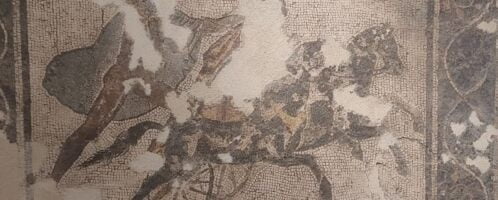
Roman fresco showing naumachia and still life
Roman fresco showing naumachia and still life. Object dated to the 1st century CE; discovered in Pompeii. The artifact is in the National Archaeological Museum in Naples.
If you have found a spelling error, please, notify us by selecting that text and pressing Ctrl+Enter.
Artifacts is a collection of curiosities dedicated to objects left behind by the ancient Romans. This category features lesser-known facts and interesting information about archaeological finds, such as tools, weapons, coins, inscriptions, and everyday objects, which provide a deeper understanding of life in the Roman Empire.
Roman fresco showing naumachia and still life. Object dated to the 1st century CE; discovered in Pompeii. The artifact is in the National Archaeological Museum in Naples.
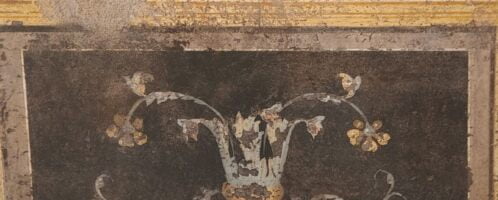
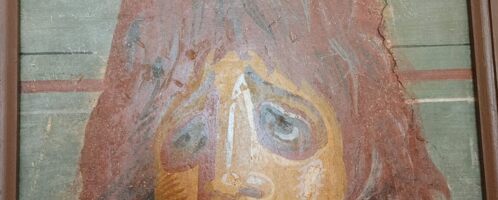
Roman fragment of a fresco showing a theatrical mask. The object dates back to the 1st century BCE. Discovered in Pompeii. The artifact is in the National Archaeological Museum in Naples.
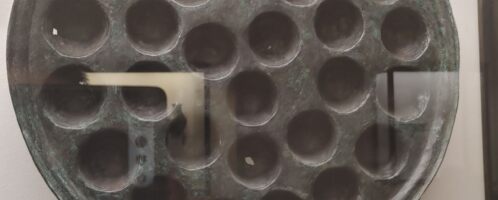
Roman mould for loaves of bread. The object is made of bronze and dates back to the 1st century CE. The artifact was discovered in Pompeii and is in the National Archaeological Museum in Naples.
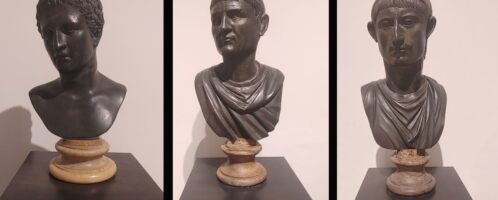
Roman sculptures of men, were probably discovered in the so-called villa of the papyri, which was located under Herculaneum. The villa was covered with pyroclastic material as a result of the eruption of Vesuvius in 79 CE. The artifacts are in the National Archaeological Museum in Naples.
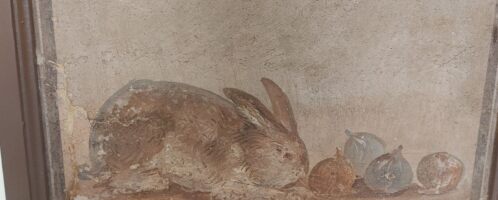
Roman fresco showing a rabbit and figs. Object dated to the 1st century CE; discovered in Herculaneum. The artifact is in the National Archaeological Museum in Naples.
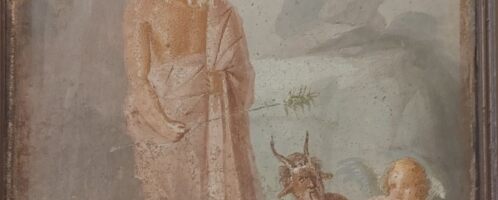
Roman fresco showing Silenus (companion of Bacchus) and Faun and Amor fighting each other. Object dated to the 1st century CE; discovered in Pompeii. The artifact is in the National Archaeological Museum in Naples.
An ancient sculpture showing a warrior holding a dying child by the leg. Object dated to the 2nd-3rd century CE. The artifact is in the National Archaeological Museum in Naples.

Roman fresco showing the nymph Io who remains under surveillance in the temple of Hera in Argos, protecting her from the advances of Zeus. Io is shown with cattle horns. The object was discovered in Pompeii and is dated to the 1st century CE. The artifact is in the National Archaeological Museum in Naples.

Roman painting showing a young assistant during an official ritual (so-called camillus) who holds a vessel in his hands. According to Roman tradition, camillus had to be under the age of puberty and both parents had to be alive. The boy usually came from a wealthy family.

Roman mosaic showing Oedipus killing his father Laius, king of Thebes, driving a chariot. Object dated to the 1st century CE. The artifact is in the National Archaeological Museum in Naples.