
Empress Livia’s white hens
Ad Gallinas Albas: Few people know this name today, but two thousand years ago things were different. Known under it was a town nowadays called Prima Porta – near Rome, on Via Flaminia.
If you have found a spelling error, please, notify us by selecting that text and pressing Ctrl+Enter.
Monuments are curiosities dedicated to the preserved buildings, ruins, and material remains of the ancient Roman world. This category includes lesser-known facts, interesting details, and unusual information about Roman monuments, their history, function, and significance for understanding the history of the Roman Empire.
Ad Gallinas Albas: Few people know this name today, but two thousand years ago things were different. Known under it was a town nowadays called Prima Porta – near Rome, on Via Flaminia.

Contemporary Naples is a city where ancient monuments are much more difficult to find than in Rome, but that does not mean that they are not there. After all, it is a city as old as Rome. Founded by Greek colonists, the settlement already had an urban character when Rome was still a small village.
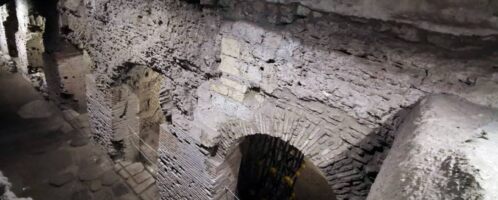
In 1880, during the construction of the Tiber embankments near Villa Farnesina in Trastevere, a very interesting discovery was made: large fragments of a luxurious residence from the reign of Emperor Augustus were excavated. It is a fascinating building: breaking with the typical architectural layout of the Roman “domus” (and with its canonical sequence of rooms: vestibule-atrium-tablinum-peristyle), reminiscent of the more refined suburban villas of Roman patricians. Its location on the very bank of the Tiber must have been captivating.
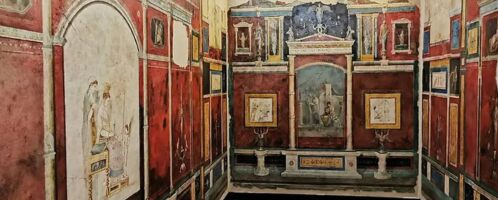
In Cartagena (south-eastern Spain) there are remains of the Punic walls of Cartagena, which date back to the 3rd century BCE. Scientists have found traces of fire, which proves that a battle and probably looting really took place here.
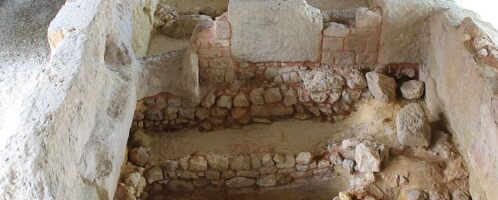
Roman theater in Cartagena (southern Spain) was built in the late 1st century BCE. The facility is hidden among the modern buildings of the city.

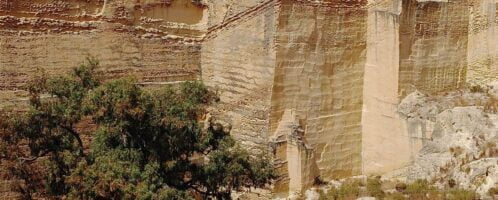
Roman sandstone quarry in Cartagena (south of Spain), which was intensively used from the 3rd BCE until the middle of the 20th century. This place has the status of a historic site.
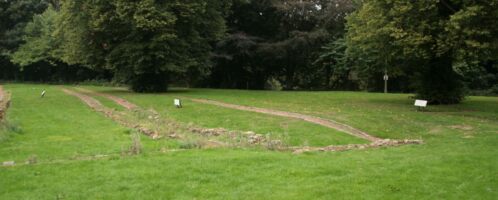
An earth and wooden Roman fortress – Castle Greg – dating back to the early 80s of the 1st century CE, built during the expedition of Julius Agricola (Gnaeus Julius Agricola).

Cramond Fort is the remains of one of the few stone Roman forts on the Antonine Wall. It is located in the north-western district of Edinburgh, near the Almond River, in close proximity to the Firth of Forth (North Sea).
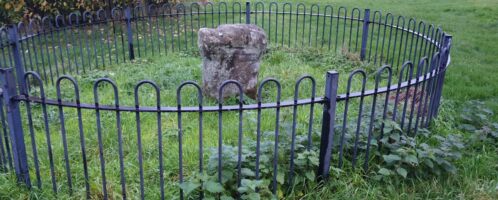
Roman altar, now called the Carrick Stone, which is located in Scotland. The object is dated to the 60s of the 2nd century CE. It is located halfway between Glasgow and Falkirk, close to Antoninus’ wall.
A rich spectre of ancient Roman architectural achievements is reflected all over the Empire’s former territory. The largest ever-built Roman temple is located in today’s Lebanon, in the Bekaa Valley.
