Publius Virgil Maro
The greatest poet in Rome was Publius Virgil Maro. To this day, however, the erroneous form Virgil is also used, which first appeared in the 5th century CE. It resulted from the intrusive use of the letter “i” in many languages.
If you have found a spelling error, please, notify us by selecting that text and pressing Ctrl+Enter.
The world of the ancient Romans was rich in extraordinary, and sometimes even surprising, facts. We draw our knowledge of Roman daily life, customs, and mentality primarily from works left by ancient writers and historians. It is thanks to them that we discover information that is astonishing today – sometimes even hard to believe. Below are some interesting facts that reveal a lesser-known and less obvious side of the Roman world.
I encourage you to submit your own suggestions and to report any corrections or inaccuracies.
The greatest poet in Rome was Publius Virgil Maro. To this day, however, the erroneous form Virgil is also used, which first appeared in the 5th century CE. It resulted from the intrusive use of the letter “i” in many languages.

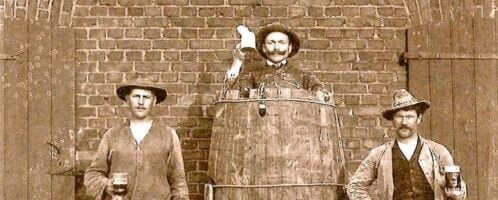
Fragment of a wooden Roman barrel found in Oberaden in western Germany, on the site of a former legionary camp. The object is dated to the 1st century CE. Wine was transported in the barrel, which was intended for the soldiers in the camp. Scientists, apart from traces of wine, found traces of pepper that came from distant India.
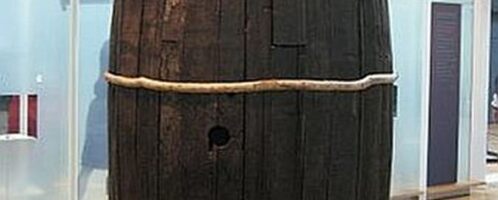
Stone axe blade from antiquity (the so-called Keraunia or “thunder stone”). The object is dated to the 2nd-3rd century CE.
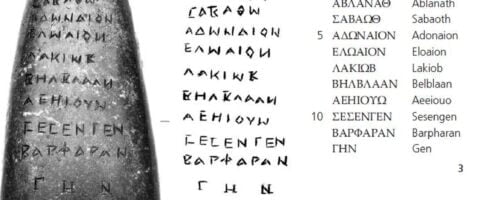
Roman board game – Tabula Lusoria. The name Tabula Lusoria is more of a broad term and in Latin, it means more or less the same as “playing field”. The game is designed for two players and consists of a special, rosette board with eight fields arranged in a circle with one central field connected to each field on the circle (see the picture) and two sets of pieces in two colours, three in each.

Cup from Emona. A glass cup was discovered in one of the graves in a cemetery near the Roman castrum (now Ljubljana, Slovenia). It was made of glass in the millefiori technique (an Italian term meaning a thousand flowers). It is a method of obtaining multi-coloured glass, which consists in combining glass paste (in the form of tubes) into decorative patterns, cutting it into slices and then melting it into the surface of the vessel.

Quintus Cecilius Metellus Numidian, leader of the optimates and opponent of Gaius Marius, was considered an energetic man, with an impeccable reputation. In 102 BCE he held the office of censor. During his tenure in office, he strove to increase the number of births in Roman society.
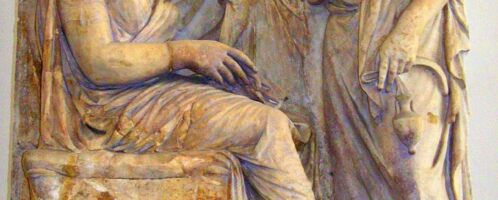
In Roman historiography, there were not many events that could be described as rebellions of the population against the local elite or the emperor, in connection with, for example, problems with food supplies. This does not mean, however, that the rulers or aristocracy could remain indifferent to the voice of the people.

We are all well aware that an effective politician is one who has very good contact with the voter. However, there are behaviours that can effectively discourage a citizen from voting for a given politician. A great example of this is the story of the conversation between the Roman politician Publius Cornelius Scipio Nasica and a random Roman citizen.
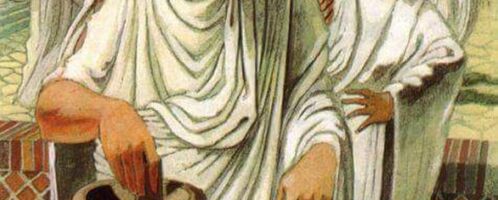
Polybius in “Histories” describes the figure of Antiochus IV Epiphanes, the son of King Antiochus III the Great, who, after the defeat of the Seleucid monarchy in the war with Rome in 188 BCE, had to live in Rome as a hostage for over ten years. When his brother Seleucus IV Philopator died, the hostages were changed and Antiochus IV was to take the Syrian throne, and Seleucus’ son would go to Rome.