If you have found a spelling error, please, notify us by selecting that text and pressing Ctrl+Enter.
Curiosities of ancient Rome
The world of the ancient Romans was rich in extraordinary, and sometimes even surprising, facts. We draw our knowledge of Roman daily life, customs, and mentality primarily from works left by ancient writers and historians. It is thanks to them that we discover information that is astonishing today – sometimes even hard to believe. Below are some interesting facts that reveal a lesser-known and less obvious side of the Roman world.
I encourage you to submit your own suggestions and to report any corrections or inaccuracies.

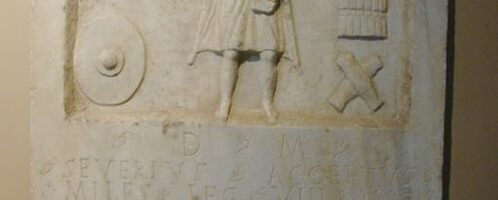
Roman tombstone of Severius Acceptus
Roman tombstone of Severius Acceptus, a soldier of the legion VIII Augusta, who probably belonged to a separate special unit of vexillatio. The man died at the age of 26 after 6 years of service in the Roman army. On the tombstone, we can see the image of a man and some of his attributes. The object is dated to the 3rd century CE. The tombstone was found in northwestern Turkey and is on display in a museum in Istanbul.
Incest, adultery or fornication
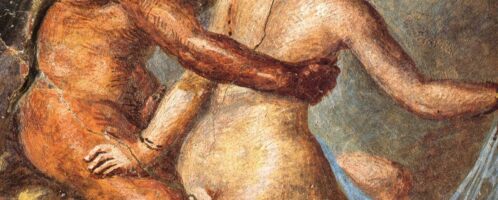
Under Roman law, sexual intercourse qualified as incest, adultery or fornication (stuprum). This word is often used by Roman writers also in the context of the violation of Roman rights of freedom in relation to free-born women of both sexes.

Roman ring inscribed with MATRI PATRI
Roman ring with the inscription MATRI PATRI, meaning “to Mum and Dad”. Object found in Vindolanda, England.

Ancient discoveries in city Magnice in Poland
Within the suburbs of Wrocław, in the village of Magnice, archaeological excavations preceding the construction of a logistics center revealed the remains of a large settlement of the Przeworsk culture from the 60’s of the 2nd century CE. The dendrochronological examination of the wooden elements of the well casing elements discovered there set the construction date as the first years of the reign of Marcus Aurelius (ca. 162-164 CE).

Assessment of Roman republican system by Polybius
Polybius went down in history as a Greek historian who, after his stay in Roman captivity, came under the protection of the consul Lucius Emilius Paulus, and then took part in more important military operations of the Romans in the middle of the 2nd century BCE, including the defeat of Carthage and the destruction of the city. Polybius in his “Histories” describes the history of Rome in the years 264-146 BCE, showing the Roman system as an example of the Greek ideal of a “mixed constitution”.

No fight as gladiator
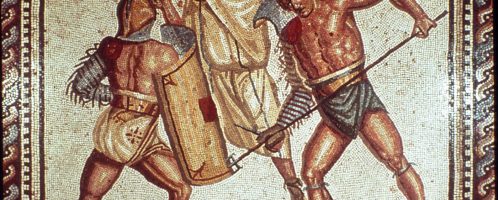
Tabula Larinas was a senatorial decree of 19 CE that forbade sons, daughters, grandchildren and great-grandchildren from senators or equites to participate in gladiatorial fights if they are under 20 life.
Silphium juice
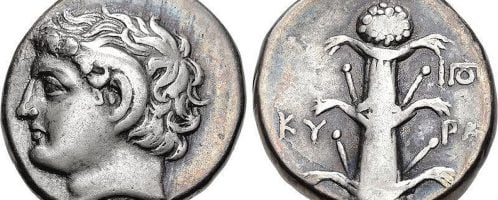
Silphium, that is, the sylphion was a plant that enjoyed extraordinary popularity in ancient times. Its juice was one of the main exports of the ancient Greek colony of Kyrene (today Libya), and it was known and used throughout the Mediterranean. To this day, it has not been possible to identify it unequivocally.