If you have found a spelling error, please, notify us by selecting that text and pressing Ctrl+Enter.

Curiosities of ancient Rome

The world of the ancient Romans was rich in extraordinary, and sometimes even surprising, facts. We draw our knowledge of Roman daily life, customs, and mentality primarily from works left by ancient writers and historians. It is thanks to them that we discover information that is astonishing today – sometimes even hard to believe. Below are some interesting facts that reveal a lesser-known and less obvious side of the Roman world.

I encourage you to submit your own suggestions and to report any corrections or inaccuracies.

Roman tombstone of Marcus Valerius Celerinus

Roman tombstone of Marcus Valerius Celerinus, Roman soldier of the Legio X Gemina Pia Fidelis. The tombstone was commissioned by his wife, Marcia Procula. Celerinus was originally from southern Spain, however a tombstone was discovered in Cologne, Germany, suggesting that he settled there after his retirement. Currently, the object is located in the Romisch-Germanisches Museum.
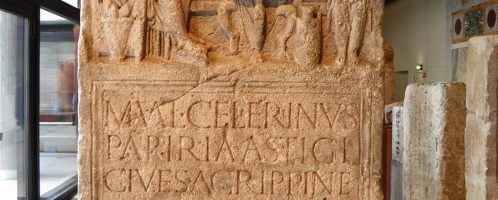
Roman tombstone of Marcus Valerius Celerinus

Domitian and fears about assassination

Emperor Domitian, despite his initially peaceful rule, became very suspicious over time. A guard almost always accompanied him. He covered the walls of his palace with shiny stone (the so-called fengit) so that he could see what was happening behind his back thanks to the gloss.

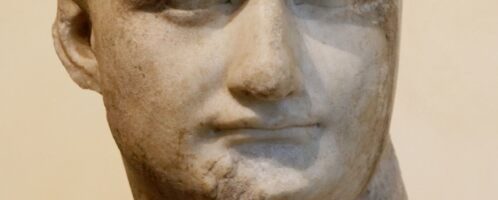
Domitian

Different opinions about Nero

Already ancient s had different opinions about Emperor Nero; some even gave some “positive” feedback. When asked by the flatterers, the philosopher Apollonius of Tyana replied, “I think of him better than you, for you think he should sing and mine should be silent”1.

Nero, author Cesares de Roma

Holy water in antiquity

Holy water is associated with the Christian faith. It is used in baptisms, blessing and expelling evil. Few, however, realize that the holy springs occurred in other religions, including the ancient Greeks and Romans.

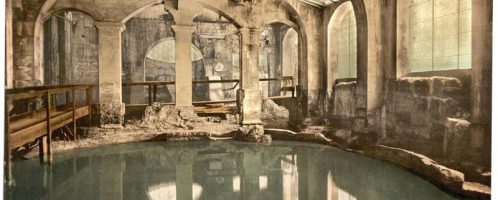
Roman baths in Bath (England) from 1900

Roman wall fresco depicting Silenus and fight of Amor with Pan

Roman wall fresco depicting Silenus, the god of nature, watching Amor and Pan fighting each other. The struggle itself is interpreted as a rivalry between love and desire. The object adorned the walls of the Meleager House in Pompeii. Currently, the artefact is in the National Archaeological Museum of Naples. Fresco is dated to the 1st century CE.

Roman wall fresco depicting Silenus and fight of Amor with Pan

Anomalies in nature

Ancient Romans were often interested in anomalies in nature. Therefore, Octavian Augustus (63 BCE – 14 CE) received an armless person from India – a boy 60 cm tall. Such persons were held for entertainment (they were also shown in public).

Augustus

Mark Antony’s legion emissions

They say you need three things to fight a war: money, money, and more money. Regardless of whether or not we accept this sentence as true, money undoubtedly helps in war. Of course, it was no different in ancient times. In ancient Rome, troops were paid primarily with silver denarii, sometimes, in exceptional circumstances, and also with gold coins, i.e. aureus.

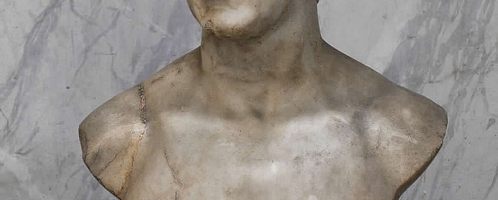
Bust of Mark Antony

Spelling error report

The following text will be sent to our editors: