Fear of death
Roman citizen Caecina Petus was involved in a plot (42 CE) against Emperor Claudius. Sentenced to death by the emperor, he was to take his own life. He hesitated, however, and could not dare to deal himself a fatal blow.
If you have found a spelling error, please, notify us by selecting that text and pressing Ctrl+Enter.
The world of the ancient Romans was rich in extraordinary, and sometimes even surprising, facts. We draw our knowledge of Roman daily life, customs, and mentality primarily from works left by ancient writers and historians. It is thanks to them that we discover information that is astonishing today – sometimes even hard to believe. Below are some interesting facts that reveal a lesser-known and less obvious side of the Roman world.
I encourage you to submit your own suggestions and to report any corrections or inaccuracies.
Roman citizen Caecina Petus was involved in a plot (42 CE) against Emperor Claudius. Sentenced to death by the emperor, he was to take his own life. He hesitated, however, and could not dare to deal himself a fatal blow.
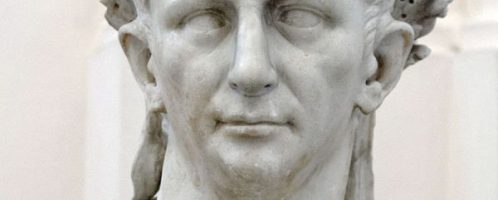
Roman sculpture showing a young man. Researchers suspect that it may be an image of one of Octavian Augustus’ grandsons: Gaius or Lucius. It is located in the Archaeological Museum of Milan.

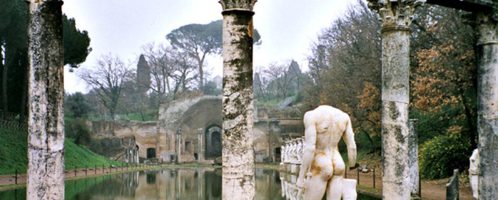
Emperor Hadrian (reigning in the years 117-138 CE) became famous as one of the so-called “five good emperors”. His reign was a period of stabilization and order in the country, which did not wage serious conflicts and gave up conquests. His numerous travels and visits to the provinces probably tempted him to implement a vast project – building a huge mansion in Tivoli, which was to be a place of relaxation and seclusion.
According to the Historia Augusta, during the reign of Gallienus (253-268 CE), a Roman merchant who traded in fake jewellery was captured and led to the arena, where he had faced a bloodthirsty lion. As the gate opened, a chicken entered the arena.

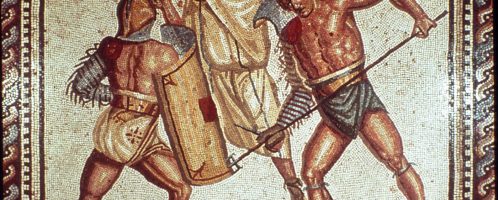
The costs of training the gladiator were very high – in the order of tens of thousands of sesterces. Hardly any school would allow itself, colloquially speaking, in a “shambles” in which many students would lose their lives. In addition, it should be emphasized that a doctor was often admitted to the arena so that he would quickly treat the wounded and prevent a possible permanent loss of health. The doctor then assessed which gladiator was fit for the fight, and which, after his wounds, was crippled.
Fragmented ancient papyrus which was sent by a Roman soldier named Aurelius Polion to his family. In it, the soldier complains that he does not receive letters from them and that he feels as if they treated him as a “stranger”. The object is dated to the beginning of the 3rd century CE and was found in Egypt.

A military sandal (caliga) made of leather, preserved to our times, in good condition. The object was found in Qasr Ibrim, in the south of Egypt. The artefact is dated to the 1st BCE – 1st century CE. Currently, it is housed in the British Museum in London.

Alea iacta est – this saying, literally meaning “the die is cast”, knows probably everyone who had any contact with the European Civilization, which arose, among others, from the Greco-Roman traditions. But where – in what place – Gaius Julius Caesar uttered (if not the apocrypha) those memorable words?