Women poisoned their husbands
Titus Livius mentions that approximately 170 women of prominent families were convicted in 331 BCE for poisoning their husbands. Other sources mention even larger numbers.
If you have found a spelling error, please, notify us by selecting that text and pressing Ctrl+Enter.
The world of the ancient Romans was rich in extraordinary, and sometimes even surprising, facts. We draw our knowledge of Roman daily life, customs, and mentality primarily from works left by ancient writers and historians. It is thanks to them that we discover information that is astonishing today – sometimes even hard to believe. Below are some interesting facts that reveal a lesser-known and less obvious side of the Roman world.
I encourage you to submit your own suggestions and to report any corrections or inaccuracies.
Titus Livius mentions that approximately 170 women of prominent families were convicted in 331 BCE for poisoning their husbands. Other sources mention even larger numbers.

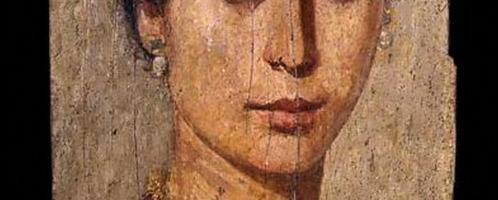
Beautiful portrait of a woman from the 2nd century CE from Roman Egypt. The painting was made on wood and placed on an Egyptian mummy.
According to the message of Titus Calpurnius Siculus, a Roman poet from the 3rd century CE, in ancient Rome, in the arenas of amphitheatres, bears were supposed to appear hunting for seals. The writer specifically mentions here an event during the reign of Emperor Nero (54-68 CE).

The appearance in Roman mythology of Cybele is associated with defeats during the Second Punic War. In 205 BCE The Senate called on a college of priests to consult the Books of Sibyl about the results of the ongoing war. The priests have issued a verdict that the only thing that can save Italy in this tragic hour is to bring a new goddess to Rome.

In ancient Rome, a Roman salute performed with the right hand (called dextera or dextra) meant trust, friendship and loyalty or simple greeting.