If you have found a spelling error, please, notify us by selecting that text and pressing Ctrl+Enter.

Curiosities of ancient Rome

The world of the ancient Romans was rich in extraordinary, and sometimes even surprising, facts. We draw our knowledge of Roman daily life, customs, and mentality primarily from works left by ancient writers and historians. It is thanks to them that we discover information that is astonishing today – sometimes even hard to believe. Below are some interesting facts that reveal a lesser-known and less obvious side of the Roman world.

I encourage you to submit your own suggestions and to report any corrections or inaccuracies.

De agri cultura – Cato’s work on farm management

De agri cultura (On farming) is one of the oldest works of Roman literature, written by Cato the Elder (Marcus Porcius Cato, lived in the years 234-149 BCE) in the 2nd century BCE. It is the first surviving textbook on agriculture in Latin literature. The work was created with landowners in mind and aimed to provide them with practical advice on farm management.

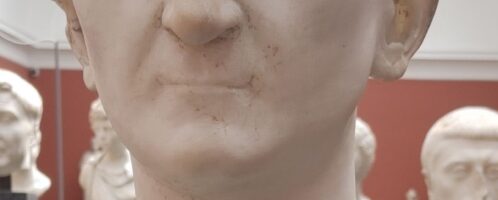
Bust of an older man – the so-called patrician Torlonia. Considered to be a likeness of Cato the Elder

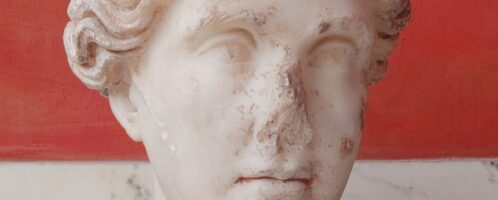
Venus on Roman sculpture

Venus on Roman sculpture. The object was discovered in the Baths of Hadrian in Aphrodisias in Asia Minor; dating back to the 2nd century CE. The artifact is located in Ny Carlsberg Glyptotek in Copenhagen (Denmark).

Venus on Roman sculpture

Roman woman depicted on sculpture

Roman woman depicted on a sculpture from the mid-1st century CE. The object was discovered in the Licinian tomb in Rome. The artifact is located in Ny Carlsberg Glyptotek in Copenhagen (Denmark).

Roman woman depicted on sculpture

Narcissus – wrestler and trainer who killed Commodus

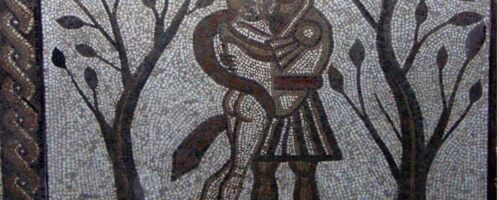
Narcissus was a Roman wrestler and gladiator who went down in history for participating in a conspiracy to kill Emperor Commodus (reigned 177-192 CE). He was the emperor’s wrestling coach, but as Commodus became increasingly tyrannical and unstable, a conspiracy was formed against him. According to historical records, Narcissus killed Commodus on December 31, 192 CE.

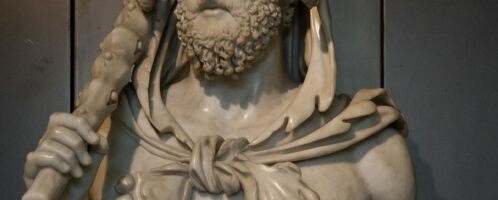
Commodus as Hercules

Lucerna – what was it used for by ancient Romans?

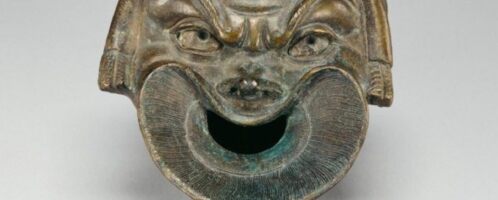
Roman oil lamp (lucerna) is an everyday item that was widely used in ancient Rome to illuminate homes, temples and other spaces. Made of clay, bronze, and sometimes marble, these lamps had a characteristic shape with a spout for the wick, which was immersed in olive oil – the main fuel for this type of lamp.

Roman oil lamp

Milo of Croton – ancient sports star

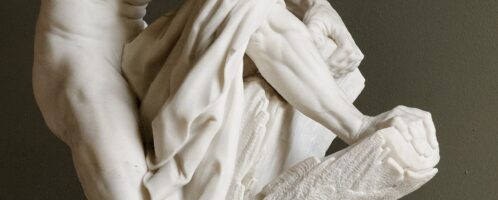
One of the most famous athletes of the ancient world was Milo of Croton. He was a Greek, and his fame even reached Rome and survived for centuries. Milo was a legendary wrestler who lived in the 6th century BCE and was a six-time winner of the Olympic Games and a six-time winner of the Delphi Games. His strength and skills were so impressive that his figure became an inspiration in Roman culture, and his exploits were even written about in Rome.

Milo of Croton

What was fibula in ancient Rome?

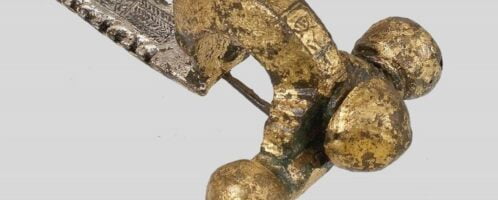
In ancient Rome, a fibula was a type of decorative pin, used mainly as a fastener for clothing such as tunics or coats. It was an important element of the wardrobe, serving both a practical and decorative function.

Roman "crossbow" shaped fibula

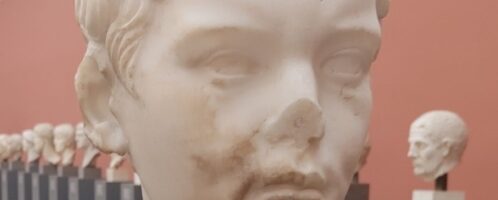
Sculpture showing boy

Sculpture showing a boy in his youth, from the 1st century CE. The object was discovered in the Tomb of Licinius in Rome. The artifact is located in Ny Carlsberg Glyptotek in Copenhagen (Denmark).

Sculpture showing boy

Spelling error report

The following text will be sent to our editors: