If you have found a spelling error, please, notify us by selecting that text and pressing Ctrl+Enter.

Curiosities of ancient Rome

The world of the ancient Romans was rich in extraordinary, and sometimes even surprising, facts. We draw our knowledge of Roman daily life, customs, and mentality primarily from works left by ancient writers and historians. It is thanks to them that we discover information that is astonishing today – sometimes even hard to believe. Below are some interesting facts that reveal a lesser-known and less obvious side of the Roman world.

I encourage you to submit your own suggestions and to report any corrections or inaccuracies.

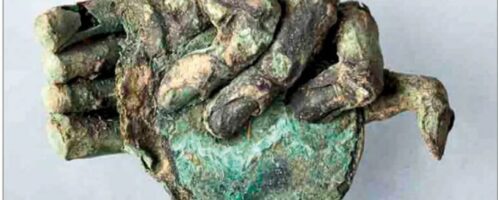
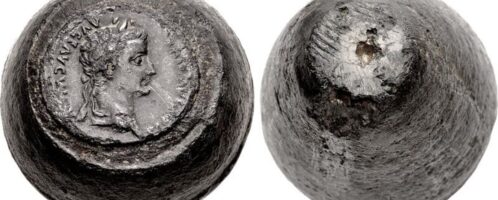
Roman stamp used to mint Roman coins

Roman stamp used to mint Roman coins. This is an extremely rare artifact of this type that has survived to this day. The object was discovered in Lugdunum (now Lyon, France), on the site of a former mint. Dated to 14-37 CE.

Roman stamp used to mint Roman coins

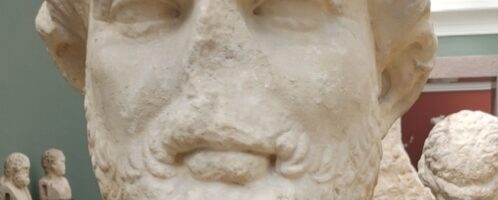
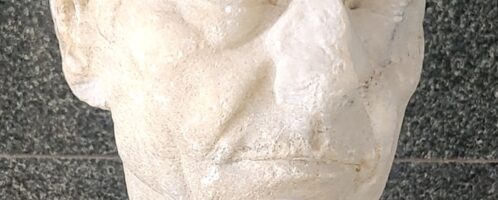
Roman sculpture depicting Philip II

Roman sculpture depicting Philip II, king of Macedon from 359-336 BCE, who was the father of the famous Alexander the Great. The object is a copy of a Greek original from the 4th century BCE. The artifact is located in Ny Carlsberg Glyptotek in Copenhagen (Denmark).

Roman sculpture depicting Philip II

Differences Between a Municipality and a Roman Colony

Although both the municipality and the Roman colony refer to forms of urban organization in ancient Rome, they differed significantly in terms of administrative structure, autonomy, and relations with central authority. Understanding these differences is crucial for a fuller comprehension of the functioning of the Roman legal and administrative system.

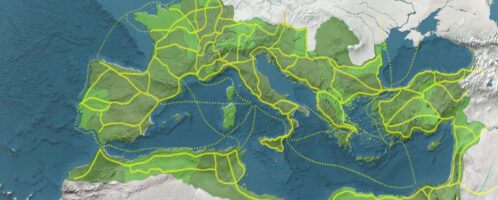
Map of the Roman Empire

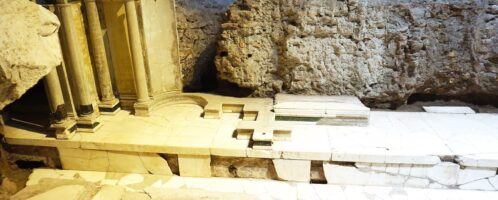
Touch traces of “Quo Vadis?”… – Domus Transitoria

Domus Transitoria is a very mysterious palace, about which much less is known than about other residences of Roman emperors. Other palaces of the Caesars: Domus Augustea, Domus Tiberiana, Domus Augustana, and Domus Flavia, Domus Severiana and even Domus Aurea) can still be admired on Palatine Hill or extensive ruins nearby. Meanwhile, surprisingly little is known about Nero’s first palace. Suetonius writes in the Lives of the Caesars that Nero built it to connect various residences inherited from his ancestors on the Palatine, Velia, Oppius and Esquiline. But this palace was destroyed during the great fire of Rome in 64 CE. Nero did not rebuild it, and on its ruins, he soon built Domus Aurea.

Remains of Domus Transitoria

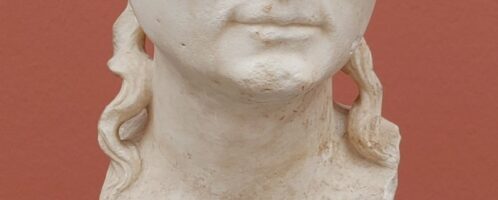
Elderly woman on Roman sculpture

Elderly woman on a Roman sculpture. The object dates back to the reign of Octavian Augustus (27 BCE – 14 CE). The artifact is located in Ny Carlsberg Glyptotek in Copenhagen (Denmark).

Elderly woman on Roman sculpture

You’re starving and you pretend you’re not

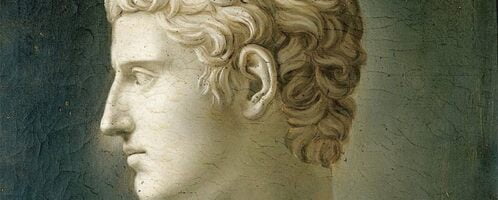
The battle of Philippi (43 BCE) in the far north of Greece, lost by the optimates, put an end to dreams of restoring the republic. Brutus and Cassius were dead, and soon after Cicero’s beheaded head was hung on a Roman rostra. The road to the empire led through Actium (31 BCE) and the victory of Augustus, or perhaps Gaius Octavian, over Antony and Cleopatra.

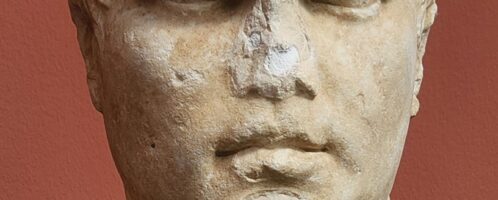
Octavian Augustus

Spelling error report

The following text will be sent to our editors: