If you have found a spelling error, please, notify us by selecting that text and pressing Ctrl+Enter.
Curiosities of ancient Rome
The world of the ancient Romans was rich in extraordinary, and sometimes even surprising, facts. We draw our knowledge of Roman daily life, customs, and mentality primarily from works left by ancient writers and historians. It is thanks to them that we discover information that is astonishing today – sometimes even hard to believe. Below are some interesting facts that reveal a lesser-known and less obvious side of the Roman world.
I encourage you to submit your own suggestions and to report any corrections or inaccuracies.
Lack of enemies is threat
Plutarch mentions that most of the people claimed that the destruction of Carthage and the conquest of Greece gave Rome security and a chance of harmonious existence. The Greek historian, however, cites the opinion of Roman politician – Nasica, who believed that such situation is in fact a threat to Roman statehood.

Flowers around Colosseum
Flowers from North Africa are still growing around the Colosseum. Their seeds were probably brought to Rome thanks to lions and other exotic animals (eg. in fur), which were brought to the capital for the Games. In the nineteenth century, nearly 420 different types of plants were cataloged around the Flavian Amphitheater.

Wars only in summer
Ancient Romans as farming people wars only fought in the summer between the times of sowing and harvest, and before winter, when military maneuvers were more difficult. For the first time in the winter, Rome led the war at the beginning of the fourth century BCE, when the Romans began to siege the Etruscan city of Veii.
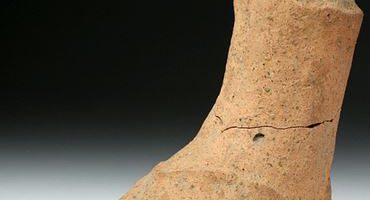
Roman votive offering in form of leg
Roman votive offering in the form of a leg. Object dated to the 1st – 3rd century CE; made of terracotta.
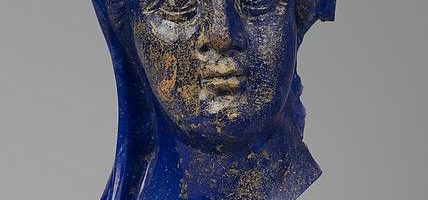
Roman glass image of woman
Roman glass portrait of a woman. Dated back to 1st – 2nd century CE.
Dried manure is medicine?
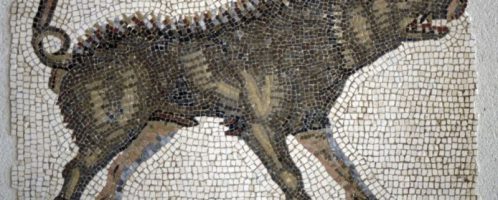
From the category of alternative methods of treatment. Pliny the Elder states that wounds and bruises are best treated with dried dung of wild boar taken in spring. Such a method is recommended, for example, in the case of wounds, after the coachman was pulled behind a chariot or some part of the body was crushed by the wheel.