
If you have found a spelling error, please, notify us by selecting that text and pressing Ctrl+Enter.
Curiosities of ancient Rome
The world of the ancient Romans was rich in extraordinary, and sometimes even surprising, facts. We draw our knowledge of Roman daily life, customs, and mentality primarily from works left by ancient writers and historians. It is thanks to them that we discover information that is astonishing today – sometimes even hard to believe. Below are some interesting facts that reveal a lesser-known and less obvious side of the Roman world.
I encourage you to submit your own suggestions and to report any corrections or inaccuracies.
Reconstruction of image of dictator Sulla
An attempt to reconstruct the image of dictator Lucius Cornelius Sulla based on a bust from Munich. He was a life appointed dictator, and his rule was the time of persecution of political opponents – mainly supporters of Gaius Marius who took power in Rome, in the absence of Sulla. Sulla returned to Rome and took over the full power with the help of his army.

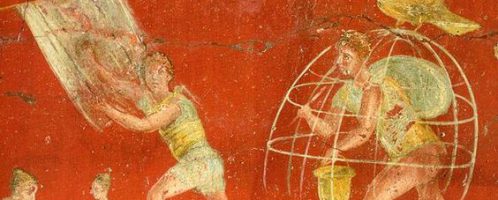
Roman fresco showing fullers
Roman fresco from the fullonica (dyer’s shop) of Veranius Hypsaeus in Pompeii. Object dated to I century CE; found in Pompeii. Now located in the National museum of Naples.
Roman way for hangover
Romans recommended a cold drink from the mixed raw owl’s eggs, the fried intestines of the sheep, spiced with milk thistle extract and charred bread.

Roman door planks found at Vindolanda
Roman door planks found at Vindolanda with carved numerals – possibly showing barrack room numbers.

Food tester in Rome
Pregustator was a person (usually a slave) who tried to eat or drink before serving. The rulers had a whole host of such testers, afraid to be poisoned.

Carved footprints in Italica
Footprints carved in marble. The object was found in the Roman amphitheater in Italica (province of Sevilla, Spain).

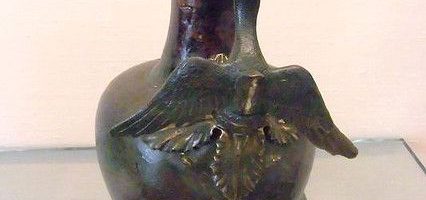
Beautifully decorated Romn jar with eagles
Beautifully decorated bronze jar, with representations of eagles. Object found in Herculaneum. Dated back to 1st century CE.
Name of month January
Name of the month January comes from the Roman god Janus. The Latin name of the month of January is Ianuarius. He was the god of all origins, and also the guardian of doors, gates, passages and bridges, the patron of alliances and agreements. His main celebration was the first day of the year (calendae Ianuariae), when people made each other wishes and gave small gifts (such as a baked cake called ianual) for a good omen; at that time, newly elected officials were also appointed.
