Roman statue showing lion
Roman marble statue showing a lion. Object dated to the 2nd century CE. The artifact is in the National Archaeological Museum in Naples.
If you have found a spelling error, please, notify us by selecting that text and pressing Ctrl+Enter.
The world of the ancient Romans was rich in extraordinary, and sometimes even surprising, facts. We draw our knowledge of Roman daily life, customs, and mentality primarily from works left by ancient writers and historians. It is thanks to them that we discover information that is astonishing today – sometimes even hard to believe. Below are some interesting facts that reveal a lesser-known and less obvious side of the Roman world.
I encourage you to submit your own suggestions and to report any corrections or inaccuracies.
Roman marble statue showing a lion. Object dated to the 2nd century CE. The artifact is in the National Archaeological Museum in Naples.

Aes signatum was a primitive form of Roman money, succeeding aes rude – copper nuggets. The exact date of the introduction of these “coins” is unknown, but it is believed that it took place in the middle of the 5th century BCE, and is related to the codification of Roman law (the so-called law of the Twelve Tables).

Contemporary stairs, which are located in one of the tenement houses in Pompeii. Wooden ancient structures of this type have not survived our times. The business was usually conducted at ground level, with living quarters upstairs.

Roman fresco showing Maenad and Amor. Object dated to the 1st century CE; discovered in Pompeii. The artifact is in the National Archaeological Museum in Naples.

In the ancient port of Arles on the Rhône, in 2014, French researchers made an astonishing discovery. They found a Roman water supply network – eight threads of lead pipes laid across the Rhône bed, at a depth of 12 meters. Each section of pipe laid on the bottom is approximately 200 meters long. These sections consist of 3-meter-long sections.

Ancient sculpture showing the goddess Athena Parthenos (Athena-Virgin). It is a Roman copy from the 2nd century CE of Greek famous original made by Phidias (5th century BCE).

In the Roman family, the husband and father were the head of the family. “Paternal authority” (patria potestas) lasted as a rule for life. It died out only with the death patris familias. Then the wife of the deceased (if she was subject to his authority), his children (but not grandchildren) and further descendants became persons sui iuris ([persons] of their right).

Octavian Augustus, the first emperor of the Roman Empire (27 BCE – 14 CE), from the beginning of his office, proclaimed the need to correct morals, criticizing promiscuity and a taste for luxury. As it turned out, he had to start repairing Roman society from his own home.
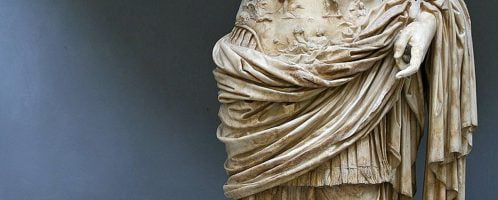
Many of the nicknames of Roman emperors in use today were not used in official documents. Caracalla even got his nickname because of his fondness for a long Gallic cloak with a hood (the prototype of the monastic habit), which in Rome was called caracalla.

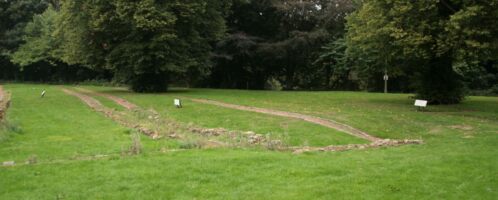
Cramond Fort is the remains of one of the few stone Roman forts on the Antonine Wall. It is located in the north-western district of Edinburgh, near the Almond River, in close proximity to the Firth of Forth (North Sea).