If you have found a spelling error, please, notify us by selecting that text and pressing Ctrl+Enter.

Curiosities of ancient Rome

The world of the ancient Romans was rich in extraordinary, and sometimes even surprising, facts. We draw our knowledge of Roman daily life, customs, and mentality primarily from works left by ancient writers and historians. It is thanks to them that we discover information that is astonishing today – sometimes even hard to believe. Below are some interesting facts that reveal a lesser-known and less obvious side of the Roman world.

I encourage you to submit your own suggestions and to report any corrections or inaccuracies.

Where was Roman toilet located?

Almost all private Roman houses in Herculaneum and Pompeii had toilets. They were usually in the kitchens or under the stairs (Herculaneum Casa del Gran Portale house). Such solitary confinement rooms often had no doors, which would be unthinkable these days.
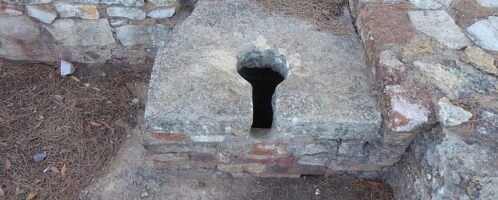
Roman toilet in Cerro da Vila

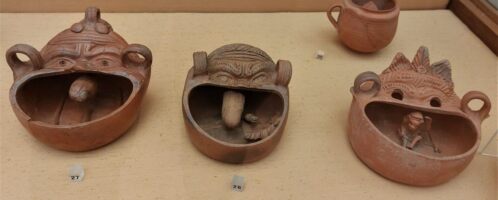
Roman ceramic drinking cups

Roman ceramic drinking cups in the shape of masks with phalluses inside. The objects are on display at the National Archaeological Museum in Naples.

Roman ceramic drinking cups

Roman deadlift

It is said that the ancient Greeks and Romans practised the deadlift (deadlift). Lifting a weight from the ground is the oldest “utility” movement and has been proven to be the most powerful for centuries. Heavy stones were grabbed and lifted off the ground.

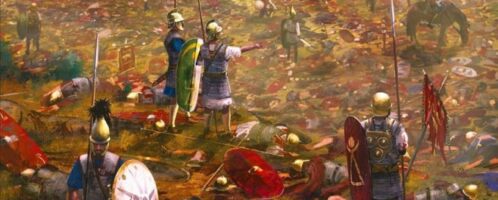
Ancient battlefield

Nomenclature of discovered buildings in Pompeii

Pompeii is one of the most amazing archaeological discoveries in the history of mankind. A well-preserved ancient city, with the remains of people who did not manage to beat the destructive power of Vesuvius in 79 CE. However, what gives us the most information about the life of those times are the preserved artefacts and buildings.

Reconstruction of the garden in the Vettii house in Pompeii

Menenius Agrippa’s fable

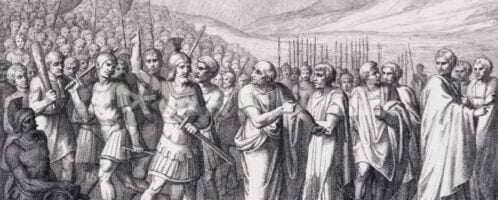
In 494 BCE there was a so-called first plebeian secession, which was a rebellion against the patrician rule in Rome. To convince the crowd to stop the rebellion, the ruling class sent a special emissary. It was a certain Menenius Agrippa – consul for 503 BCE – who was friendly with the masses.

Secessio plebis on Mons Sacer

Argentarii – Roman bankers

Roman bankers appeared in the 3rd century BCE. Initially, they were called trapezitai in Greek, but then the Latin name argentarii came into use.

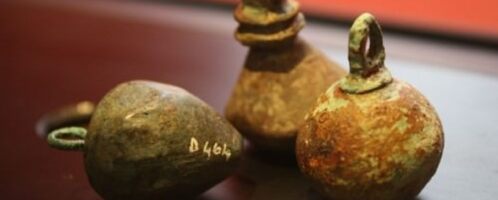
Roman balance weights

Spelling error report

The following text will be sent to our editors: