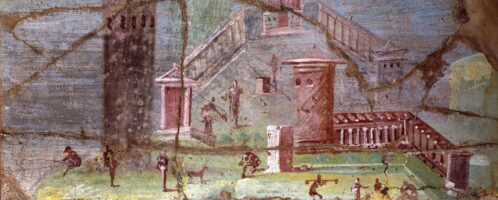
Roman fresco showing maritime villa
Roman fresco depicting a maritime villa. The object dates to 20–45 CE; found in Pompeii.
If you have found a spelling error, please, notify us by selecting that text and pressing Ctrl+Enter.
The world of the ancient Romans was rich in extraordinary, and sometimes even surprising, facts. We draw our knowledge of Roman daily life, customs, and mentality primarily from works left by ancient writers and historians. It is thanks to them that we discover information that is astonishing today – sometimes even hard to believe. Below are some interesting facts that reveal a lesser-known and less obvious side of the Roman world.
I encourage you to submit your own suggestions and to report any corrections or inaccuracies.
Roman fresco depicting a maritime villa. The object dates to 20–45 CE; found in Pompeii.
Roman fresco depicting a globe with a mountain. The object dates to the 1st century CE and was found at the Villa Boscoreale near Pompeii. The artifact is located at the Metropolitan Museum of Art, New York (USA).

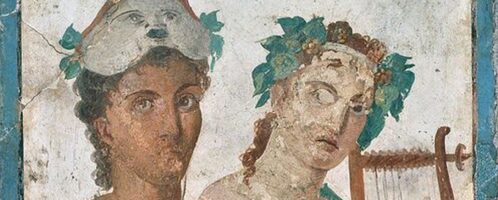
Roman fresco from Pompeii depicting a man wearing a theatrical mask and a woman with a wreath playing a lyre. The object is located at the National Archaeological Museum in Naples, Italy. Dated to the 1st century CE.
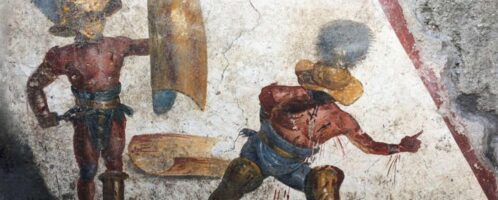
Fragment of a Roman fresco depicting a fight between two gladiators. The painting was found north of the Pompeii archaeological park.
In the Roman baths of the Emperor Caracalla (reigned 211-217 CE), there is a preserved fresco depicting Anubis, which dates back to the 2nd century CE.

Roman amphorae made of banded agate, dating from around 1st BCE – 1st century CE. An amphorae was a small, amphora-shaped vessel usually used for storing expensive oils, perfumes or aromatic essences.

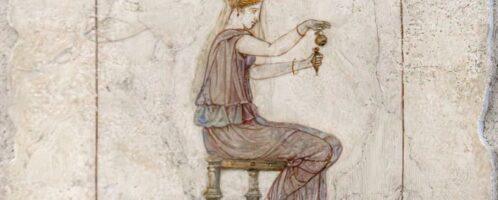
A fresco from the Roman villa known as Casa della Farnesina, depicting a woman pouring perfume. Dating back to the 1st century BC, it is located in the National Museum in Rome.
During the First Punic War (264-241 BCE), the Roman commander Marcus Atilius Regulus was said to have fought – according to Pliny the Elder – an extraordinary battle not with the Carthaginians, but with a giant serpent (this is suggested as the first mention of a dragon in Roman culture) on the Bagradas River in Africa (present-day Tunisia).

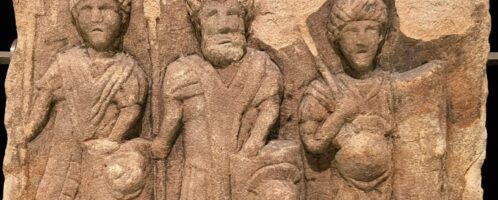
Fragment of a Roman tombstone depicting three legionaries. The object was discovered on Croy Hill on the Antonine Wall and is currently in the collections of the National Museum of Scotland in Edinburgh, Scotland.
Bust of Agrippina the Younger, made of marble and dated to the 1st century CE. The object is located at the Rhode Island School of Design Museum (USA).