If you have found a spelling error, please, notify us by selecting that text and pressing Ctrl+Enter.

Curiosities of ancient Rome (People)

People are curiosities dedicated to figures from the world of ancient Rome and antiquity. This category includes lesser-known facts, anecdotes, and interesting information about emperors, generals, politicians, thinkers, and other heroes of the Roman Empire, revealing a lesser-known side to them.

Sulla’s divine guide

The Roman politician Lucius Cornelius Sulla Felix, also known as Sulla, lived from 138-78 BCE. In the history of Rome, he went down as one of the most controversial figures of the Roman Republic. As an efficient military and politician, he is known for the first Roman civil war and the adoption of the office of dictator (82 BCE) for life. He was cruel in getting rid of political opponents. A certain goddess of war, Bellona, ​​played a large role in Sulla’s enormous career.
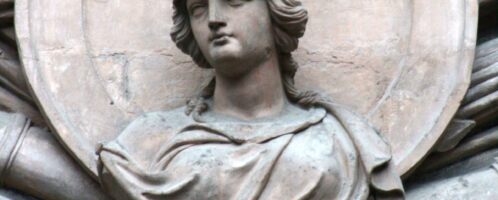
Bellona

Aristonicus (Eumenes III) – self-proclaimed king of Pergamon

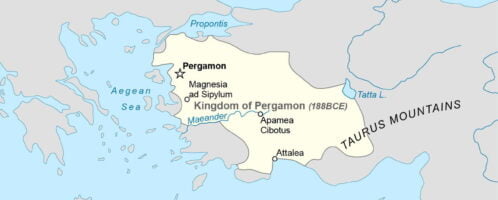
In 133 BCE, Attalus III died on the throne of the Kingdom of Pergamum (the western part of present-day Turkey). In his will, he handed over his country to Roman rule. As the Romans were very slow in securing their rights, a certain Aristonicus raised a rebellion against the decision of the former king.

Kingdom of Pergamon in 188 BCE

Tertullian – knight of faith

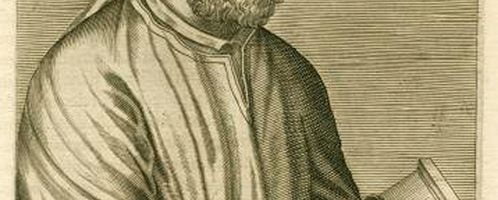
Tertullian was a well-educated Roman orator and jurist who lived in North Africa at the turn of the 2nd/3rd century CE. In about 190 CE he was baptized and became a zealous supporter and defender of Christianity. He founded his own Tertullian sect, which preached moral rigour and forbade escape from persecution; it mandated fasts that other Christians did not practice.

Tertullian

Bernice, beloved of caesar Titus

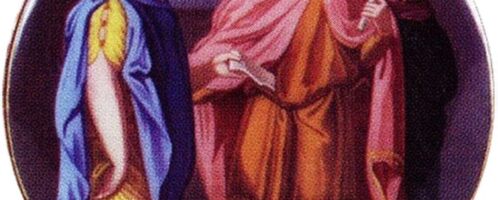
Roman Empire was lucky to have unusual female characters. And although not all of them became empresses, they were often remembered by History. This was the case with caesar Titus, son of Vespasian, a descendant of the Flavian family. Officially, his wives were Arrecina Tertulla and Marcia Furnilla. One of them was the mother of his only daughter, Julia.

Titus and Berenice in the painting

Crates of Mallos – creator of first globe

Crates of Mallos, the Greek Stoic philosopher and grammarian of the ruler of Pergamon, is known as the creator of the first globe (c. 150 BCE) – a spherical model of the Earth. His globe differs from the modern ones for a simple reason – in his time people did not know as much about all the continents as they do today.

Globe of Crates of Mallos

Certain Calvisius Sabinus

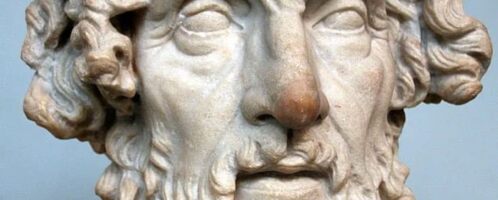
Seneca the Younger, a Roman philosopher and writer from the 1st century CE, mentions in his letters Calvisius Sabinus – a wealthy and respected Roman who had such a bad memory that he couldn’t even remember the names of Homeric heroes.

Roman copy of a Hellenistic sculpture  from the 2nd century BCE depicting Homer

Syagrius – king of Romans

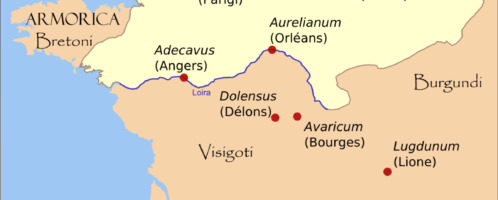
Syagrius (430-486 or 487 CE) was a Roman commander and the last governor (dux) of Gaul – called by the surrounding barbarian tribes “king of the Romans1” (rex Romanorum). He was the son of the Roman governor Egidius.

The reign of Syagrius

Death of emperor Augustus

In ancient Rome, the brutal, violent death of the ruler was inscribed in the logic of power to such an extent that today it is often said that the profession of “emperor” was the most dangerous profession in the world. Of the twelve emperors who died in the first century CE, only four died naturally. Murder as a way to change power was so obvious that natural death always aroused suspicion and was a source of conjecture as to whether no one had contributed to it.

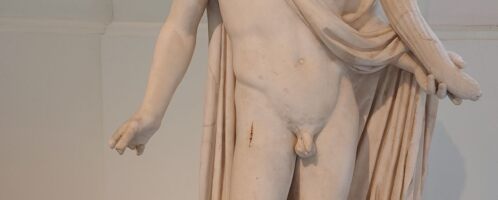
Roman sculpture showing Octavian Augustus

Calgacus the Caledonian

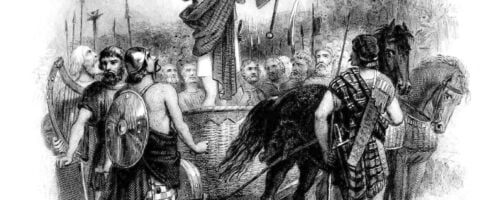
Calgacus was the first Caledonian (inhabitant of present-day Scotland) mentioned in Roman sources. Tacitus describes him as the leader of the Caledons, a man of self-respect and an excellent orator. He had red hair and a powerful build. His name in the Celtic language meant “having a sword”.

19th-century engraving showing Calgacus speaking

Attila – leader of Huns

Attila – the leader of Huns, one of the most important figures in the history of the late-antique world. Together with his brother Bleda, he inherited power from his uncle – Ruas. In the year 445 CE killed his brother while hunting, allegedly mistaking him for a bear. He then became the independent ruler of the Hunnic Empire. In the 40s of the 5th century, the Eastern Roman Empire paid Attila several thousand pounds of gold of various kinds of tribute and tribute.

Eugène Delacroix, Attila

Spelling error report

The following text will be sent to our editors: