If you have found a spelling error, please, notify us by selecting that text and pressing Ctrl+Enter.
Curiosities of ancient Rome (Unknown facts)
Unknown Facts are curiosities revealing little-known, surprising, or rarely discussed information from the world of ancient Rome and antiquity. This category includes unusual details, curiosities, and facts that offer a less obvious perspective on the Roman Empire.
Fall of consular dignity in middle of 1st century BCE
In the middle of the 1st century BCE, the Roman republic experienced a real systemic crisis. A perfect example of this is 59 BCE when the consulate was held by Marcus Calpurnius Bibulus (son-in-law of Caton the Younger) and Gaius Julius Caesar.
Could Augustus have had penchant for young girls?
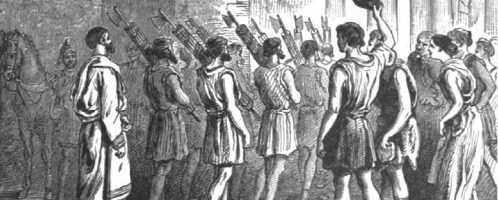
Octavian Augustus (63 BCE – 14 CE) like virtually every famous personage, and even more so the ruler had to reckon with numerous rumours about himself. One of them was allegedly the emperor’s adoration of deflowering virgins, whom Livia was to send him from various parts of the Empire.


Roman medicine was of high standard
Roman medicine had its high level, especially in the legions. Celsus, a Roman scholar in the 1st century CE, claims that military doctors knew human anatomy much better than their colleagues in private practice.

Roman absolutism
From the end of the 3rd century CE, the emperor ceased to be princeps to become “domine” – dominat. We owe the new type of government to Diocletian, who ruled from 284 to 305 CE. The emperor was now omnipotent, he could change the law as he pleased, and the appearance of a republic vanished.

Pangiallo – yellow bread
In the Latium region to this day, one of the typical Christmas cakes is the so-called yellow bread – pangiallo. Its roots go back to the era of the Roman Empire.

Pine was sacred tree
Pine (Pinus pinea) has been a sacred tree in the Apennine Peninsula since the Punic Wars (well before the advent of our era). A frequent element of the landscape, it was a symbol of eternity.

What did Chinese call Roman Empire?
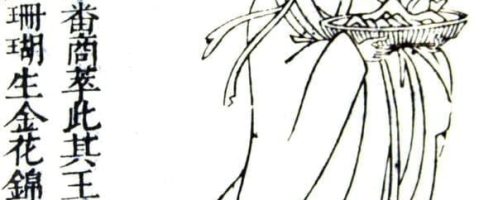
Daqin (literally “Great Qin”) was the historic name for the Roman Empire in China. This name comes from the Chinese dynasty founded by Qin Shihuangdi, which ruled the Qin state. This ruler was also the first emperor of a united China in 221 BCE.
Fear of death
Roman citizen Caecina Petus was involved in a plot (42 CE) against Emperor Claudius. Sentenced to death by the emperor, he was to take his own life. He hesitated, however, and could not dare to deal himself a fatal blow.