If you have found a spelling error, please, notify us by selecting that text and pressing Ctrl+Enter.
Curiosities of ancient Rome (Unknown facts)
Unknown Facts are curiosities revealing little-known, surprising, or rarely discussed information from the world of ancient Rome and antiquity. This category includes unusual details, curiosities, and facts that offer a less obvious perspective on the Roman Empire.
Imperial staff in ancient Rome
In 1726, a great tomb (columbarium) was discovered at via Appia, in which, as it turned out, the ashes of almost a thousand slaves and freedmen belonging to the first empress Livia were buried. In the tomb, there were also badges with names and professions written on them.


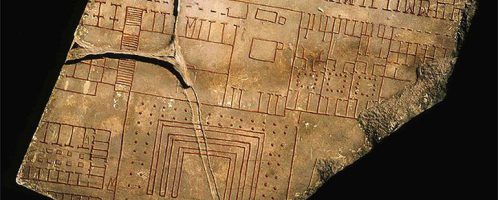
Form Urbis Romae – map of Rome
Form Urbis Romae also called (Form Urbis Severiana) is from the times of the Severan dynasty (193-235 CE) a map of ancient Rome. It is the only plan of this type preserved from antiquity.
Different opinions about Nero
Already ancient s had different opinions about Emperor Nero; some even gave some “positive” feedback. When asked by the flatterers, the philosopher Apollonius of Tyana replied, “I think of him better than you, for you think he should sing and mine should be silent”1.

Holy water in antiquity
Holy water is associated with the Christian faith. It is used in baptisms, blessing and expelling evil. Few, however, realize that the holy springs occurred in other religions, including the ancient Greeks and Romans.

Anomalies in nature
Ancient Romans were often interested in anomalies in nature. Therefore, Octavian Augustus (63 BCE – 14 CE) received an armless person from India – a boy 60 cm tall. Such persons were held for entertainment (they were also shown in public).

Silk and Seres – Romans about Chinese
Chinese were referred to by the ancient Romans as the Seres1. The Romans associated this people far east of the borders of the Empire primarily for the beautiful silk fabric, on which the Chinese held a monopoly. The Middle Kingdom for centuries had enormous profits from the sale of silk, which was very much in demand by the Roman aristocracy.
Roman support system for poorest
Ancient Romans knew that if a society was to be economically viable, it had to be well fed. Therefore, there was a social welfare system that guaranteed the distribution or sale of grain at reduced prices (the so-called frumentationes).