If you have found a spelling error, please, notify us by selecting that text and pressing Ctrl+Enter.

Curiosities of ancient Rome (Unknown facts)

The world of ancient Romans abounded in a number of amazing curiosities and information. The source of knowledge about the life of the Romans are mainly works left to us by ancient writers or discoveries. The Romans left behind a lot of strange information and facts that are sometimes hard to believe.

Cabbage goo – drug of Cato

Cato the Elder, author of the work De agri cultura, recommended the use of cabbage to compress wounds, swelling, burns and even bone dislocations. In turn, for arthritis, he recommended chopped, raw cabbage mixed with coriander and cured cabbage mixed with vinegar and honey.

Bust of an older man – the so-called patrician Torlonia. Considered to be a likeness of Cato the Elder

Black stone from Emessa

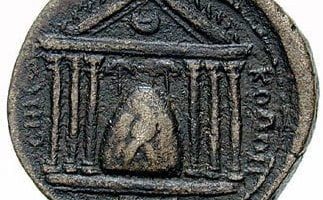
Elagabalus was less than fourteen years old when he ascended the throne on May 16, 218 CE. Lost, he sought support from a god – El Gabal, whom he had served until recently. He brought from Emessa the black stone symbolizing Baal (most likely a piece of a meteorite; Herodian mentions that it “fell from heaven”) and made sacrifices before him, killing sheep and cows with his own hands.

Black stone from Emessa on a Roman coin

Why do we learn so little about Byzantine history at school?

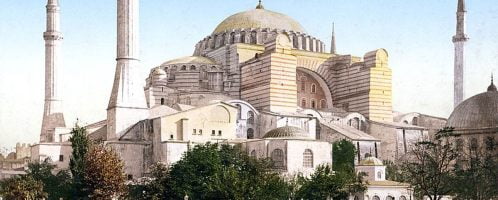
The Byzantine Empire was a continuation of the Eastern Roman Empire, which was created as part of the division of the Roman Empire in 395 CE, on the initiative of Emperor Theodosius I. It was also thanks to this ruler that Christianity became a state religion that began to have an increasing influence on the centre of power. The fall of Rome in 476 CE and the return of the insignia of power to Constantinople meant that the continuity of the Roman state was based only on the emperors from the east.

Hagia Sophia in 1897

Sunday is day off from work

On March 3, 321 CE Roman Emperor Constantine the Great issued an edict which instituted Sunday (dies Solis, meaning “the day of the sun”) a day off from work in crafts and trade but did not prohibit agricultural work.

Offices were closed, except for those responsible for supervising the liberation of enslaved people.

The ordinance changed the week’s length (until now there was an 8-day week, the so-called nundinae) and sanctioned the Christian custom of celebrating the first day of the week (Sunday).

Emperor Constantine I

Tragic earthquake in Antioch in 115 CE

At the end of 115 CE, Emperor Trajan travelled to Antioch, which he had chosen as his headquarters during an operational break in the Roman-Parth War. He was to devote this time to recuperation and overseeing the process of creating new provinces in Armenia and Mesopotamia. Unexpectedly, however, during this time, there was a massive earthquake.

Ancient road in Antioch

Spelling error report

The following text will be sent to our editors: