If you have found a spelling error, please, notify us by selecting that text and pressing Ctrl+Enter.

Curiosities of ancient Rome (Unknown facts)

The world of ancient Romans abounded in a number of amazing curiosities and information. The source of knowledge about the life of the Romans are mainly works left to us by ancient writers or discoveries. The Romans left behind a lot of strange information and facts that are sometimes hard to believe.

BT KN’NYM – Punic house

The most important building for any civilization, culture or family is undoubtedly the house. Whether it is a snow refuge in the polar regions or tents in African deserts, the house always serves the same function for its users, and allows scientists to learn, at least to a small extent, the everyday life of peoples from the past.
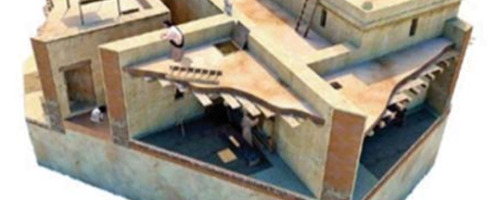
Reconstruction of the Phoenician house

Celts and chariots

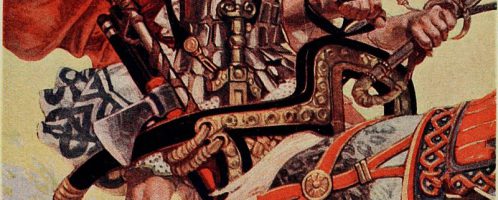
The oldest Praceltic name for a war chariot recorded among the Gauls by older ancient Greek authors is reda – a word with a very ancient Proto-Indo-European lineage- a similar one exists in the language of which the Protaindoarian Vedas were written. In the indigenous Iranian language the word riad, meaning driving, has been preserved.

An irish hero who fights on a chariot

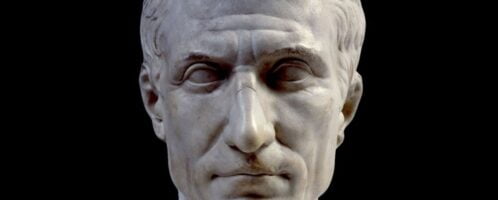
Celtic resistance against Caesar

A special role in inciting resistance against the Romans was played by the extraordinary authority of the supernatural “intellectual elite” of the Celts – a network of centres bringing together the Celtic priesthood, a huge confraternity of druids, extending on both sides of the English Channel and maintaining close communication with each other.

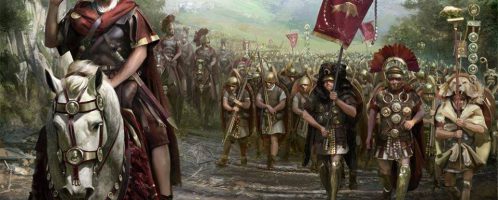
Caesar on the march

Alectriomancy – fortune-telling with chickens

Romans, as a nation famous for their godly fear already in ancient times, tried to run the state as often as possible in accordance with the will of the gods read through the signs of omens. Quirites respected birds very much because it was from their flight that the future and divine intentions were foretold by means of auspices.

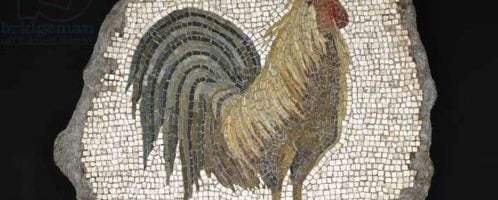
Rooster on the Roman mosaic

Roman military diploma

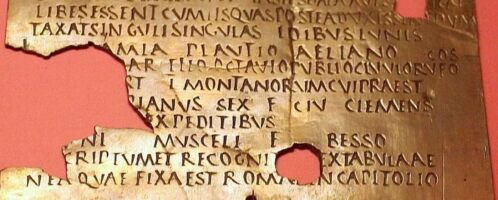
A military diploma is the modern name of Roman documents confirming the release from the army and the granting of Roman citizenship to a veteran of auxiliary units by the emperor. It existed as a reward for faithful service. The diploma was drawn up by imperial officials and displayed to the public in Rome.

Roman military diploma

Fossa Neronis – channel of Nero between Puteoli and Rome

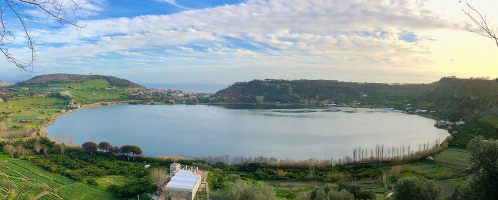
During the reign of Nero (54-68 CE), a plan appeared to dig a 257 km long water canal from Lake Avernus, near Puteoli (Pozzuoli), to the vicinity of Rome. The idea was to secure grain supplies to the capital, as ships often crashed in the final stretch between Puteoli and Rome. Established during the rule of Claudius (41-54 CE), the new port at the mouth of the Tiber meant that many ships were pushed back by storms onto the built embankments and fortifications.

Lake Avernus

Parricidia

Parricidia, was one of the most serious crimes in Roman criminal law. The term was used to refer to the killing of relatives.

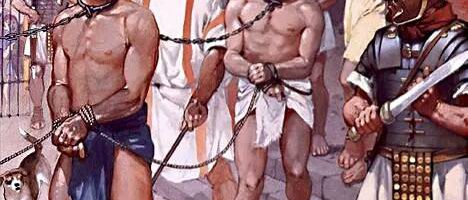
Chained slaves

Spelling error report

The following text will be sent to our editors: