If you have found a spelling error, please, notify us by selecting that text and pressing Ctrl+Enter.

Curiosities of ancient Rome (Unknown facts)

Unknown Facts are curiosities revealing little-known, surprising, or rarely discussed information from the world of ancient Rome and antiquity. This category includes unusual details, curiosities, and facts that offer a less obvious perspective on the Roman Empire.

How to capture elephant?

Claudius Aelianus, a Roman writer, states that Indians had difficulty with catching an adult elephant. That’s why they went to the swamp and there they caught small baby elephants. The favorite place of staying elephants are boggy and wet areas, where the water is galore. As they prefer to spend time in such areas, you can call the elephant a swamp animal.

People are grasping baby elephants yet gentle and meek, then they take care of them, satisfing their appetites and care for their physical condition, they use caressing expressions (elephants understand the speech of the natives). In a word – they nurse them like children and nurture, while teaching various fields. And small elephants obey them.

Herd of elephants

Most handsome Greek and Roman

Claudius Aelianus, a Roman writer, reports that, according to the ancient, one of the most handsome Greeks was Alcibiades and among the Romans Scipio. However, we do not know which Scipio was it about: Elder or Younger.

Scipio Africanus the Elder

Pork very popular in Rome

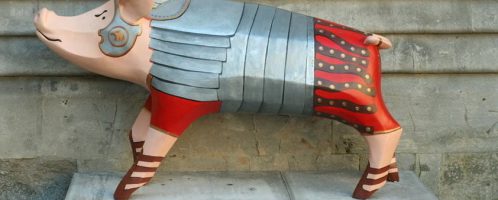
Archaeologists studying the eating habits of the Etruscans and Romans came to the conclusion that pork was the basic ingredient in the diet of Italian cuisine, both for the upper and lower classes. Meat was eaten either in the form of goulash or cooked. The richer Romans could afford to fry meat.

Pork in Rome

Ancient fast-food

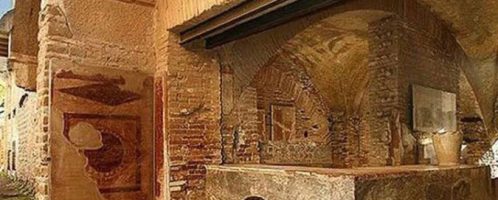
Ancient fast-food in Ostia. Probably the Romans were the first to invent “fast food” restaurants. In Pompeii, several places were discovered that offered quick food to residents. Such an ancient fast-food bar was called thermopolium (literally “a place where something warm is sold”) or opinae.

Ancient fast-food

Stroke of Valentinian I

Emperor Valentinian I in 375 CE commanded Roman troops in Illyria, where he tried to suppress the rebellion of the Sarmatians and the Quadi. The situation was so stalwart that both sides sought agreement.

Valentinian I

Drink in Scythian fashion

In ancient Greece and Rome, the wine was diluted with water. People who liked the unreported drink were considered crude, and drinking in this way was defined as “in Scythian fashion”.

Scythian drinkers

“Fabian strategy”

After the destruction of Roman army in the battle of Lake Trasimeno in 217 BCE, Quintus Fabius Maximus Verrucosus Cunctator (“the delayer”) was entrusted with the dictator’s dignity to save the Republic’s in a crisis situation. Fabius decided to avoid an open confrontation with the army of Hannibal, leading the war against the Carthaginians. His plan was to follow the legions behind Hannibal’s army at such a distance that there was no short circuit, and at the same time not lose sight of the rival.

Quintus Fabius "the Delayer"

Emporium

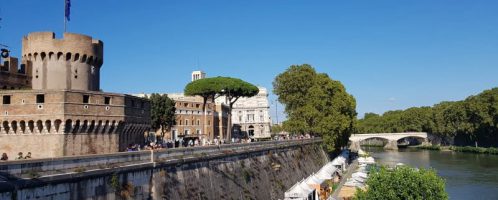
Emporium in antiquity was a municipal square where goods imported by sea were stored. In Rome, the emporium, founded in 192 BCE, was located on the banks of the Tiber River at the foot of the Aventine Hill.

Shore of the Tiber

Cooks of queen Cleopatra VII

Plutarch states that the cooks of queen Cleopatra VII had to have different sets of dishes always prepared in case her lover Mark Antony made a visit. Plutarch claims that the source of the rumor was a friend of his grandfather, who was allowed to visit the cuisine of the queen in the palace in Alexandria.

Cleopatra VII

Spelling error report

The following text will be sent to our editors: