If you have found a spelling error, please, notify us by selecting that text and pressing Ctrl+Enter.

Curiosities of ancient Rome (Unknown facts)

Unknown Facts are curiosities revealing little-known, surprising, or rarely discussed information from the world of ancient Rome and antiquity. This category includes unusual details, curiosities, and facts that offer a less obvious perspective on the Roman Empire.

Roman cursive

On the tombstone visible in the photo I came across in the Fitzwilliam Museum in Cambridge. The full Latin text reads: D(is) M(anibus) / T(ito) Fl(avio) Vero Aug(usti) / lib(erto) tab(ulario) rat(ionis) / aquarior(um) co(n)/iugi bene me/renti Octa/via Thetis fecit.

Urn of Titus Flavius Verus, Fitzwilliam Museum, Cambridge

Farthest part of Roman Empire

After hearing the slogan “the farthest part of the Roman Empire”, most of us will probably think of wild Britain or Mesopotamia, conquered for a moment by Trajan. However, modern discoveries have shown that the truth may be different and very surprising. We are talking about a Roman garrison on inconspicuous Arabian islands – over 3,900 km from Rome itself.

Farasan Islands

Atia the Elder manipulator?

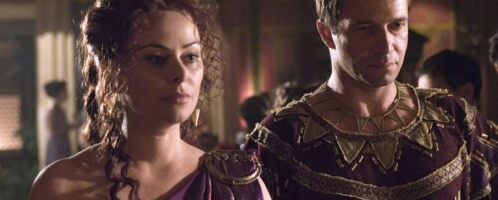
Atia the Elder, niece of Julius Caesar and mother of Gaius Octavian and Octavia was one of the most expressive female characters in the television series “Rome”. In the series, she was shown as an amoral manipulator who allows herself to play with the feelings and matchmaker of her family members to achieve political goals. Do historical sources confirm this?

Polly Walker as Atia the Elder and James Purefoy as Antony in Rome

Death of emperor Augustus

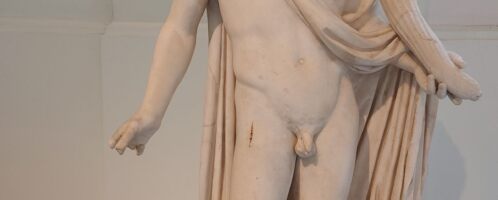
In ancient Rome, the brutal, violent death of the ruler was inscribed in the logic of power to such an extent that today it is often said that the profession of “emperor” was the most dangerous profession in the world. Of the twelve emperors who died in the first century CE, only four died naturally. Murder as a way to change power was so obvious that natural death always aroused suspicion and was a source of conjecture as to whether no one had contributed to it.

Roman sculpture showing Octavian Augustus

Method Ruina Montium

This is what is left of a mountain massif in Spain after the method Ruina Montium was used by the Romans. With the help of slaves, tunnels were dug in the mountain, through which the water was then diverted by at least seven aqueducts.

Method Ruina Montium

Eagle – symbol of Rome

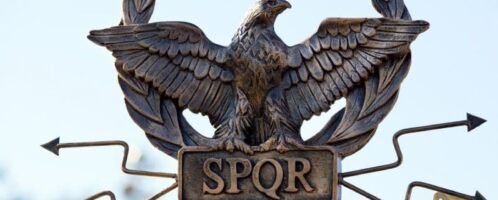
In Rome, the symbol of Rome – the eagle – was often shown accompanied by a serpent. They symbolized good in the form of an eagle triumphing over evil, which was represented by a snake.

Eagle - symbol of Rome

Sex is good for everything

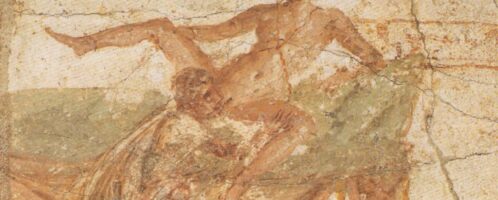
Pliny the Elder, Roman historian and writer of the 1st century CE, became famous for his work “Natural History” (Naturalis historia). In his work, he presents universal methods of dealing with ailments. According to Pliny the Elder, for example, sexual intercourse is a good remedy for lower back pain, poor eyesight and depression.

Roman sex scene

Spelling error report

The following text will be sent to our editors: