Chapters
Pompeii has once again proven that even after nearly two thousand years, it can still surprise archaeologists. This time, researchers have unveiled the partially reconstructed vault of the banqueting hall, decorated with exceptional frescoes depicting Ariadne and Dionysus. The discovery not only impresses with its level of craftsmanship but also allows for a better understanding of the significance of Greek mythology for the inhabitants of the Roman Empire.
Fresco hidden under ash for nearly 2,000 years
The painting comes from a building known as the House with a Bakery (Casa con Panificio) in Pompeii’s Region IX. The vault collapsed during the eruption of Mount Vesuvius in 79 CE, and its fragments remained buried under a thick layer of volcanic ash for centuries.
Conservators spent many months analyzing hundreds of decorative elements. They were then placed on a specially prepared curved structure reproducing the original shape of the vault. This allows visitors to see what the ceiling of a luxurious Roman banqueting hall looked like. The reconstruction is still ongoing and will be updated with additional fragments as they are discovered.
Ariadne and Dionysus – one of the most beautiful stories of antiquity
The central scene depicts the myth of Ariadne and Dionysus. According to Greek tradition, Ariadne, daughter of King Minos, helped Theseus defeat the Minotaur by giving him the famous ball of thread, which allowed him to escape the labyrinth. After escaping Crete, the hero abandoned Ariadne on the island of Naxos.
It was there that Dionysus, the god of wine, fertility, theater, and ecstasy, found her. He fell in love with the abandoned princess, married her, and made her immortal. In ancient art, their union symbolized the triumph of love over suffering and the transition from human fate to divine glory.
Although Pompeii was a Roman city, decorations inspired by Greek mythology were among the most prestigious.
Roman elites considered Greek culture a model of education and good taste. Richly decorated banquet halls were meant to delight guests and emphasize the homeowner’s status. Mythological scenes were also a topic of conversation during feasts, testifying to the host’s erudition.
Pompeii still holds a thousand secrets.
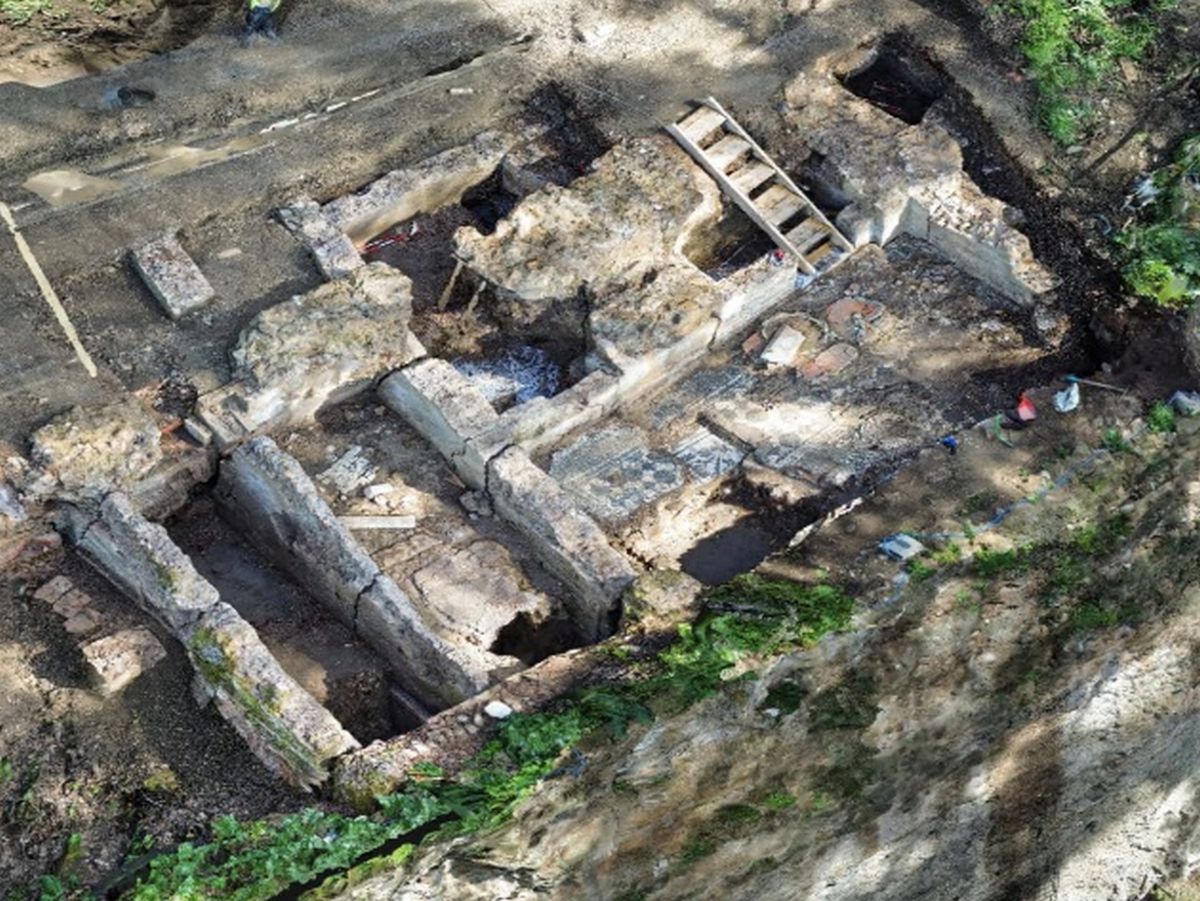
The discovery is part of a series of spectacular finds in recent years. In Regio IX, archaeologists previously uncovered, among other things, monumental paintings related to the cult of Dionysus, a luxurious complex of private thermal baths, and richly decorated state rooms.
Despite over 250 years of research, much of Pompeii remains unexcavated. Each subsequent archaeological season brings new information about the lives of the city’s inhabitants, which were suddenly frozen in time by the eruption of Mount Vesuvius.
Important discovery not only for archaeologists
The newly reconstructed fresco demonstrates the advanced painting techniques used in the 1st century CE. The preserved colors, rich ornamentation, and meticulous workmanship attest to the high caliber of Roman artists.
For historians, it is also a valuable source of knowledge about the motifs chosen to decorate private residences and the strong influence of Greek mythology on the culture of the Roman Empire.