If you have found a spelling error, please, notify us by selecting that text and pressing Ctrl+Enter.

Rome’s war against tribes of Galatians

(189 BCE)

War in 189 BCE between the Roman Republic and the Galatians, Gauls inhabiting Asia Minor. The pretext for the war was the fact that the Galatians provided armed reinforcements to the Seleucids, and their warriors even fought against the Romans in the Battle of Magnesia.
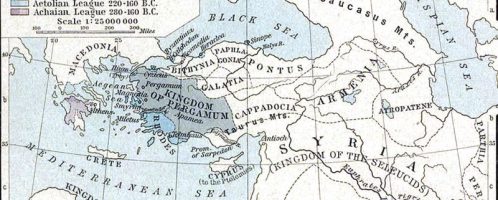
Map showing Asia Minor in 188 BCE

Campaigns of Romans in Spain 197-179 BCE

(197-179 BCE)

Iberian Peninsula played a key geopolitical role before and during the Second Punic War. Before his expedition to Italy, Hannibal, following the example of his relatives, was spreading Punic rule in this area, abundant in resources and providing a large recruit for his army.

Iberians from the late 2nd century BCE

War of Andriscus

(149-148 BCE)

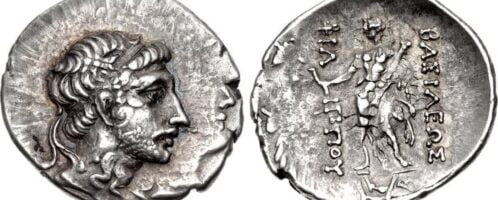
Lack of stability in Macedonia and the constant threat from barbarians led to the appearance of Andriscus, also known as the Fourth Macedonian War. This event had a major impact on the further political fate of Macedonia, after being defeated by Rome.

Coin of Andriscus, who was named King Philip on the coin

War of Rome with Achaean League

(146 BCE)

After defeating Andriscus, Rome left troops in the Balkans with the intention of dealing with the Achaean League, where anti-Roman attitudes intensified. Over the past decades, the Union has been the strongest federal organization in Greece.

Shield Wall - An array typically used by Hoplites

Conquest of Gallia Narbonensis

(125-120 BCE)

For a long period, the Romans treated Transalpine Gaul only as a transit country. Even at the beginning of the 2nd century BCE they were not interested in conquering these territories, as they claimed that the communication route from Italy to Spain would be secured by their ally Massilia. Everything changed in the middle of this century.