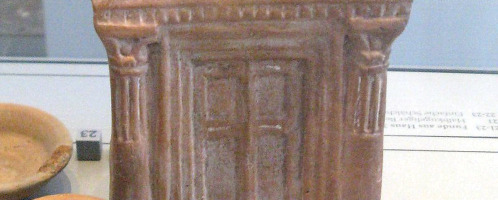
Roman moneyboxes
Almost every child learned the difficult art of saving on the example of piggy banks. They come in various shapes and sizes – the best-known one is the honest “piggy bank”.
If you have found a spelling error, please, notify us by selecting that text and pressing Ctrl+Enter.
Roman state existed for nearly thirteen centuries, repeatedly exerting a profound influence on the course of history. I present the history of ancient Rome in the individual articles below, which not always refer solely to the Eternal City itself but encompass the wider world of the Roman Empire.
I encourage you to submit your own articles and to report any corrections or factual inaccuracies.
Almost every child learned the difficult art of saving on the example of piggy banks. They come in various shapes and sizes – the best-known one is the honest “piggy bank”.
Wars in the East waged by legions in the early 2nd century BCE led to the expansion of the area controlled by the Republic. Along with the new territories, Greek culture reached the Tiber with its splendour and new ideas in the field of philosophy and literature. There was an exodus of Greek specialists to Rome.

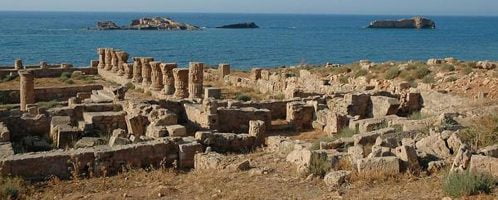
Currently, Mauritania is a country in northwest Africa, on the Atlantic Ocean. It has a land border with Senegal, Mali, Algeria and Western Sahara, and most of its territory is occupied by the Sahara Desert. In antiquity, however, Mauritania was called the land on the Mediterranean coast in what is now the northern part of Morocco and the northwest of Algeria.
The figure of Hannibal as Rome’s greatest enemy is fairly well known to that learning ancient history. Recognized as one of the greatest leaders of antiquity, the winner of Kann, Trebia or Lake Trasimeno, however, disappears from textbooks with the final defeat of Carthage in the Second Punic War and defeat at Zama in 202 BCE Sometimes it seems as if Hannibal died in this battle because in school notebooks it is often the last event related to a Punic chief.
Servius Sulpicius Galba was the sixth Roman emperor. His reign lasted only a few months, but due to his earlier deeds, he belongs to the group of distinguished Romans. What kind of man was Galba? In what did he resemble Claudius, and in what contemporary politics?
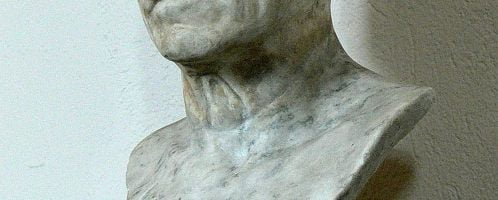
Ammianus Marcellinus, author of Roman History (Latin Res gestae), thanks to whom we know history very well The Roman Empire in 353-378 CE, holding many state functions and being a participant in such significant events of the world than as the siege of Amida and the expedition to Ktezyfont Emperor Julian the Apostate, no in his work, he merely described this type of military-political events.
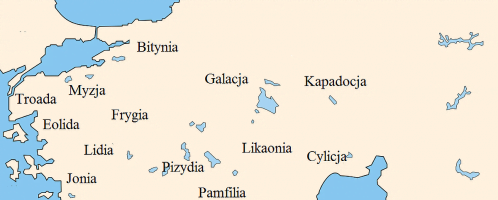
When reading about events in the history of the Roman Empire, you sometimes come across geographical names that cannot be intuitively defined on the map of modern countries. Names of lands, such as: Pont, Bithynia, Cilicia, Phrygia, Galatia, Lydia, Pamphilia or Paphlagonίa are not to be found on the maps of contemporary school geographic atlases.
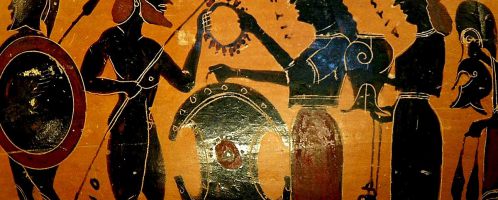
In the 18th book of the Iliad, there is a description of Achilles’ shield, made for him by Hephaestus at the request of the hero’s mother – Tethys. Virgil, the entire “Aeneid” modelled on both epics of Homer (“Iliad” and “Odyssey”), did not fail to include in his work (in book VII) an analogous description of the shield Aeneas. The differences between them illustrate well the different goals and characters of the works of the two poets.
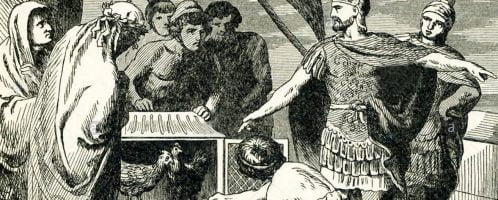
For centuries, people have tried to find out what the future holds. Hence, it was common to refer to all kinds of fortune-tellers or priests – augur or haruspices who they foretold from the entrails of animals. Special attention was also paid to all kinds of fortune-telling, which, as it was believed, were not a coincidence, but were interfering with the gods.
The Baltic Sea is not far from the former theatre of Roman military campaigns and research expeditions. How did the Romans imagine its location and coastlines? Have they ever influenced the reservoir over which present Poland lies?