If you have found a spelling error, please, notify us by selecting that text and pressing Ctrl+Enter.

Articles (Politics and events)

Politics and Events is a category dedicated to the key processes, decisions, and events that shaped the history of ancient Rome. Here, you’ll find articles on the formation of the Republic and Empire, political struggles, reforms, conspiracies, and key historical events that shaped the fate of the Roman Empire. The articles explore both high-level politics and pivotal moments in Roman history, placing them within their broader social and historical context.

Year of the Five Emperors

Year 193 CE is known in the history of ancient Rome as The Year of Five Emperors, because during these 365 days as many as five claimants claimed the throne. This year also brought the fall of the current Antonin dynasty (96 – 192 CE) and the beginning of the four-year period of civil wars (193 – 197 CE), which eventually ended with the victory of Septimius Severus.

Year of the Five Emperors

Vision of Constantine before the battle of the Milvian Bridge

According to ancient sources, on the evening of October 27, 312 CE, just before the battle at the Milvian Bridge, Constantine the Great was to have a vision that led him to victory with the support of a Christian god. Historical sources, however, are not consistent and differ on certain issues as to the so-called “miracle of Constantine”.

Jacopo Vignali, The Appearance of the Cross to Constantine

Kingdom period in Roman history

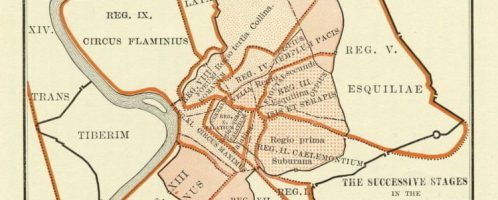
The history of Rome in the educational canon of teaching history begins with the founding myth immediately enters the times of the republic. The royal period is often overlooked in silence. This is understandable given the tight schedule of history lessons. However, the royal period in Rome’s history, which lasted 244 years, prepared the ground and paved the way for further conquests on the Apennine Peninsula, literally and figuratively.

Map of ancient Rome

Caesar’s ambitious plans before death

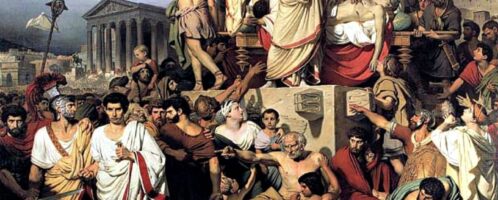
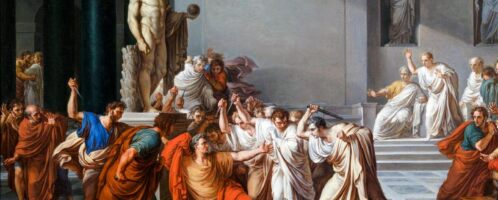
In the final period of his life, Julius Caesar was preparing for the implementation of several ambitious plans. To a large extent, these were only beautiful dreams, because having regard to the political realities and possibilities that existed at that time, he could not count on them to be finally realized.

Julius Caesar

Eruption of Mount Vesuvius

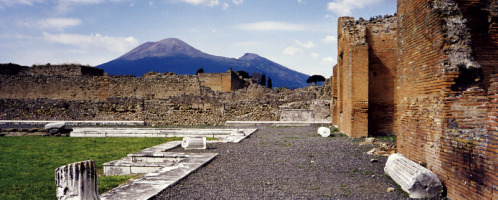
In 79 CE Mount Vesuvius (Vesuvio), unexpectedly resumed its eruption activity, covering the area with a hurricane of ashes, lapels, poisonous gases and eruptive materials. At that time, streams of lava mixed with mud were flowing down the slopes of the volcano, destroying everything on its way.

View of the Vesuvius massif from Pompeii

Against Republic. Carthaginian-Macedonian alliance against Romans

During the third century B.C.E Rome continually fought other Mediterranean states. The end of the First Punic War left the Punic empire considerably lessened, and many Carthage’s nobles disgruntled with the peace treaty and expansion into Spain. The resulting clash with Rome influenced both the republic and other states that were in conflict with it at the time, e.g. Macedonia. Hannibal’s victories over the legions convinced the Macedonian leader that Romans can be beaten and routed and that an alliance with victorious Carthage would be politically advantageous.

A scene from the movie "Aleksander". Macedonian phalanx on the  march

Spelling error report

The following text will be sent to our editors: