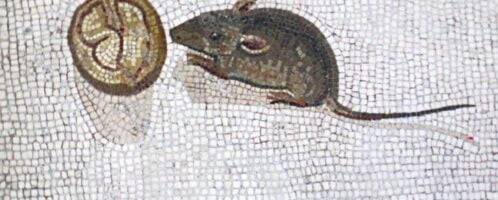
Squeak of mice – bad omen
Probably in 222 BCE, when Marcus Minucius Rufus assumed the office of Roman dictator, and Gaius Flaminius magister equitum (deputy dictator in political and military functions), a disturbing event occurred.
If you have found a spelling error, please, notify us by selecting that text and pressing Ctrl+Enter.
The world of the ancient Romans was rich in extraordinary, and sometimes even surprising, facts. We draw our knowledge of Roman daily life, customs, and mentality primarily from works left by ancient writers and historians. It is thanks to them that we discover information that is astonishing today – sometimes even hard to believe. Below are some interesting facts that reveal a lesser-known and less obvious side of the Roman world.
I encourage you to submit your own suggestions and to report any corrections or inaccuracies.
Probably in 222 BCE, when Marcus Minucius Rufus assumed the office of Roman dictator, and Gaius Flaminius magister equitum (deputy dictator in political and military functions), a disturbing event occurred.
Gaius Verres was an example of a wicked and greedy Roman governor who, while in office (73-71 BCE) in Sicily, committed countless thefts of works of art, tax evasion and speculation on grain prices.
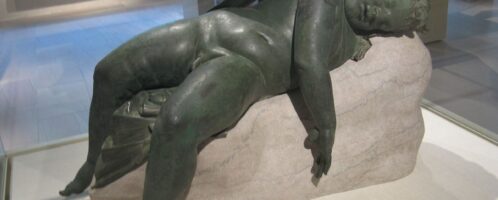
In 91 BCE in the city of Asculum (the city of the Sabines in southern Italy) theatrical performances took place, during which the Roman part of the audience killed one of the comedians who showed an anti-Roman attitude. When an actor of Latin origin was to appear next, the man decided to use a joke to get out of the situation, fearing for his life.
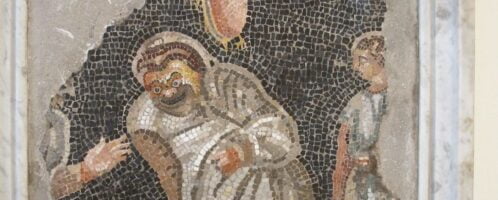
To this day, it seems to us that Julius Caesar was the first Roman who managed to reach almost unlimited power in the Roman republic. The truth is, however, that in 82 BCE it was Lucius Cornelius Sulla, after conquering Rome, who took full power in the state.
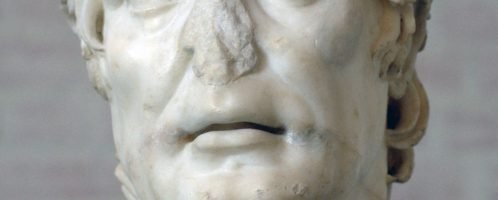
Ancient Romans weren’t as passionate about hunting as the Greeks. They treated it more as a sport and entertainment than an educational element. Hunting provided movement and exercise.
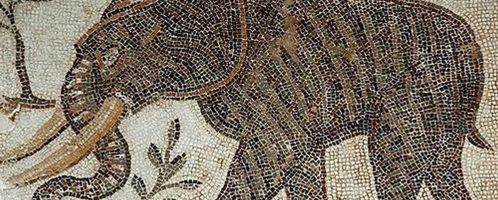
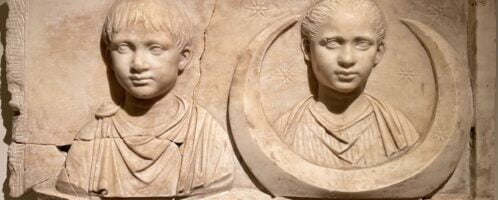
Roman bas-relief showing portraits of a boy and a girl. The crescent moon and the stars around the girl’s head suggest that she is in heaven or that she remained a virgin until her death. The object is dated to the end of the 2nd century CE and is in the collection of the Denmark National Museum in Copenhagen.
Carrodunum was the name of the city mentioned in Ptolemy’s “Geography” (II, 11, 29) identified with today’s Cracow. The origin of the name is Celtic, as indicated by the particle dunum derived from the Celtic languages and meaning the city.

Manumission of a slave was referred to in ancient Rome as manumissio (literally “releasing from hand”). Originally, this practice took place in a public place, usually in front of a judge. The owner then touched the slave’s head with his walking stick and let him go. In practice, however, such occasions were held in the group of family and friends, and the slave would eat dinner with the family for which he was serving.