If you have found a spelling error, please, notify us by selecting that text and pressing Ctrl+Enter.

Curiosities of ancient Rome

The world of the ancient Romans was rich in extraordinary, and sometimes even surprising, facts. We draw our knowledge of Roman daily life, customs, and mentality primarily from works left by ancient writers and historians. It is thanks to them that we discover information that is astonishing today – sometimes even hard to believe. Below are some interesting facts that reveal a lesser-known and less obvious side of the Roman world.

I encourage you to submit your own suggestions and to report any corrections or inaccuracies.

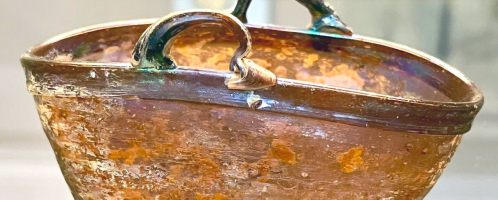
Stone of Carausius

Stone of Carausius is a preserved stone from the end of the 3rd century CE, on which the name of the usurper Carausius was engraved. Interestingly, at the other end of the stone is the name of Emperor Constantine. After the fall of Carausius, his name was removed from public places (damnatio memoriae), and the stone was simply turned over and his inscription was hidden.

Stone of Carausius

Lycurgus Cup

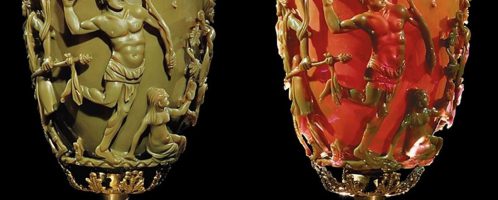
Lycurgus Cup (also known as the Lycurgus chalice) is an example of the advancement of Roman culture. Depending on the angle at which the sun’s rays fall on the cup, the decorations of the vessel change in different colours. When lit from the front, they are green. However, with light coming from the rear, they turn red. Thus, it can be said that the Romans were pioneers of nanotechnology!

Lycurgus Cup

Sulla was especially cruel

According to ancient sources, Lucius Cornelius Sulla, after taking full power at the end of 82 BCE, began extremely bloody proscriptions against the opposition and his enemies, which claimed nearly 3,000 people. Their property was confiscated and handed over to Sulla’s supporters. According to prevailing rumours, Sulla ordered the killed victims to cut off their heads and set them up as trophies in the atrium of his house.

Reconstruction of the image of Sulla

Roman horses were excellently trained

Roman horses racing in the quadrigas were known for excellent training. The case of Emperor Claudius proves this. whose coachman fell out of the quadriga at the start. Despite the lack of a driver, they ran 7 laps and won. After the race, they obediently positioned themselves at the finish line.

Roman mosaic with a wounded horse

Process of Asicius

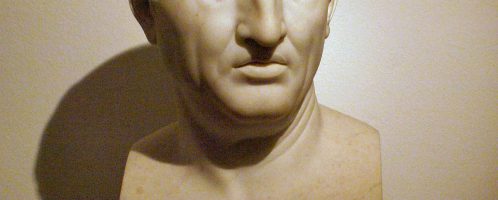
In 56 BCE Publius Asicius was accused of murdering Dio of Alexandria – an Egyptian envoy. The murder was believed to have been commissioned by Pompey. The accusation was brought by Titus Coponius with whom Dio was staying.

Cicero

Crimen laesae maiestatis

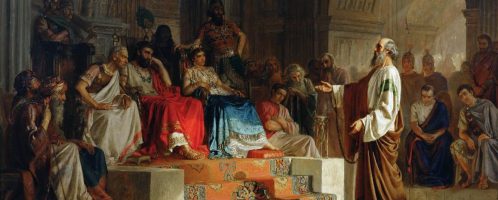
Crimen laesae maiestatis in Roman law was a crime of offending majesty, punished as treason. Roman law considered crimen laesae maiestatis not only attacks or attempts to overthrow the emperor, but also threats, offensive statements about the person or name of the emperor or jokes about him.

Nikolai Bodarevsky, Trial of the Apostle Paul

Conquest of Veii in 396 BCE

According to ancient sources, the conquest of Veii by Rome in 396 BCE was an important event for the Roman community. Veii was located only 16 km north of the “Eternal City” and posed a real threat in the region.

Marcus Furius Camillus appearing in Rome

Spelling error report

The following text will be sent to our editors: