Bust of Roman matron
Bust of Roman matron. The sculpture is in the British Museum.
If you have found a spelling error, please, notify us by selecting that text and pressing Ctrl+Enter.
The world of the ancient Romans was rich in extraordinary, and sometimes even surprising, facts. We draw our knowledge of Roman daily life, customs, and mentality primarily from works left by ancient writers and historians. It is thanks to them that we discover information that is astonishing today – sometimes even hard to believe. Below are some interesting facts that reveal a lesser-known and less obvious side of the Roman world.
I encourage you to submit your own suggestions and to report any corrections or inaccuracies.
Bust of Roman matron. The sculpture is in the British Museum.

In ancient Rome, there was a praegustator – usually a slave- whose job was to taste food intended for important people (patricians or emperors) to make sure it wasn’t poisoned.
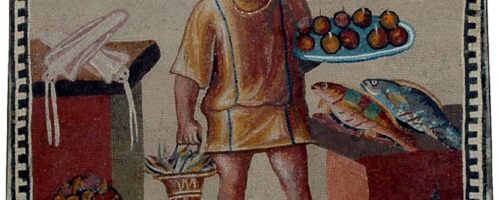
In ancient Rome, there was a special type of slave called a nomenclator whose job was to remind the Roman patrician of the names of everyone he met.
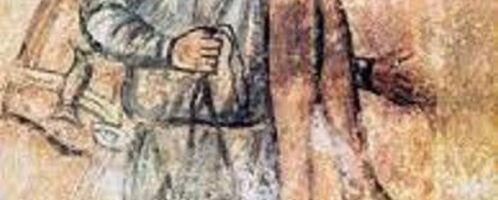
A common image of social life in ancient Rome is of patricians reclining on their sides in the triclinium (dining room), wine and food during long feasts. The popular imagination is that all Romans ate this way—rich and poor alike, on every occasion. But this is a myth.

Roman fresco showing figs and bread. The object is in the British Museum.

In ancient Rome, spells and curses were written on thin lead tablets called defixiones. The Romans used them to curse a rival for reasons of love, rivalry, or pure envy. The tablets were often placed in tombs, wells, or temples to “send” a message to the underworld.

In ancient Rome, the water supply system was managed by officials known as curatores aquarum. These were senators of consular rank, appointed by the emperor, responsible for overseeing the construction, maintenance and operation of the city’s aqueducts and water distribution networks. Their duties also included enforcing water laws, preventing illegal connections and resolving disputes related to access to water.

In the transitional period between antiquity and the Middle Ages, when Christianity was consolidating its position as the state religion, events occurred that left a profound mark on the history of culture and science. One of the most renowned figures of this era was Hypatia – a philosopher, mathematician, and astronomer whose tragic death became a symbol of the changes sweeping through the world at that time.

Before watches and modern clocks, the ancient Romans used clepsydras, or water clocks, to measure the passage of time. This device worked by passing water from one container to another, usually through a small hole. As the water level fell (or rose), marked scales showed how much time had passed.

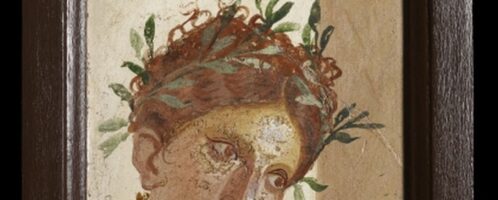
Roman fresco depicting the face of a woman from Herculanum. The object is located in The British Museum.