Villa Romana del Tellaro in Sicily
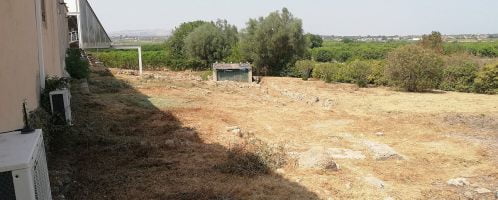
Roman villa, Villa Romana del Tellaro, is located in eastern Sicily, south of the town of Noto. The villa was of an agricultural character, however, it is distinguished mainly by beautiful mosaic floors.
If you have found a spelling error, please, notify us by selecting that text and pressing Ctrl+Enter.
The world of the ancient Romans was rich in extraordinary, and sometimes even surprising, facts. We draw our knowledge of Roman daily life, customs, and mentality primarily from works left by ancient writers and historians. It is thanks to them that we discover information that is astonishing today – sometimes even hard to believe. Below are some interesting facts that reveal a lesser-known and less obvious side of the Roman world.
I encourage you to submit your own suggestions and to report any corrections or inaccuracies.
Roman villa, Villa Romana del Tellaro, is located in eastern Sicily, south of the town of Noto. The villa was of an agricultural character, however, it is distinguished mainly by beautiful mosaic floors.
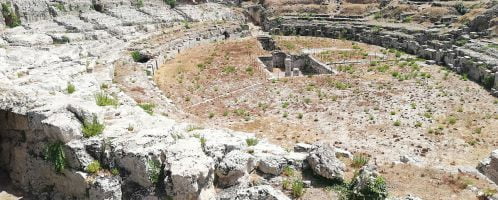
The Roman amphitheatre in Syracuse (eastern Sicily) was the largest of its kind on the island. It was probably built at the end of the 1st-century BCE and was associated with the reconstruction of Syracuse in 21 BCE. It is possible that in the arena apart from gladiator fights and wildlife hunts, naumachia. The object was 140 meters wide and 119 meters long.
Roman helmet of the Montefortino type, dated to the 4th-3rd century BCE. The object is made of bronze and is located in the Parco Archeologico di Lilibeo in Marsala (Sicily).

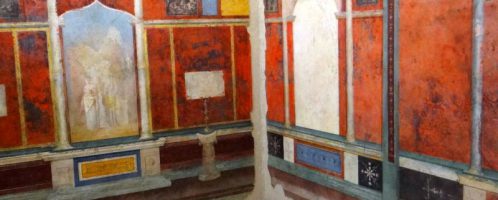
In 1897, in Rome, on the right bank of the Tiber, the remains of a magnificent Roman villa were found. As it soon turned out, its perfect condition and decorations surpassed the beauty of the already known houses in Pompeii, or Herculaneum.
In 1999, a Roman merchant ship from the 3rd century CE was discovered near the Sicilian city of Trapani. The object was at a depth of less than two meters – 150 meters from the shore. The object was not excavated from the sea until 2011 and underwent conservation. Since 2015, the artefact is in the Parco Archeologico di Lilibeo in Marsala (Sicily).

In 1971, the remains of a Punic military ship were discovered in the port of the Sicilian city of Marsala. They are the oldest surviving remains of this type. Researchers refer to the ship as “Punta Scario” and believe it was either a reconnaissance vessel or was used to tare smaller boats.

On the occasion of the ongoing Olympic Games, it is worth mentioning that the plant that is directly associated with the everyday life of ancient Romans is the noble laurel (Laurus nobilis). The image of the winner of the Olympics is a figure of a man with a proudly raised head, on which there is a laurel wreath, decorated with laurel leaves. What if our image was not true and instead of the characteristic lanceolate leaves we would see pinnate oak leaves adorning his temple?
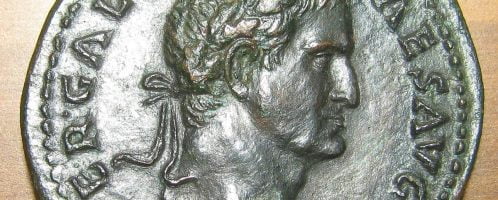
Apart from loan for consumption (mutuum) there were other real contracts – deposit (depositum), loan for use (commodatum) and pledge (pignus). Originally there was only the loan but with time the group of real contracts expanded and several different types of contracts were specified.
In the central part of Sicily, near the town of Corleone, there are the remains of a Roman villa – Villa romana di San Luca. The facility had an agricultural character and unfortunately it is not available to tourists. The place is neglected and more information about the monument is not available.