
If you have found a spelling error, please, notify us by selecting that text and pressing Ctrl+Enter.
Curiosities of ancient Rome
The world of the ancient Romans was rich in extraordinary, and sometimes even surprising, facts. We draw our knowledge of Roman daily life, customs, and mentality primarily from works left by ancient writers and historians. It is thanks to them that we discover information that is astonishing today – sometimes even hard to believe. Below are some interesting facts that reveal a lesser-known and less obvious side of the Roman world.
I encourage you to submit your own suggestions and to report any corrections or inaccuracies.
Cumin in ancient times
Ancient Rome used a range of overseas spices such as black pepper, long pepper, ginger, cardamom and cinnamon. However, the most frequently used raw materials, both in cooking and in medicine, that were grown locally – coriander, mint and Roman cumin. The last of them was used both as an ingredient of dishes, a cosmetic raw material and a ritual plant. Where was this spice traded? What diseases were treated with it? Answer in the article below.

Where is tomb of Caesar?
When visiting the Forum Romanum, many people notice flowers placed in the niche of the wall of Caesar’s temple in memory of his memory. This is where Caesar was to be cremated, which is why many people intuitively point to this place as his burial place. But is it possible that the tomb of the dictator is there?


Summa rudis – referee of gladiatorial fights
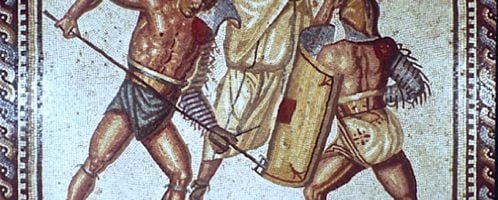
In the arena between the gladiatorial fighters there was a referee (summa rudis) who supervised the fight and could stop it if any of the gladiators were seriously injured or used illegal “plays”, to encourage gladiators to fight bolder or to convey the decision to win to the sponsor of the games (editor).
Feast of Pollio and Augustus’ intercession
Publius Vedius Pollio was a Roman equestrian and friend of the first emperor, Octavian Augustus. His father was a freedman; Pollio made a huge fortune by managing the province of Asia on behalf of emperor; i.e. he owned a huge villa on the Bay of Naples, where he was breeding predatory moray eels, which he would devour disobedient or making mistakes to slaves. His brutal habits were known throughout Rome and extremely outraged the public.


Roman gold relief necklace
Roman gold relief necklace. The object is made of emerald glass and chalcedony. Object dated to the 2nd-4th century CE.

Umbo from Roman shield
An umbo that was attached to the shield of a Roman legionary who belonged to the legion VIII Augusta. The object dates back to the early 2nd century CE; it was found in the River Tyne in northern England. On the edge of the umbo you can read the name Junius Dubitatus.

