If you have found a spelling error, please, notify us by selecting that text and pressing Ctrl+Enter.
Curiosities of ancient Rome
The world of the ancient Romans was rich in extraordinary, and sometimes even surprising, facts. We draw our knowledge of Roman daily life, customs, and mentality primarily from works left by ancient writers and historians. It is thanks to them that we discover information that is astonishing today – sometimes even hard to believe. Below are some interesting facts that reveal a lesser-known and less obvious side of the Roman world.
I encourage you to submit your own suggestions and to report any corrections or inaccuracies.

Defend master!
If the owner of the slave was attacked and threatened with death, his slave was obliged to help his master, even when he has no weapon. He had to use all means to stop the attacker: fight with his bare hands, shout, separate master from the aggressor.


Kill Pyrrhus!
Claudius Aelianus mentions that doctor of Pyrrhus – Cineas, wrote a secret letter to the Roman senate and demanded money, promising to murder Pyrrhus using poison. The senators rejected his offer, saying that “for Romans know how to achieve their goals thanks to their bravery and do not fight their enemies with trick, deceit or ambush”. What’s more, they informed Pyrrhus of Cineas offer.

Earliest Roman beliefs
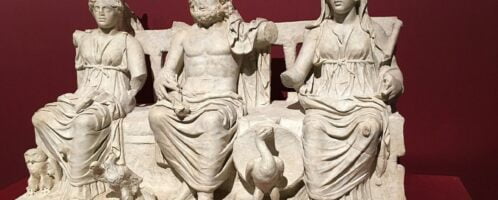
Originally, the Roman religion was animistic and abstract. Finally, Etruscan influences, during the kingdom, caused the Roman deities to become anthropomorphic. From the Etruscans, the custom of setting up temples was also accepted. On Capitol Hill, a shrine was erected, in which statues of the three most important Etruscan gods were found: Tinii – identified with Jupiter, Uni – with Juno and Minerva. These deities created the so-called the Capitoline Triad, replacing the Latin Triad: Jupiter, Mars and Quirin.
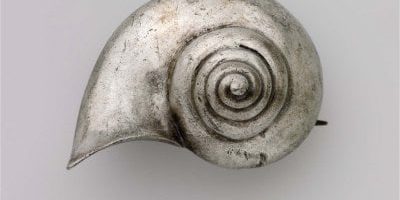
Roman fibula in shape of snail shell
Roman fibula in the shape of a snail shell with a length of 3 cm. The object is made of silver and is dated to the 2nd-3rd century CE.
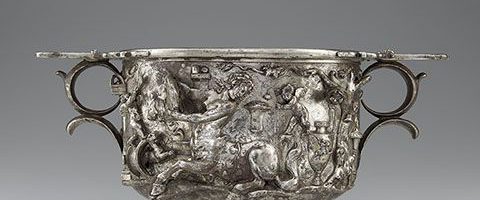
Roman cup with details showing centaurs
Roman cup with details showing centaurs. The object is made of silver and gold. Dated to the first century CE.