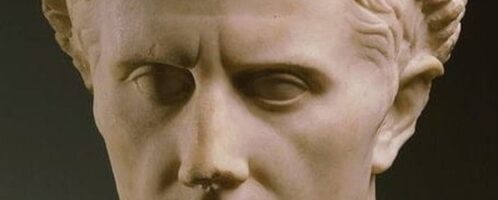
Augustus’ phrases
Octavian Augustus used some characteristic phrases: instead of “stupid”, he used “dumb”; to describe the speed of acting, he used the phrase “faster than asparagus cooks”; instead of saying “crazy”, he used “mad in the head”.
If you have found a spelling error, please, notify us by selecting that text and pressing Ctrl+Enter.
The world of the ancient Romans was rich in extraordinary, and sometimes even surprising, facts. We draw our knowledge of Roman daily life, customs, and mentality primarily from works left by ancient writers and historians. It is thanks to them that we discover information that is astonishing today – sometimes even hard to believe. Below are some interesting facts that reveal a lesser-known and less obvious side of the Roman world.
I encourage you to submit your own suggestions and to report any corrections or inaccuracies.
Octavian Augustus used some characteristic phrases: instead of “stupid”, he used “dumb”; to describe the speed of acting, he used the phrase “faster than asparagus cooks”; instead of saying “crazy”, he used “mad in the head”.
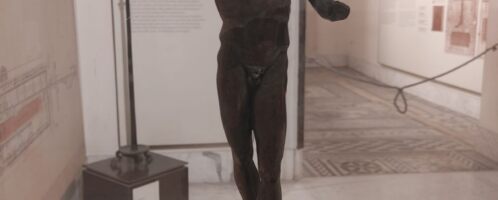
Roman sculpture showing a walking Satyr, a mythological creature who was supposed to accompany Dionysus (Bacchus) in the retinue. The artifact is in the National Archaeological Museum in Naples.
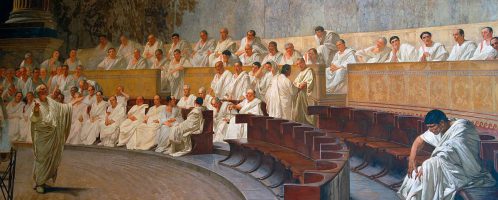
Roman Senate was an important office during the time of the Roman Republic, which decided on Roman laws. As the plebeians gradually won more democratic governments (moving away from the oligarchy), a typical legislative process in the Roman state emerged.
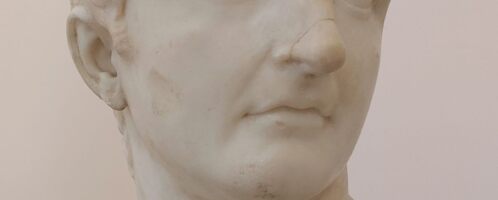
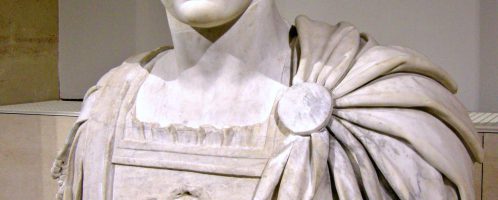
Bust of the emperor Tiberius, who ruled in the years 14-37 CE. The artifact is in the National Archaeological Museum in Naples.
The wife of Mark Antony, Fulvia, completely ignored the spinning traditions and housekeeping of a Roman woman. In addition, according to Roman descriptions, she was a strong and independent woman.

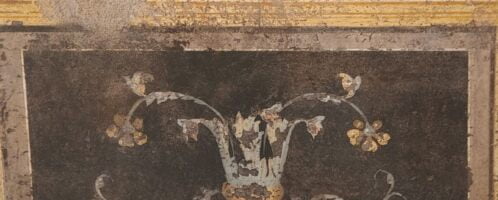
Roman fresco showing naumachia and still life. Object dated to the 1st century CE; discovered in Pompeii. The artifact is in the National Archaeological Museum in Naples.
According to Edward Gibbon (1737-1794), author of the classic work The Decline of the Roman Empire, the greatest influence on the disintegration of the Roman Empire was, among others, Christianity, the loss of civic values by the Romans, or “the great migration of peoples”.

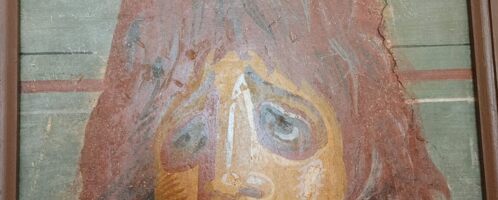
Roman fragment of a fresco showing a theatrical mask. The object dates back to the 1st century BCE. Discovered in Pompeii. The artifact is in the National Archaeological Museum in Naples.
Emperor Domitian was extremely suspicious towards the end of his reign and sensed conspiracies everywhere. He was also reluctant to refer to senators. According to Cassius Dio, once the ruler invited a group of influential senators to dinner at his residence. The drawing room where the feast was to take place was painted entirely black.
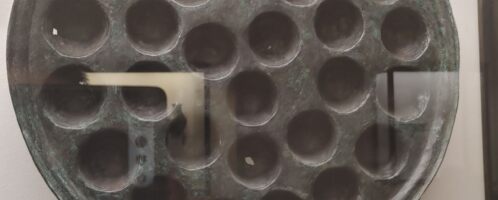
Roman mould for loaves of bread. The object is made of bronze and dates back to the 1st century CE. The artifact was discovered in Pompeii and is in the National Archaeological Museum in Naples.