If you have found a spelling error, please, notify us by selecting that text and pressing Ctrl+Enter.
Curiosities of ancient Rome
The world of the ancient Romans was rich in extraordinary, and sometimes even surprising, facts. We draw our knowledge of Roman daily life, customs, and mentality primarily from works left by ancient writers and historians. It is thanks to them that we discover information that is astonishing today – sometimes even hard to believe. Below are some interesting facts that reveal a lesser-known and less obvious side of the Roman world.
I encourage you to submit your own suggestions and to report any corrections or inaccuracies.
Calgacus the Caledonian
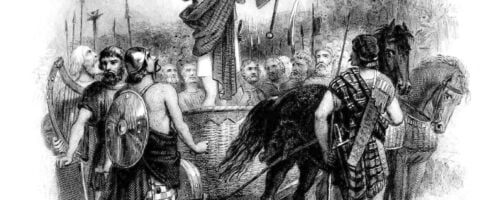
Calgacus was the first Caledonian (inhabitant of present-day Scotland) mentioned in Roman sources. Tacitus describes him as the leader of the Caledons, a man of self-respect and an excellent orator. He had red hair and a powerful build. His name in the Celtic language meant “having a sword”.
Sex is good for everything
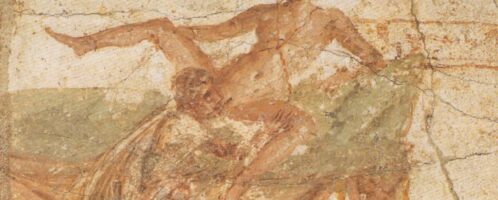
Pliny the Elder, Roman historian and writer of the 1st century CE, became famous for his work “Natural History” (Naturalis historia). In his work, he presents universal methods of dealing with ailments. According to Pliny the Elder, for example, sexual intercourse is a good remedy for lower back pain, poor eyesight and depression.
Round or square formation
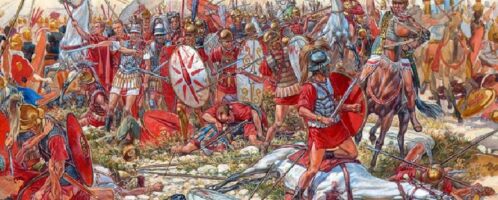
Roman legion (or individual legion units) when defending, when things went too far and the enemy was gaining the upper hand, they adopted defensive formations like orbis – a circle or agmen quadratum – a quadrilateral. Vegetius (4th century CE) also mentions aciesquadrata, i.e. an empty quadrilateral.

Ancient sculpture showing Greek strategist
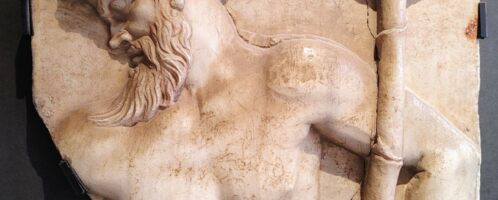
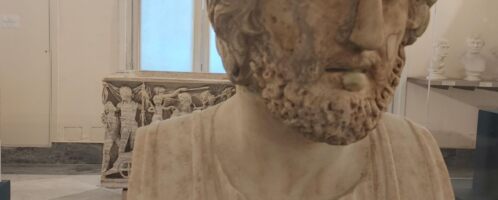
An ancient sculpture showing a Greek strategist. The marble object was discovered in Herculaneum and is dated to the 1st century CE. It is probably a copy of a Greek original from the 5th century BCE. The artifact is in the National Archaeological Museum in Naples.
Calisthenics
Calisthenics, physical activity based on strength training based on exercises using your own body weight (crunches, push-ups, etc.) was already used in ancient times, e.g. by the Greeks and Romans, and one of the earliest records of calisthenics is Herodotus’s account that it was used by the Spartans in training for the upcoming Battle of Thermopylae.
Ancient votive hand with inscription
Ancient votive hand with an inscription on the inside of the wrist: “Arabiades and his brother Germanus supplicant, dedicate”. According to the researchers, the men sacrificed the object to Jupiter Dolichenus in gratitude for their care. The Syrian deity spread in the west of the Roman Empire in the 2nd-3rd century CE and was popular, for example, in the Roman army.