Roman cameo showing goose
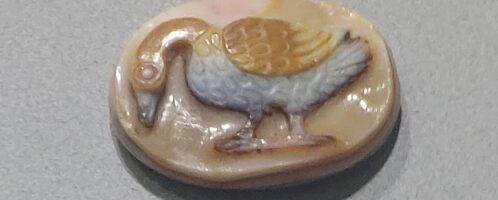
Roman cameo of a goose, a bird dedicated to Goddess Juno. The artifact is in the National Archaeological Museum in Naples.
If you have found a spelling error, please, notify us by selecting that text and pressing Ctrl+Enter.
The world of the ancient Romans was rich in extraordinary, and sometimes even surprising, facts. We draw our knowledge of Roman daily life, customs, and mentality primarily from works left by ancient writers and historians. It is thanks to them that we discover information that is astonishing today – sometimes even hard to believe. Below are some interesting facts that reveal a lesser-known and less obvious side of the Roman world.
I encourage you to submit your own suggestions and to report any corrections or inaccuracies.
Roman cameo of a goose, a bird dedicated to Goddess Juno. The artifact is in the National Archaeological Museum in Naples.
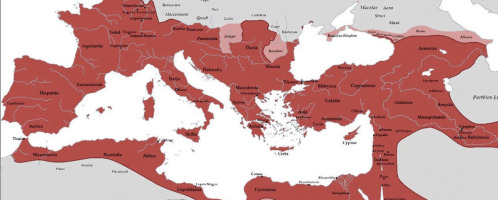
The Mediterranean Sea in Roman times was the internal sea of the Roman Empire. For this reason, the Romans used to call it mare nostrum, literally “our sea”. This term appears for the first time during the conquest of Sicily, Sardinia and Corsica during the First Punic War.
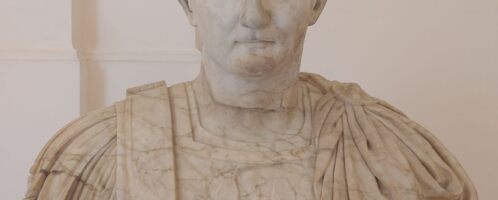
Sculpture of emperor Antoninus Pius, who reigned in the Roman Empire in the years 138-161 CE. The artifact is in the National Archaeological Museum in Naples.

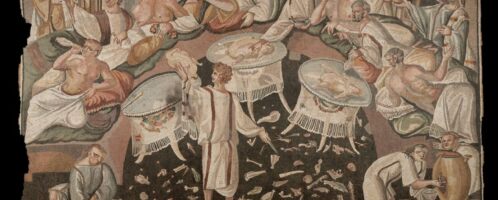
Alcoholism is not only a social problem of modern times. Already Lucretius, a Roman poet from the 1st century BCE, mentions alcoholism as a plague affecting the then elites among others, famous writers of the 1st century CE Seneca the Younger or Pliny the Elder prove the existence of a real social problem.
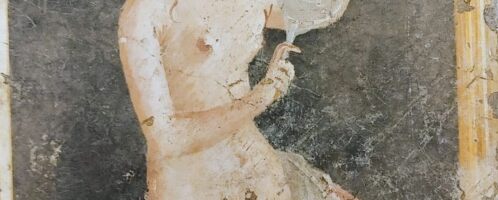
Roman fresco showing a woman combing her hair. The object is dated to the 1st century CE and was discovered in Stabiae. The artifact is in the National Archaeological Museum in Naples.
Emperor Octavian Augustus hated flattery – when one day during the show, the artist addressed him with the words “O just and gracious Lord!” Augustus rebuked him for this in a public proclamation. He even forbade his children and grandchildren to refer to him as “Lord”.
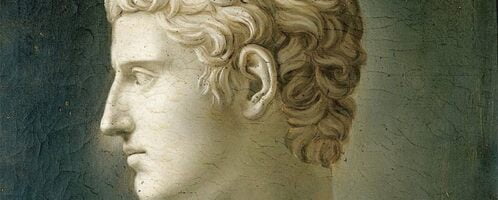
Bust of emperor Tiberius (reigned 14-37 CE), made of marble, which is in the National Archaeological Museum in Naples. The head of the sculpture is dated to around 40 CE, and the rest of the bust was additionally made by the 16th-century Italian sculptor Guglielmo della Porta and combined with the preserved head.
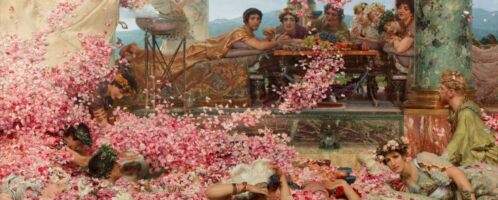
According to Suetonius, during one of the feasts in Nero’s “Golden House”, one of the guests suffocated after the hall was flooded with huge amounts of rose petals.