If you have found a spelling error, please, notify us by selecting that text and pressing Ctrl+Enter.

Curiosities of ancient Rome

The world of the ancient Romans was rich in extraordinary, and sometimes even surprising, facts. We draw our knowledge of Roman daily life, customs, and mentality primarily from works left by ancient writers and historians. It is thanks to them that we discover information that is astonishing today – sometimes even hard to believe. Below are some interesting facts that reveal a lesser-known and less obvious side of the Roman world.

I encourage you to submit your own suggestions and to report any corrections or inaccuracies.

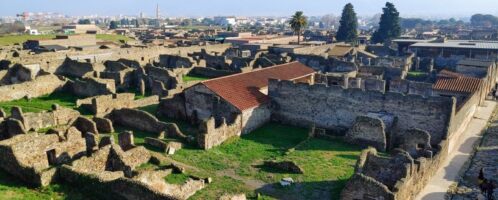
Ruins of Pompeii with section not yet excavated

The ruins of Pompeii with the section (regiones V) visible that has not yet been excavated. There are still undiscovered places in the Pompeii Archaeological Park before archaeologists. These are mainly districts (regiones): V, IV, IX, III and part of I. The main problem, as always, is not enough money.
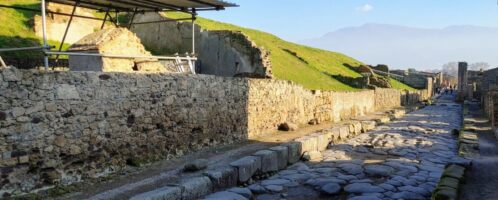
Ruins of Pompeii with section not yet excavated

Extremely useful materials before visiting Pompeii, Oplontis, Boscoreale or Stabiae

When visiting Pompeii, Oplontis, Boscoreale or Stabiae, it is worth equipping yourself with appropriate materials in advance. On the Pompeii Archaeological Park website (http://pompeiisites.org ) we will find maps and helpful materials that we can print out before the visit, and which will be invaluable help during sightseeing. It is worth mentioning that the materials are regularly updated.

Map of Pompeii by Pompeii Archaeological Park

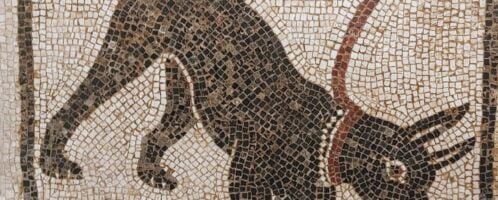
Roman mosaic depicting dog on leash

Roman mosaic of a dog on a leash; discovered in Pompeii. The artifact is in the National Archaeological Museum in Naples and dates back to the 1st century CE. Before entering the house, the Romans often placed signs with the inscription Cave Canem (“Beware of the dog”) or mosaics with the image of a dog; in this way, attempts were made to discourage robbers from sneaking into the house.

Roman mosaic depicting dog on leash

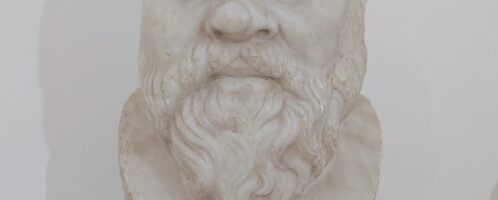
Roman marble sculpture of Socrates

Roman marble sculpture showing the philosopher Socrates. The object is dated to the mid-1st century CE and is a copy of a Greek original from the 4th century BCE. The artifact is in the National Archaeological Museum in Naples.

Roman marble sculpture of Socrates

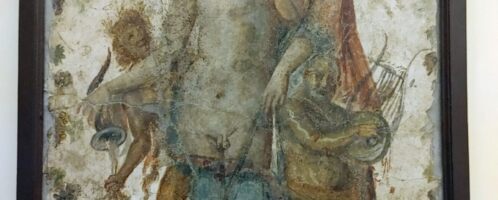
Roman fresco showing Dionysus and Maenad

Roman fresco showing Dionysus (Bacchus) and Maenad (Bacchae), the companion of the god of wine. Also visible in the scene is a young Satyr and Silenus with a zither. Wine is poured from a vessel (rython) which is licked off by the panther. Object dated to the mid-1st century CE; discovered in Pompeii. The artefact is in the National Archaeological Museum in Naples.

Roman fresco showing Dionysus and Maenad

How was scutum kept?

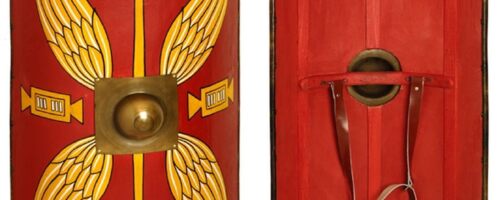
To protect against rain scutum – a Roman shield – was hidden during the march in a special cover with goatskin or cowhide. For convenience, the scutum was worn while marching by hanging it over the shoulder or on the back with an attached strap.

Scutum

Spelling error report

The following text will be sent to our editors: