Areas of Poland in times of Romans
How, tribes living in ancient times on current Polish territory, described Publius Cornelius Tacitus in De origine et situ Germanorum?
If you have found a spelling error, please, notify us by selecting that text and pressing Ctrl+Enter.
Interesting facts from the world of ancient Romans. The world of ancient Romans was full of amazing accounts and information.
How, tribes living in ancient times on current Polish territory, described Publius Cornelius Tacitus in De origine et situ Germanorum?
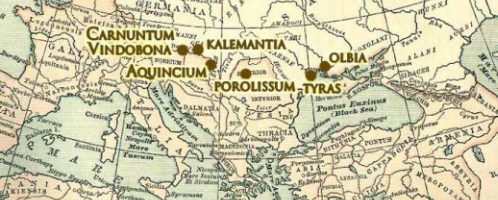
Adlocutio was the emperor’s speech to the assembled soldiers. In general, the ruler directed them to soldiers before the commencement of the war campaign, during a visit or on another particularly important occasion. Adlocutio can be seen only on numismatic monuments, where usually the emperor is standing on the tribune (suggestus), assisted by praefectus castrorum, who directs his speech towards the army presented in the form of ensigns (signifer).
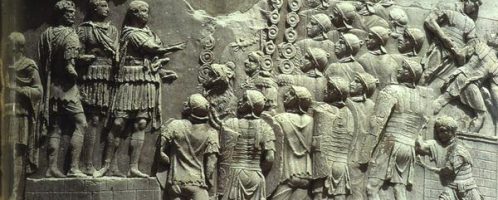
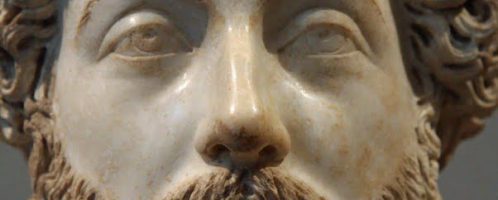
Under the reign of emperor Marcus Aurelius, there was unprecedented freedom of expression for those times. It was a phenomenon in history. For example, comedian writer Marullus allowed himself to criticize the authorities without any consequences.
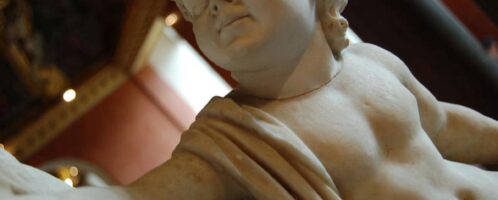
Britannicus, a son of the emperor Claudius after his father’s death (he was poisoned by the mother of Nero with a dish of mushrooms) was a big threat to Nero, a half brother. Nero, embracing the purple, was afraid that the Britannicus would want to use his birth in the future and reach for power.
According to Roman fashion, feasts were organized in the so-called triclinium. In the middle of the room, the table was set up, and the sofas around it, leaving one side “unmarked” (something like a horseshoe was created).
Triclinia could have different sizes – in the picture we can see the smallest possible triclinium, consisting of three sofas. Most often, however, it consisted of nine couches arranged around the table.

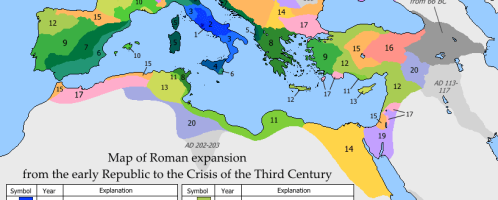
A very interesting map showing the growth of the Roman Empire from the beginning of the Republic till the crisis of the 3rd century CE.
In ancient Rome operated colleges (collegia), gathering employees of the same branch of trade. These types of associations were created either on the initiative of the Senate or independently. What’s more, there were also religious associations.