Chapters
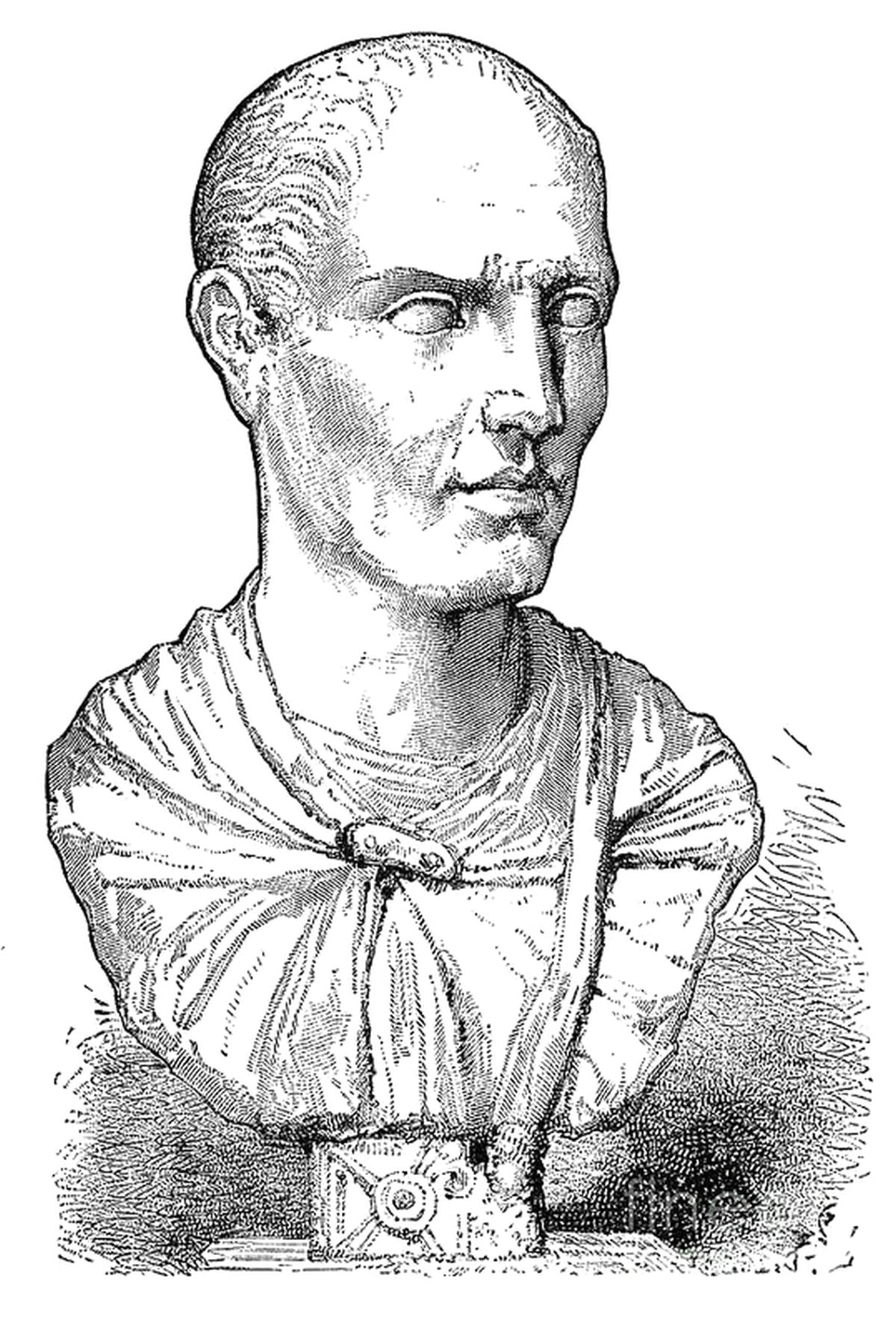
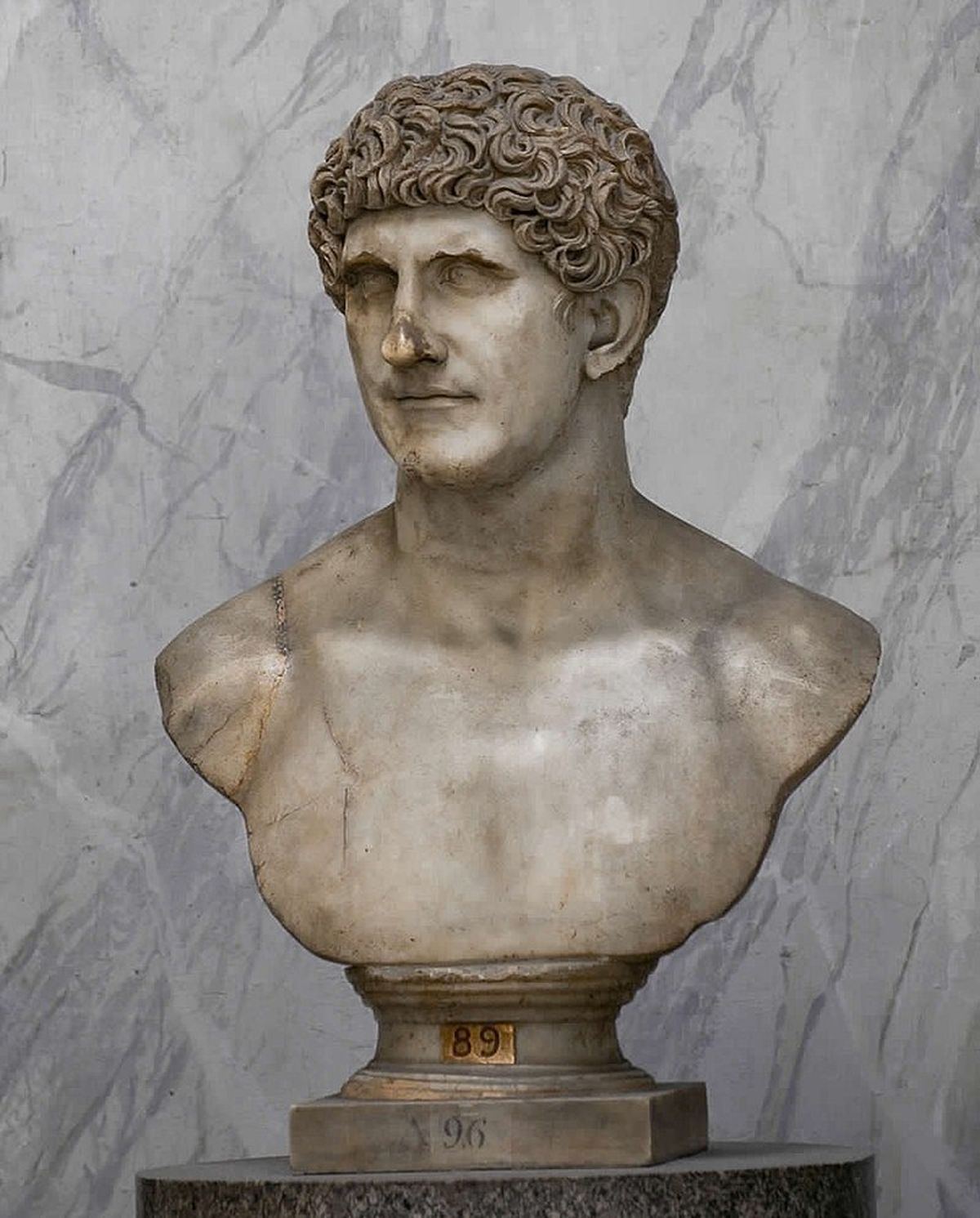
Mark Antony (Marcus Antonius) was born on 14 January 83 BCE in Rome. He was an excellent Roman commander and at the same time a brilliant politician. He was an officer of Julius Caesar and his supporter. After his death, he took part in the civil war.
Family
He was the son of Marcus Antonius Creticus and Julia, Caesar’s close relative. His grandfather was Marcus Antonius Orator, who was one of the best Roman speakers of his time. Mark’s father died young and his mother decided to marry again, this time Publius Cornelius Lentulus Sara. However, he was executed by the order of Cicero. Cicero’s attitude caused great indignation in the young man. From then on, Mark hated Cicero.
Political career
As a young man, Antony was marked by bad character traits. Together with his brothers, Lucius and Gaius, and friends (Clodius and Curio), he led a reckless life, filled with gambling, fights, drinking and numerous romances. His trip to Greece in 63 BCE was a breakthrough since he began to study rhetoric. But instead of devoting himself to studies, Antony decided to join the legions of Aulus Gabinius, the Proconsul of Syria. It was the beginning of his long military career. During the campaign, he distinguished himself as the commander of the ride, showing courage many times. Antony gradually climbed the military ladder occupying the highest positions. He devoted himself entirely to the army.
Mark Antony, who had already participated in many campaigns, was one of the commanders in Caesar’s army in Gaul (54 BCE). Here he again proved his high competence as a military commander, and thus he commended Caesar. He became his devoted supporter and did not leave him until his death. However, it had repeatedly happened that Antony, with his rather specific behaviour, caused confusion in the army. Also, Caesar rather disliked his personality. However, the commander saw in him a real ally, which he proved by entrusting him with more and more serious tasks in Gaul. The political career of Antony quickly developed, mostly because it was still supported by Caesar. With his help, Antony became a quaestor in 52 BCE, and in 50 BCE he was appointed the College of Augurs, and in 49 BCE – People’s Tribue. This last office was clearly convenient for Caesar, as the country was lost in the Civil War. Caesar needed support from people, which Antony assured him as a tribune.
Civil war
The crisis in Rome meant that Antony had to devote himself entirely to politics. Representing Caesar in the Senate, he demanded that in addition to Caesar, who would complete the second 5-year period of consular power in Gaul, Pompey should also give power over the army. However, this demand met with total opposition, and Antony was thrown out of the chamber. Mark quickly left Rome joining the forces of Caesar in the north. As it turned out, he was Caesar’s faithful ally during the Civil War. When Caesar went in pursuit of Pompey to Greece, Antony was to be his representative in Rome. However, at the request of Caesar, he left the city and, as the head of the rest of the army, supported the leader in Greece. Caesar was really confident about his ally, entrusting him with the command of the left wing of his army at the battle of Pharsalus in 48 BCE.
After defeating Pompey, his death and taking over dictatorial power by Caesar, Antony was appointed the commander of the ride (magister equitum). During the absence of Caesar, who fought in Africa with Pompey’s supporters, Mark had power over Rome, where he, however, did not show administrative skills. His bad decisions led to numerous conflicts in the city. Dissatisfied with the rule of Antony, Caesar, pushed him aside for two years. It was not until 44 BCE that Mark Antony was elected a consul along with Caesar.

Caesar’s death and fight with murderers
During the festival of Lupercalia, Antony presented Caesar with a royal diadem, which was rejected by Caesar. Further signals indicating that Caesar may want to recreate the monarchy resulted in a plot for his life. The opposition to Caesar was led by Gaius Cassius Longinus and Marcus Junius Brutus. Longinus was previously associated with Pompey’s camp, after the defeat at Pharsalus, he surrendered to Caesar, but still loudly expressed his dislike of him. It was the same with Brutus, who nevertheless enjoyed Caesar’s confidence; moreover, Caesar had an affair with his mother, Servilia.
Caesar was murdered on March 15, 44 BCE. Caesar’s death divided the Roman state. The supporters of the republic found themselves under the leadership of Gaius Cassius and Mark Brutus and took over the eastern expanses of the empire. The opponents of Caesar’s murderers were Octavian Augustus, Mark Antony and Marcus Lepidus, who ruled the west.
The last three men joined forces in 43 BCE, creating the so-called Second Triumvirate. According to this agreement, Antony was to hold the East in his personal fief, Africa was to go to Lepidus, and the rest of the West to Octavian. Here, however, a problem arose. The east was ruled by Brutus and Cassius, and they were ready to resist the triumvirs and fight to defend the republic. To this end, they gathered a mighty army in Macedonia, expecting the attack of the enemies. Finally, in the battles of Philippi in 42 BCE. Antony and Octavian defeated Caesar’s murderers. The power over the Roman world was shared by three men: Mark Antony, Octavian Augustus and Marcus Lepidus. Antony, like his two rivals, was appointed for 5 years as triumvirs. It was then that the famous 14 Philippics of Cicero were delivered in the Senate, criticizing the person of Antony. Antony then decided to hire wet boys, whom he gave the order to murder Cicero. It was the so-called proscriptions that led to the death of many other Romans.

Cleopatra
After the victory of Antony, Lepidus and Octavian in the battle of Philippi, the power of triumvirs was no longer restricted in any way. There was actually no other threat to their interests. Lepidus took control of the western part of the empire, Octavian remained in Italy, and Antony took the East. During his stay in Egypt, Antoni met the Queen of Egypt, Cleopatra, Caesar’s ex-mistress. Antony was delighted with her beauty and became mad about her. They eventually became lovers.
At that time, a revolt took place in Italy, headed by Fulvia, Antony’s wife and his brother Lucius. They were, however, besieged in Perusia by the armies of Octavian and forced to surrender. Fulvia went into exile and died soon. The event brought Antony and Octavian closer again. They entered into a treaty in Brundisium, and the marriage between Antony and Octavia, Octavian’s sister became a symbol of this treaty. Antonia Major and Minor were born from their relationship. It was thanks to her that both chiefs came to another agreement after the quarrel, this time in Tarentum in 38 BCE.
Immediately after finalizing the treaty, Mark Antony decided to go to Alexandria. With Cleopatra’s financial support, he organized an expedition against the Parthians. However, a failed campaign cost him half the soldiers. In Rome, Octavian began a propagandist campaign against Antony, which clearly damaged their mutual agreement. Antony’s victorious military campaign in Armenia was organized again with Cleopatra’s support, ending the agreement with Octavian.

Another civil war
In order to ensure his family’s reign in the eastern territories, Antony distributed kingdoms among his children. And thus Alexander Helios fell to Armenia and Parthia, Cleopatra Selene II got Cyrenaica and Libya, and Ptolemy Philadelphus got Syria and Cilicia. The most important event, however, was the appointing of Caesarion, the son of Cleopatra and Caesar, the co-ruler of Egypt, and the legal son and heir of Caesar. This struck at the bases of Octavian’s authority as the adopted son of Caesar and his heir. This manoeuvre was unacceptable for Octavian and after the triumvirate expired in 33 BCE, another civil war began.
Both sides led a propagandist war in which Octavian was accused of usurping power and forging Caesar’s will, and Antony of illegal power in the provinces, waging wars without the acceptance from the Senate and seeking to seize power over the entire empire. In 31 BCE there was a, in which the fleet of Antony and Cleopatra was destroyed and they were forced to flee to Egypt. Octavian, however, did not plan to give up his full power in the Empire. On the way to Egypt, he was accompanied by his trusted companion Marcus Agrippa.
Death
Mark Antony and Cleopatra, in a desperate situation, realized that submission to Octavian would mean death or life in humiliating captivity. They did not want to let this happen. As he found no other solution, Antony decided to commit suicide by stabbing himself with his sword. He did it thinking that Cleopatra had already done it. He was taken to Cleopatra, in whose hands he died. Mark Antony died on 1 August 30 BCE in Alexandria. Cleopatra followed his path and she did not want to take part in Octavian’s disgracing triumph in Rome.
Antony’s death meant that the Empire was finally in peace, and Octavian became the sole ruler of Rome. At the news of Antony’s death the Senate, at the request of Cicero’s son – Cicero Minor, Antony’s honours were revoked and his statues removed. His name was to be forgotten forever (damnatio memoriae). In addition, Cicero prepared a decree prohibiting any member of the Antonii bearing the name Marcus
Roman writers speak unflatteringly about Antony. For example, Plutarch, Antony’s critic in various fields of his activity, not only in the context of his relationship with the Egyptian ruler Cleopatra, describes him in the following way in “Parallel Lives”:
Antony gave brilliant promise in his youth, they say, until his intimate friendship with Curio fell upon him like a pest. For Curio himself was unrestrained in his pleasures, and in order to make Antony more manageable, engaged him in drinking bouts, and with women, and in immoderate and extravagant expenditures.
– Plutarch, Antony, 2
Antony’s love for Greek literature and languages was particularly visible during his stay in Greece. There, also due to the origin of the protoplasts of his family, he organized performances, processions and festivals in the Dionysian scenery, claiming that he was New Heracles or the New Dionysus.