If you have found a spelling error, please, notify us by selecting that text and pressing Ctrl+Enter.
Medieval housing community in Colosseum
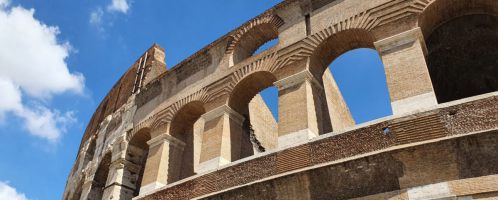
In 2015, scholars discovered that from the 9th century, at least until 1349 (that is, until the earthquake partially damaged the building), the former ancient battle arena – the Colosseum – functioned as a rental space for the inhabitants of the Eternal City. The houses and workshops were located in the former arena, where gladiators fought to the death.
Five skeletons that could change Roman history
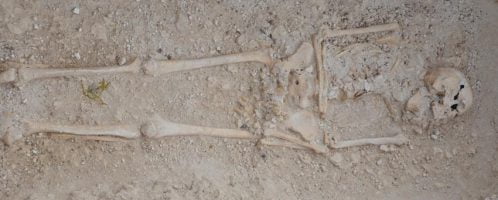
Roman history as we know it may change with the discovery made in 2015 in Britain. A new archaeological find from Durotriges in Dorset can provide a wealth of information about the life of Britain’s provincial late Roman elite. The skeletons owe their uniqueness to the fact that they are located right next to a Roman villa. Most likely, these are the remains of its owners or residents – thus, for the first time in Britain, the remains of villa owners were found near the building itself.
What did gladiators of Ephesus eat?
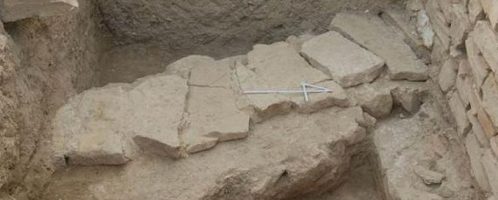
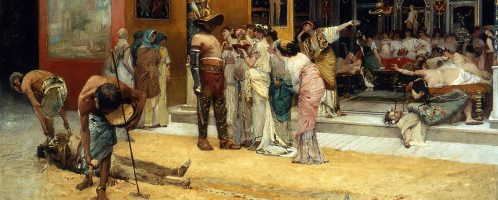
Roman gladiators were largely vegetarians and drank a tonic to strengthen a drink made of plant ash after training. Such conclusions were reached by scientists from the Medical University of Vienna and the University of Bern, who conducted an anthropological study of skeletons in 2015 from the 2nd-3rd-century necropolis in Ephesus discovered in 1993.
Pompeii’s walls are deteriorating under influence of rain and bureaucracy
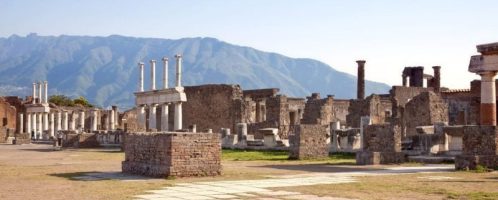
Preserved under volcanic ash, the monuments of Pompeii, a city affected by the eruption of Vesuvius in 79 CE, are endangered by the Italian bureaucracy and heavy rainfall. The city was discovered by archaeologists in the 18th century and to this day is a unique source of knowledge about the everyday life of the Romans.
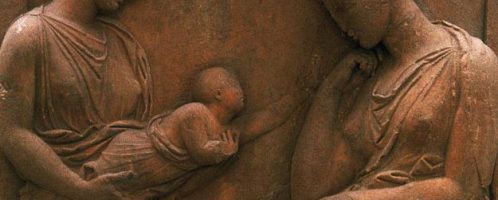
None of sex was spared in act of infanticide
Scientists emphasize in “Journal of Archaeological Science” from 2015 that female children did not account for the vast majority of infanticide victims. It was customary to think that at birth, the Romans spared the male offspring more often due to the obvious gender imbalance at the time.
Severed heads were eaten by dogs
Discovered in 1990 in central London, the human remains were thoroughly investigated. As it turned out, the numerous severed heads left in the mass grave come from the period between 120 and 160 CE.