
Great Roman commanders and their achievements
In discussing the great figures of antiquity, I will start with African Elder Scipio (Publius Cornelius Scipio Africanus Maior), who lived in years 235-183 BCE
If you have found a spelling error, please, notify us by selecting that text and pressing Ctrl+Enter.
Roman state existed for nearly thirteen centuries, repeatedly exerting a profound influence on the course of history. I present the history of ancient Rome in the individual articles below, which not always refer solely to the Eternal City itself but encompass the wider world of the Roman Empire.
I encourage you to submit your own articles and to report any corrections or factual inaccuracies.
In discussing the great figures of antiquity, I will start with African Elder Scipio (Publius Cornelius Scipio Africanus Maior), who lived in years 235-183 BCE

Reign of Domitian (81–96) is an interesting and at the same time controversial period in the history of the Roman Empire. Writers from senatorial circles described the emperor as cruel and authoritarian.

Ammianus Marcellinus is the last great historian of the dying Roman world civitatis. His “History of Rome” (Res gestae) was written at a special moment when the Roman Empire was slowly entering a time of irreversible transformations, which consequently led to the shaping of a new face of Europe.
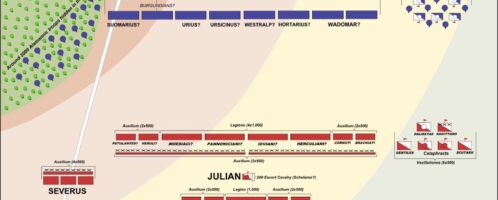
The year 31 BCE began a new stage in the history of the Roman state. Octavian’s success, crowned in 27 BCE, created a new political system – the empire.
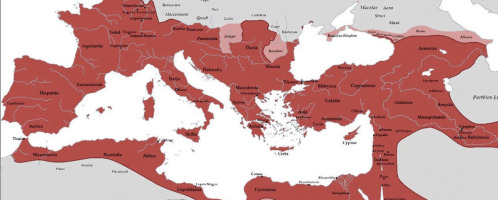
The origins of the Cypriot Nea Paphos date back to the Hellenistic period, and its first stone buildings were built in the 4th century BCE. Researchers assume that the founder of the city could have been the king of Paphos – Nikocles, or the Egyptian ruler – Ptolemy I, under whose reign was the territory of Cyprus.
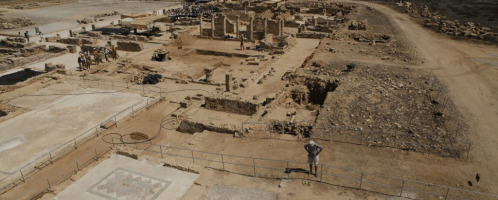
The Kourion Archaeological Complex is located near the village of Episkopi, which is part of the British overseas territory of Akrotiri, on the peninsula of the same name. It houses a British military base of approximately 1,300 soldiers. We will pass the barracks of this base on our left, approaching Kourion.
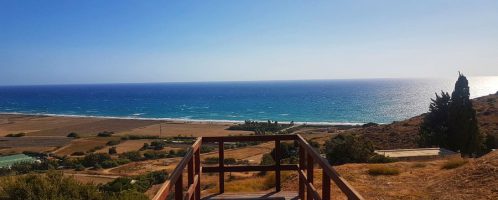
Germania, one of the smaller works of Tacitus, probably written between 98-99 CE contains a lot of detailed information about the appearance, everyday life, customs, and religion of the Germans. Particularly interesting seems to be the description of marriages that Tacitus sets as a model for his contemporaries, spoiled by luxury, citizens of the Roman Empire.

For many years, spring and summer weekends have been filled with numerous reconstruction events. Not only do they provide an opportunity to come into contact with the history of the region, but above all, they are an opportunity to meet enthusiasts of a given historical period and to have fun together with education.

One of the most interesting issues related to ancient Rome is the phenomenon of slavery and its very heterogeneous nature. How different was the life of a slave working in a quarry from, for example, Tiro – a comprehensively educated slave and later liberator of Cicero, who is perhaps one of the most interesting figures of ancient Rome?

Caratacus was the king and leader of the Catuvellauni tribe – one of the most powerful tribes in Britain. He was the son of a Celtic king named Cunobeline and ruled alone from 43-50 CE. When other tribes of Britain went to the side of the Romans or recognized their supremacy, Caratacus fought for freedom by organizing a confederation of the tribes of Britain against the Romans.
