If you have found a spelling error, please, notify us by selecting that text and pressing Ctrl+Enter.

Articles

Roman state existed for nearly thirteen centuries, repeatedly exerting a profound influence on the course of history. I present the history of ancient Rome in the individual articles below, which not always refer solely to the Eternal City itself but encompass the wider world of the Roman Empire.

I encourage you to submit your own articles and to report any corrections or factual inaccuracies.

Bulla Felix – Roman Robin Hood

Bulla Felix was the Roman version of Robin Hood. He robbed the rich and helped the poor. His activity was reportedly in the years 205-207 CE, the reign of the emperor Septimius Severus. His group consisted mainly of runaway slaves, imperial freedmen, and even former praetorians. At its peak, he had 600 robbers under his command.
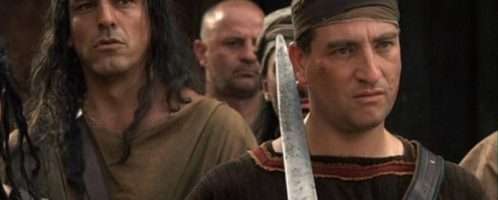
Scene from the movie "Rome"

Origins of ancient Rome

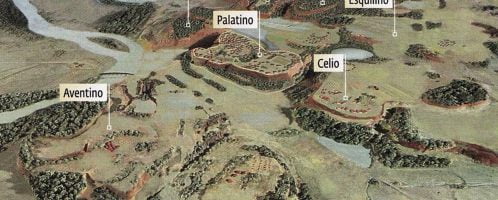
Origins of ancient Rome were one of the most discussed historical problems of the second half of the 20th century. Recent years and efforts of scientists in the field of archeology and the interpretation of historical monuments of ancient Rome, brought a lot of new material and prompted a change of perception, especially when it comes to the chronology of the early history of Rome.

Historic seven hills of ancient Rome

Greece – birth of city

Unlike most civilizations of the ancient East, developing in the valleys of great rivers, the subjugation and use of which was associated with the emergence of great states, the fate of Greece, devoid of this factor, turned out differently.

Greece - the birth of the city

Was there a middle class in Ancient Rome?

This question causes us some trouble at the outset. The ancients of course did not know the term “middle class”, which does not mean that there was no social group situated between the social elite and the urban poor. However, its definition is not easy.

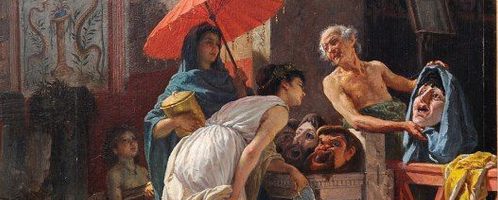
Mask seller, Cesare Mariani

Golden glass – about valuable artifacts of the late empire, their importance for the Jewish diaspora and what the Nazis and a Polish countess had to do with it

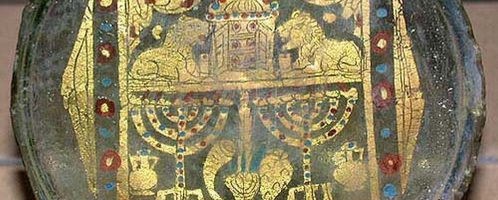
Golden glass – this is the name used to describe the parts of the dishes (bowls, plates, cups, etc.), most often they were bottoms or their walls, and they were small works of art in themselves, assuming an oval or round shape. The technique of making them was based on placing gold leaves decorated with a pattern, often with an inscription, between two panes of glass, which later became part of the dishes when the edges were heated.

Roman golden glass

Hercules tower

The Tower of Hercules (Torre de Hércules) is located in Spain, in the city of A Coruna (official name in Galician). It is the only Roman lighthouse that has survived to our times and the oldest still operating lighthouse in the world.

Hercules tower

Imperial legislation for protection of slaves

Slaves in ancient Rome were an extremely important social group from an economic point of view. The number of slaves peaked in the 1st century BCE, which also coincided with the famous uprising of Spartacus (73-71 BCE). The economic transformations of the fall of the republic, as well as the increased popularity of the custom of liberating slaves among their owners, led to a significant decrease in their number at the turn of the century, which threatened to upset the Roman economy based on slave labour.

Slave market, Gustave Boulanger

Spelling error report

The following text will be sent to our editors: