If you have found a spelling error, please, notify us by selecting that text and pressing Ctrl+Enter.

Articles

Roman state existed for nearly thirteen centuries, repeatedly exerting a profound influence on the course of history. I present the history of ancient Rome in the individual articles below, which not always refer solely to the Eternal City itself but encompass the wider world of the Roman Empire.

I encourage you to submit your own articles and to report any corrections or factual inaccuracies.

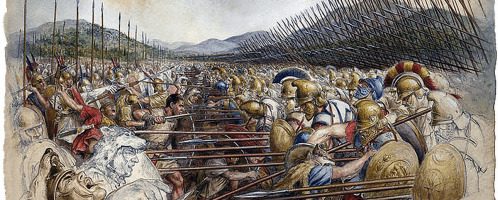
Copper coinage, i.e. ancient chronology

The division of time into two eras is widely known and is not controversial. When subjected to a critical analysis, a range of questions and doubts arise that I would like to present in this article.

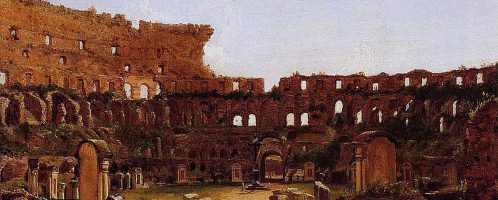
Thomas Cole, Interior of the Colosseum

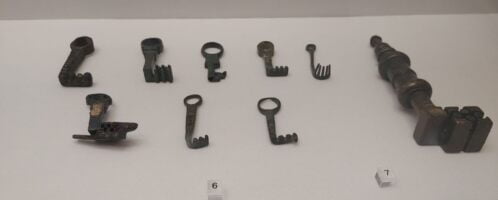
Keys and locks in ancient Rome

Hardly anyone wonders how the ancients once closed their homes, chests or cells. As it turns out, a modern key or lock is an ancient invention. For example, castles made of strong wood were already used in Egypt or Greece. However, most of the locksmith’s “patents” come from Rome, which largely took over knowledge from the Etruscans.

Different types of Roman keys

Year of the Four Emperors

The despotism of Nero caused growing dissatisfaction. The reign of Nero is stuck in the consciousness of his people today as a period of exceptional decline in morality, the oppression of society, and the eccentric pranks of the emperor. From a person sensitive to beauty, poetry, and theatre, he became a vain lust.

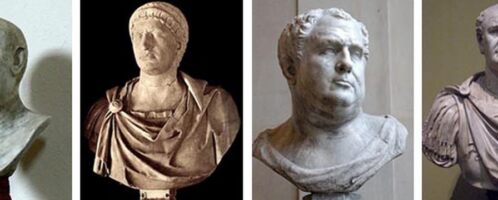
Rivals to imperial power: Vitellius, Otho, Vespasian and Galba

10 places where we can see unique Roman mosaics

Mosaics were very popular in the Roman Empire. From the colorful, marble (or glass cubes) squares various patterns were laid on the floors or walls. Many beautiful ancient compositions have been preserved to our day, which prove the craftsmanship of ancient craftsmen. Below 10 places where we will see some of the most beautiful Roman mosaics.

Mosaic of Neptune on his sea chariot - located in the Archaeological  Museum of Sousse

Year of the Five Emperors

Year 193 CE is known in the history of ancient Rome as The Year of Five Emperors, because during these 365 days as many as five claimants claimed the throne. This year also brought the fall of the current Antonin dynasty (96 – 192 CE) and the beginning of the four-year period of civil wars (193 – 197 CE), which eventually ended with the victory of Septimius Severus.

Year of the Five Emperors

Terracina – ancient sanctuary of Romans

The oracles in antiquity were of enormous importance. Starting from the ordinary “gray” people, ending with leaders, rulers and leaders – everyone went there to get the answers to the questions asked. And advice was sought and sought both in private and personal matters.

The attacking legionnaire unit - already on a T-shirt!

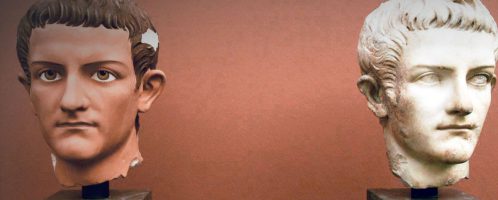
Ancient statues were colorful

Wherever we look, film productions show us the world of ancient Romans devoid of colours, and full of white and beige statues and buildings. That was even the case in “Ben Hur” (1959) by William Wyler or “Gladiator” (2000) by Ridley Scott. Indeed, this way of showing Roman civilization proved its power and role in the then Mediterranean world. However, the reality is quite different – ancient statues were colourful.

A painted bust of Caligula

Spelling error report

The following text will be sent to our editors: