If you have found a spelling error, please, notify us by selecting that text and pressing Ctrl+Enter.

Articles

Roman state existed for nearly thirteen centuries, repeatedly exerting a profound influence on the course of history. I present the history of ancient Rome in the individual articles below, which not always refer solely to the Eternal City itself but encompass the wider world of the Roman Empire.

I encourage you to submit your own articles and to report any corrections or factual inaccuracies.

Secessio plebis

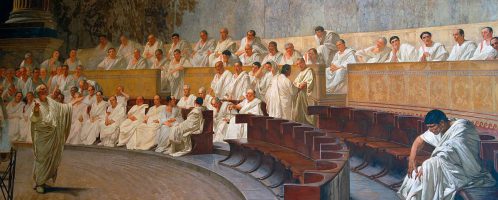
Ancient Rome from the beginning of its existence consisted of two social layers – patricians and plebeians; higher and lower state respectively. Lack of influence on state decisions and the use of plebe by patricians led to the so-called secessio plebis that took place five times in Rome’s history.

B. Barloccini, Plebeian Secession

Roman triumvirates

In ancient Rome, the term “triumvirate” (from trium viri – “three men”) was used to describe a college made up of three officials elected to perform certain tasks. Two such meetings have gone down in the history of Rome. Both took place during the so-called crisis of the Roman republic and decided about the division of power between influential politicians. In fact, these were agreements bypassing the senate, which was losing its prerogatives.

Three influential politicians: Pompey, Crassus and Caesar 

Crisis of Roman military in middle of 2nd century BCE

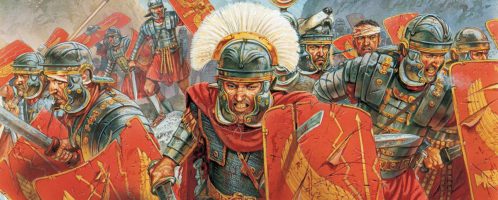
The history of ancient Rome is widely associated with the successes of the invincible legions that crushed the armies of the enemies of the Empire. In such situations, many people think of Caesar’s exploits under Alesia, Scipio under Zama or Marius under Vercellae. This very simplified image of ancient Rome does not take into account the broad context of the history of Roman military. Few people remember that the Roman state also experienced in its history moments of crisis in many areas, including military aspects.

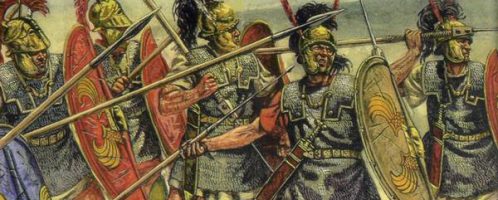
Soldiers of the Roman Republic

Roman rams – bureaucracy without limits

Researchers have been looking for relics of Punic Wars for years. Underwater archaeology is very helpful in this. The seabed off the coast of Sicily has been explored for years, in the Aegean Islands (currently Aegadian Islands, or simply Aegadian Islands), where March 10, 241 BCE, during the First Punic War there was a battle between Carthage’s fleet and the Roman fleet. In the course of the work, numerous rams (rostrum) were discovered and excavated, once menacingly mounted on the beaks of Roman and Carthaginian warships. Since they were cast in bronze, the rams did not corrode and remained in excellent condition.


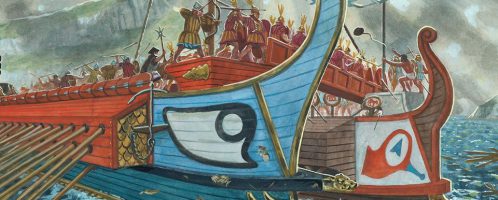
Clash of the roman fleet | Photo: Giuseppe Rava from Osprey's book, The  Ships of Republican Rome

Earthquake from 63 CE

According to Seneca the Younger, on February 5, 63 CE1, a strong earthquake occurred near Vesuvius. As it turned out later, it was a signal about the increased activity of the volcano and the announcement of a much worse cataclysm, which in 79 CE. destroyed, among others Pompeii and Herculaneum.

Damage after an earthquake in CE 62

Roman war fleet

The construction of the ship began with the construction of the hull plating from boards, usually pine. Then a light skeleton was placed inside and the whole structure was reinforced with thick ropes. Boards were connected with specially hewn pins or grooves, practically no nails or other metal fasteners were used.

Clash of the roman fleet | Photo: Giuseppe Rava from Osprey's book, The  Ships of Republican Rome

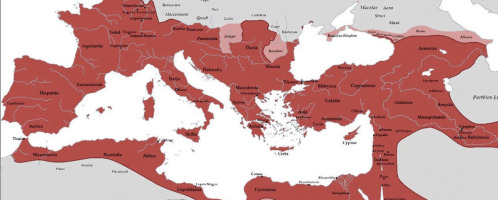
Roman Empire at time of its greatest prosperity

Roman Empire, expanding from the 3rd century BCE to the 5th century CE, was one of the few in ancient history that covered such a huge area. It is also sometimes called a world state for this reason. In the first and second centuries, the Romans ruled huge areas around the Mediterranean Sea. This huge state can only be compared with the Chinese state during the Han dynasty (202 BCE 220 CE) and the former state of Emperor Szy-Huang-Ti.

Roman Empire in 117 CE, At the end of Trajan's reign, Rome reached its peak territorial extent.

Spelling error report

The following text will be sent to our editors: