If you have found a spelling error, please, notify us by selecting that text and pressing Ctrl+Enter.

Articles (People)

Ancient Roman figures played a key role in shaping the history of the Roman Empire. In this category, you’ll find articles on emperors, politicians, generals, philosophers, and other figures who influenced the history of the ancient world. The texts present both well-known historical figures and lesser-known heroes, revealing their activities, significance, and place in the realities of the era. This is a compendium of knowledge about the people who shaped Rome’s power.

Hannibal’s revenge plans

The figure of Hannibal as Rome’s greatest enemy is fairly well known to that learning ancient history. Recognized as one of the greatest leaders of antiquity, the winner of Kann, Trebia or Lake Trasimeno, however, disappears from textbooks with the final defeat of Carthage in the Second Punic War and defeat at Zama in 202 BCE Sometimes it seems as if Hannibal died in this battle because in school notebooks it is often the last event related to a Punic chief.
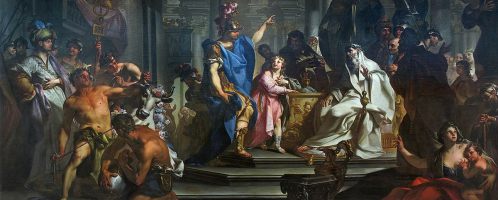
Painting by Claudio Francesco Beaumont, Hannibal swearing hatred of the Romans (painting from 1730), Musée des beaux-arts de Chambéry, France

Sergius Orata – famous fish breeder

Sergius Orata was an entrepreneur whom Pliny the Elder mentions several times in his work Natural History. On the basis of these mentions, some researchers concluded that Orata was the inventor of the so-called hanging baths, which were equated with the system of heating the floor and swimming pools in baths – hypocaustum. Nothing could be more wrong. Hypocaustum is a Greek invention, only slightly improved by the Romans, while Sergius Orata was a fish farmer and it was in this field that he was an innovator.

Fish on the Roman mosaic

Fall of Domitian

The younger son of Vespasian did not seem to be a bad ruler. With time, however, he turned into a cruel man, who was decided to be removed from the throne by force. What was the fall of the last emperor from the Flavian dynasty and what signs were to accompany him?

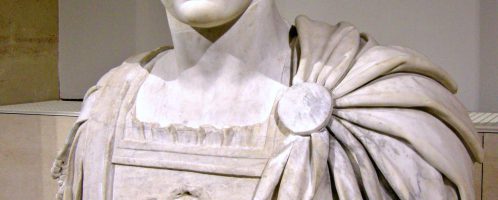
Domitian

Religious policy of emperor Julian the Apostate

Roman Emperor Julian, called the “Apostate” by Christians, reigned in the years 361-363 CE. He was the greatest of Roman rulers. Living in difficult times, he was able to carry out numerous internal reforms and conduct an active foreign policy. At the same time, he was a lover of ancient Roman deities, which created a conflict with the growing Christianity. What was the religious policy like under the Emperor Julian the Apostate?

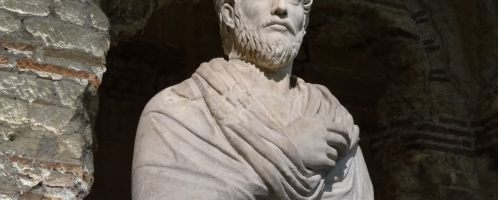
Sculpture of a priest; so far it was considered the image of Julian

Cicero and his thought

The works of the eminent Roman speaker, politician and philosopher Marcus Tullius Cicero (January 3, 106 – December 7, 43 BCE) are undoubtedly an icon of an ancient culture that laid the foundations our civilization in terms of legal, moral and social.

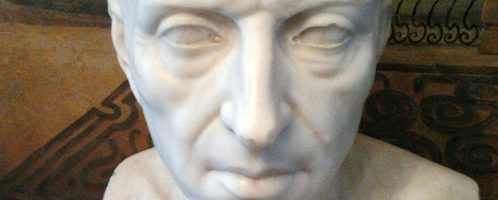
Bust of Cicero from the 19th century. It is in the collection of the Myślewicki Palace in Warsaw

Spelling error report

The following text will be sent to our editors: