Water from Roman aqueducts was stolen
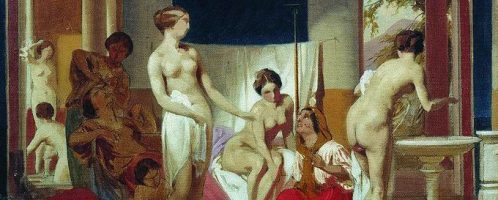
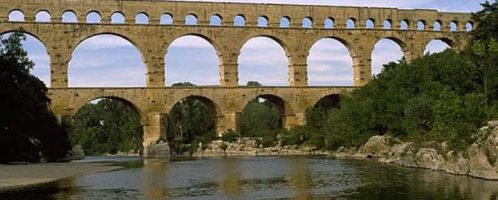
The running water that was provided by Roman aqueducts was very welcome. Often, however, not everyone was able to draw water directly from the aqueduct and had to go, among others, to public fountains.
If you have found a spelling error, please, notify us by selecting that text and pressing Ctrl+Enter.
The world of the ancient Romans was rich in extraordinary, and sometimes even surprising, facts. We draw our knowledge of Roman daily life, customs, and mentality primarily from works left by ancient writers and historians. It is thanks to them that we discover information that is astonishing today – sometimes even hard to believe. Below are some interesting facts that reveal a lesser-known and less obvious side of the Roman world.
I encourage you to submit your own suggestions and to report any corrections or inaccuracies.
The running water that was provided by Roman aqueducts was very welcome. Often, however, not everyone was able to draw water directly from the aqueduct and had to go, among others, to public fountains.
Many of us think the Roman legions were brave, disciplined, tough and well-trained soldiers It is true. However, the Romans were like us and they had their own weaknesses. For example greed.

One of the favourite delicacies of the ancient Romans was snails fattened with milk. Varro or Pliny the Elder mention that rich Romans enjoyed snails from their own farms.

In ancient Rome, adoption (adoptio) meant taking a son or daughter from another family under paternal authority. Adoption was carried out in the presence of a praetor or governor. The adoptive consent was not required. The most common reason for the adoption was the need to maintain the continuity of the family.
On March 3, 321 CE Roman Emperor Constantine the Great issued an edict which instituted Sunday (dies Solis, meaning “the day of the sun”) a day off from work in crafts and trade but did not prohibit agricultural work.
Offices were closed, except for those responsible for supervising the liberation of enslaved people.
The ordinance changed the week’s length (until now there was an 8-day week, the so-called nundinae) and sanctioned the Christian custom of celebrating the first day of the week (Sunday).

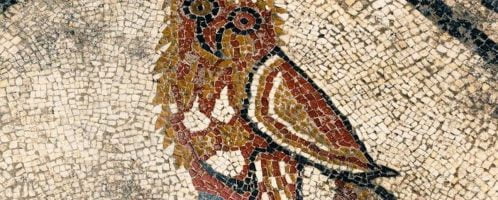
Roman mosaic showing an owl. The object was discovered in southern France, in the city of Uzès. Artifact dated to the second half of the 1st century BCE.
Roman glass urn containing the cremated bones of the deceased. The object was found near the camp of the Legio II Augusta in Caerleon (Wales), in an ancient cemetery. The ashes probably belong to one of the fallen Roman legionaries. Artifact dated to the 1st century CE.

At the end of 115 CE, Emperor Trajan travelled to Antioch, which he had chosen as his headquarters during an operational break in the Roman-Parth War. He was to devote this time to recuperation and overseeing the process of creating new provinces in Armenia and Mesopotamia. Unexpectedly, however, during this time, there was a massive earthquake.