Children of legionaries in camp
Even though at the beginning of the empire, Roman legionaries were not officially allowed to marry, they not only started a family, but they also did not keep it very secret.
If you have found a spelling error, please, notify us by selecting that text and pressing Ctrl+Enter.
The world of the ancient Romans was rich in extraordinary, and sometimes even surprising, facts. We draw our knowledge of Roman daily life, customs, and mentality primarily from works left by ancient writers and historians. It is thanks to them that we discover information that is astonishing today – sometimes even hard to believe. Below are some interesting facts that reveal a lesser-known and less obvious side of the Roman world.
I encourage you to submit your own suggestions and to report any corrections or inaccuracies.
Even though at the beginning of the empire, Roman legionaries were not officially allowed to marry, they not only started a family, but they also did not keep it very secret.

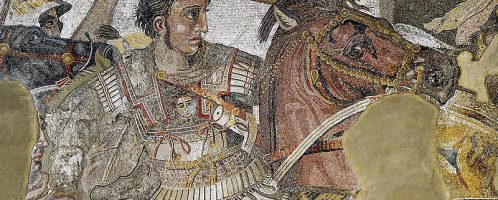
The tomb of Alexander the Great was already a cult object and a destination for expeditions in antiquity. To this day, it is not entirely clear where he was. Supposedly, in 48 BCE Julius Caesar visited the tomb in which the body of the great Macedonian leader was buried. Following in his footsteps, following the death of Cleopatra, his adopted son, Gaius Octavian followed. The chroniclers mention that he placed a bouquet of flowers on the conqueror’s grave and ordered a golden tiara to be placed over his head.
Publishers of Roman books tried to prevent their private copying by “throwing to the market” multiple copies at once. It wasn’t just about the competition, but more about keeping the text correct.

During the time of Emperor Constantine I (born on February 27, c. 280 in Nis – present-day Serbia, died May 22, 337; Emperor from 306; during his reign, the Roman Empire was in its heyday), Athanasius the Great (born in 295 in Alexandria, of Greek origin, Patriarch of Alexandria, the most prominent saint of the Catholic Church) was accused of performing magic rituals with the use of a severed hand. That hand was to belong to the Bishop of the Meleznai sect of Thebaida – Arsenius. It was even claimed that the man was murdered in order to get the “handle”.
A synod in Tire (335) was called, with the most eminent bishops of the Empire. They were even introduced to corpus delicti (the subject of the crime), in a wooden box there was an alleged hand of Arsenius. The accusers (Egyptian clergy) were already rubbing their hands. There is evidence, and there should be punishment. Knowing what he was accused of, Athanasius ordered him to bring him, none other than Arsenius himself. Alive, too. Ba, having both hands. In the end, he replied, “Let no one seek for a third hand, for man has received two hands from the Creator and no more“.

There was also a post office in ancient Rome. It was called cursus publicus (“the way of the states”) and was a state post office, resulting from the territorial development of the Empire that required efficient communication and administration.

The photo showing the preserved remains of an inhabitant of Pompeii gained considerable popularity on the Internet, who in 79 CE died as a result of hot pyroclastic flow (gas and ash cloud) that killed most of the population living in the area around Mount Vesuvius. The unusual position in which the body found itself is indecently associated with many people.

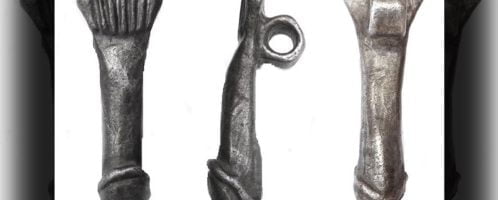
In 2020, a well-preserved Roman phallus-shaped pendant was discovered in one of the English fields. The object is dated from the 1st-5th century CE and it is made of silver. This year, the artifact was declared a national treasure in England, Wales and Northern Ireland.